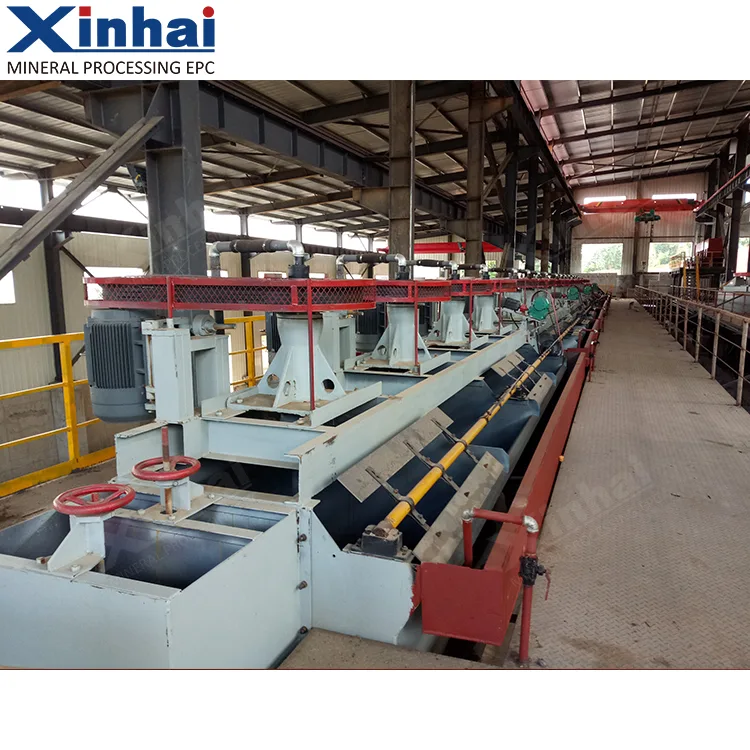
Copper: flotation circuits sized on closed circuit test data
Sulphide copper, copper-lead-zinc and copper-silver ores, treated by bulk or selective flotation with concentrate regrinding where liberation requires it.
Process route
The rougher, scavenger and cleaner arrangement is set by locked cycle test work, because copper recovery is usually lost in the cleaner circuit rather than the rougher.
Crushing and grinding
Three stage crushing or crushing plus SAG, followed by ball milling in closed circuit with hydrocyclones to the target grind.
Rougher and scavenger flotation
Bulk sulphide flotation recovers copper minerals into a rougher concentrate at a controlled pulp density and pH.
Regrind and cleaning
Rougher concentrate is reground to liberate locked particles, then upgraded through multiple cleaner stages.
Separation for polymetallic ores
Where lead, zinc or silver are present, selective flotation separates the bulk concentrate into saleable products.
Dewatering
Concentrate thickening and pressure filtration to transport moisture, tailings thickening and disposal.
Equipment in this circuit
Manufactured at our own bases and matched to the circuit capacity, not bought package by package.
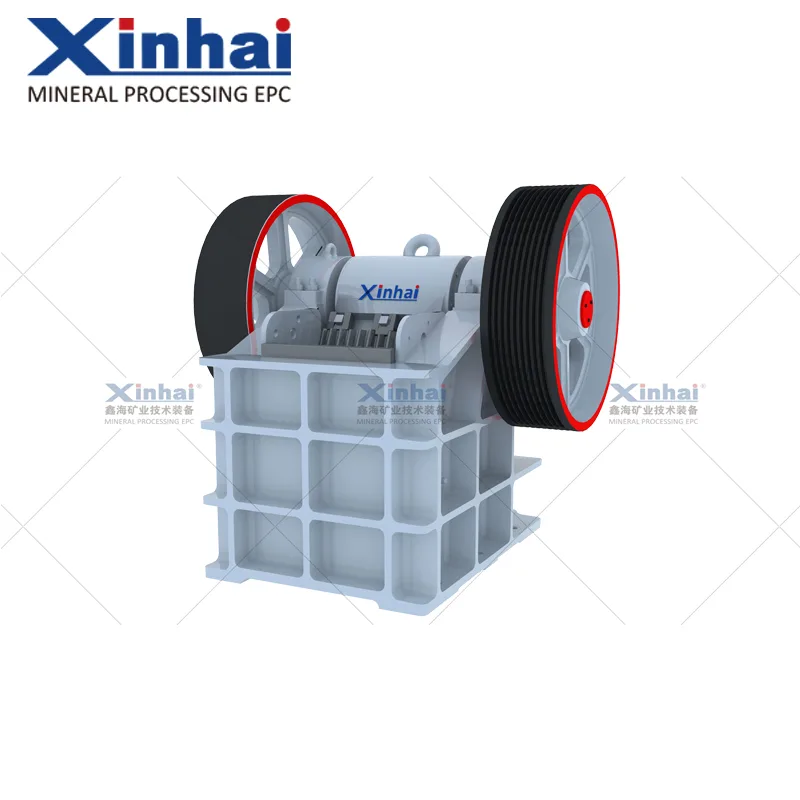
Jaw crusher
PE series for primary crushing and PEX series for secondary and fine crushing.
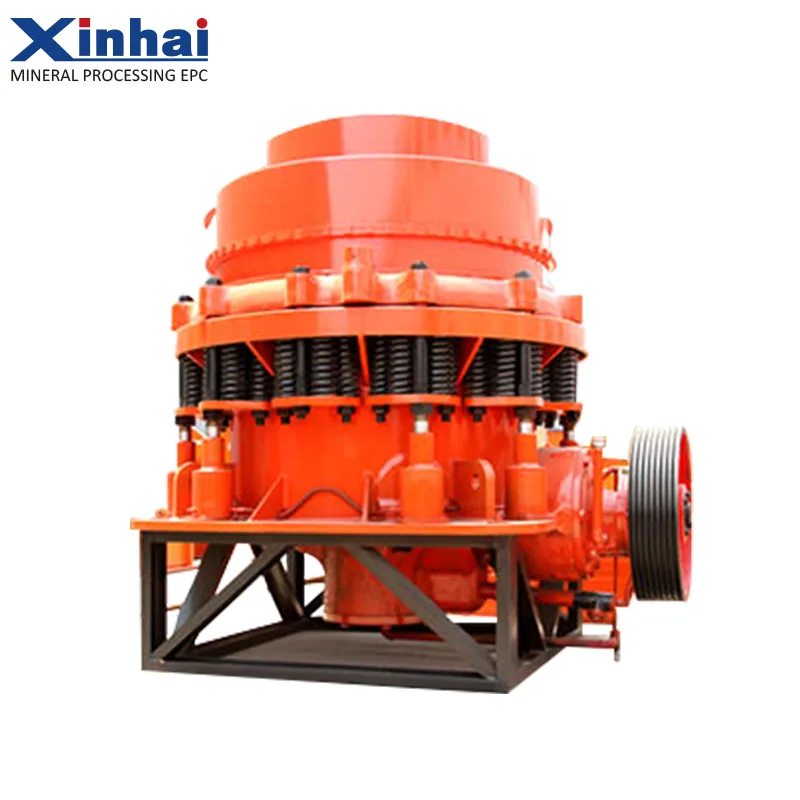
Cone crusher
Secondary and fine crushing by layered compression.
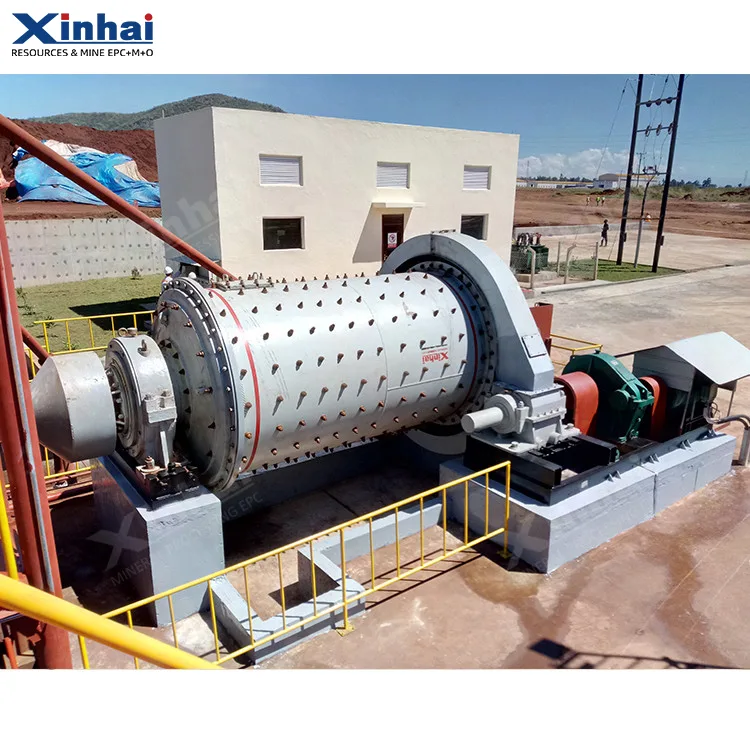
Ball mill
Wet grid mills for primary grinding and overflow mills for secondary grinding.
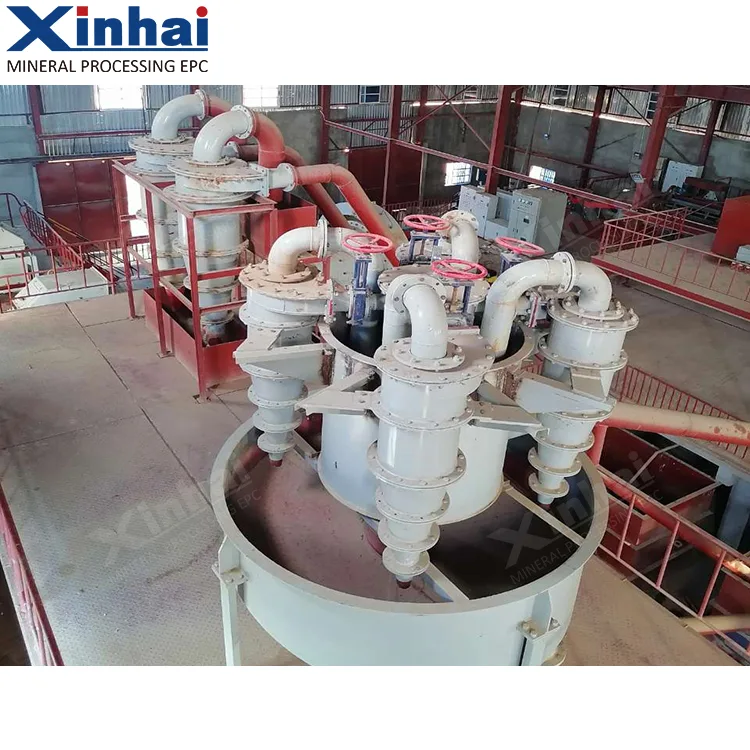
Hydrocyclone
XC, XHCV and XN series for classification, desliming and thickening duty.
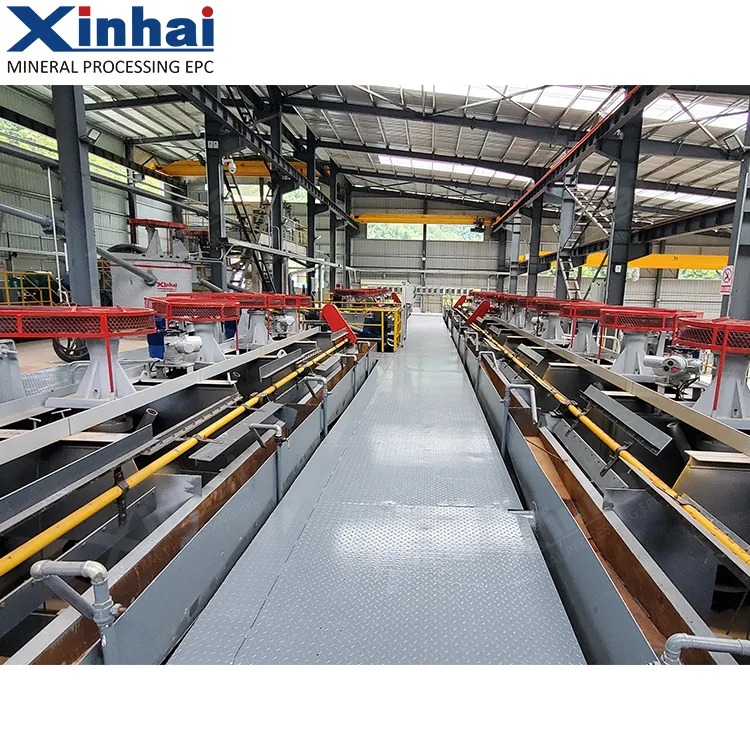
Flotation cells
SF, JJF, XCF, KYF and BF machines up to 320 m3, plus flotation columns.
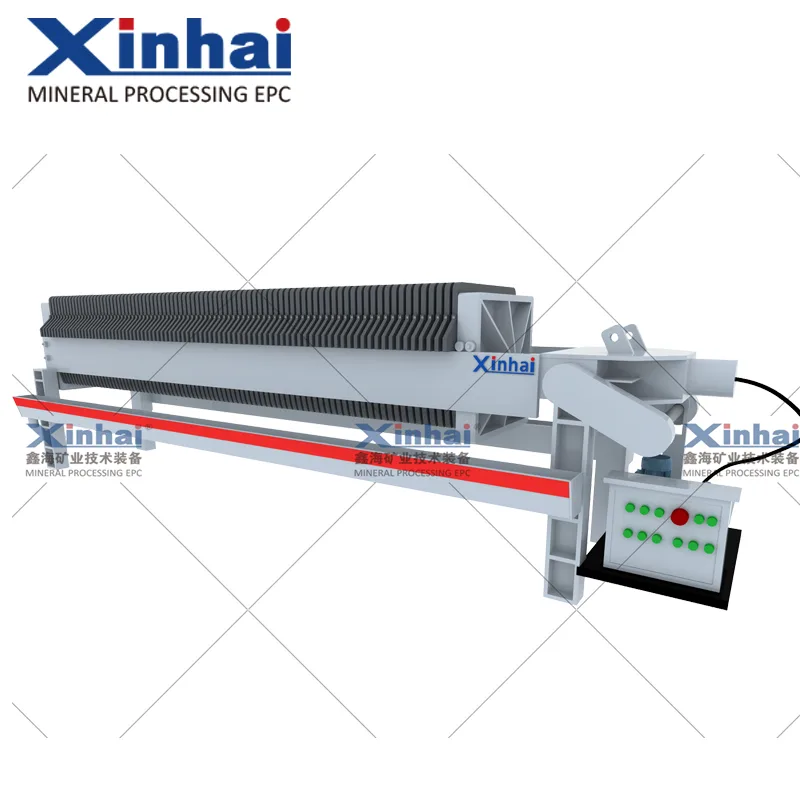
Filter press
Plate and frame and membrane presses for concentrate and tailings dewatering.
Reference projects
Figures are those reported for these projects in the Xinhai project and test brochures.
1.5 Mt/a copper flotation, concentrate at 16.23% Cu and 66.23% recovery in closed circuit tests
Test work and plant scope1,500 t/d copper processing plant
Plant scope1,100 t/d copper and lead processing plant
Plant scope1,000 t/d copper and silver processing plant
Plant scopeCommon questions
What grind size does a copper circuit need?
Can Xinhai handle copper ores with lead, zinc or silver?
Is concentrate regrinding always required?
Related
Small-scale copper plants
200 to 1,500 t/d plants for low-grade oxide, mixed and sulphide copper ore.
Small plantsLead and zinc
Selective flotation routes for polymetallic sulphide ores.
Lead and zincFlotation equipment
SF, JJF, XCF, KYF and BF flotation machines up to 320 m3, built in our own workshops.
EquipmentTest work
Locked cycle flotation tests before any circuit is sized.
Test workBefore the flotation route: check that your copper is actually a sulphide
The circuit above assumes sulphide minerals. One assay tells you whether that assumption survives contact with your orebody.
Head grade is the number every enquiry leads with. It's also the number that tells you least about which plant you need. Two deposits can carry the same copper grade and still demand completely different plants, because the copper sits in different minerals.
The assay that decides the flowsheet
Ask for a sequential copper analysis, not just total copper. It splits the copper three ways: acid-soluble, cyanide-soluble, residual. Acid-soluble copper sits in oxide minerals. The USGS porphyry copper deposit model names the usual ones — brochantite, malachite, azurite, chrysocolla, atacamite — as relatively soluble carbonate, silicate and sulphate minerals. They don't answer to the collector suite a sulphide circuit is built around. Cyanide-soluble copper points at secondary sulphides such as chalcocite and covellite. The residual fraction is your chalcopyrite and bornite, and that is what the rougher, scavenger and cleaner arrangement described above is designed to recover.
The same USGS model makes a second point worth carrying into your drilling plan: the split changes with depth. Supergene enrichment leaves a leached cap over a chalcocite blanket, with oxidised copper minerals sitting above the sulphides. The ore you drill near surface is not necessarily the ore the mill sees in year six. Composite by domain and by bench. One drum of oxide-rich outcrop will design you a plant that later runs out of feed it can treat.
What the alternatives ask of you
Three routes open up when the sulphide answer comes back wrong.
- Sulphidisation flotation. A sulphidising reagent ahead of the collector brings some oxide and mixed ores back into a flotation circuit. Reagent consumption and pH control decide whether it pays, and bench work settles that quickly.
- Leaching with solvent extraction and electrowinning. USGS records that low-grade and oxide ores may be crushed less intensively and treated with acidic solutions on leach pads. Your decision data here isn't a flotation test at all. It's acid consumption of the gangue, column leach kinetics, and permeability after crushing and agglomeration. Carbonate-rich host rock can consume enough acid to end the conversation before the metallurgy gets interesting.
- Two plants. Mixed deposits sometimes justify a flotation circuit and a leach pad side by side, producing two products for two different buyers.
That last option has a commercial tail. Concentrate goes to a smelter. Cathode from electrowinning goes to the metal market directly, with no treatment or refining charge in between. In the United States alone, the USGS 2026 summary counts 2 primary smelters against 14 electrowon refineries, so the leach route is nobody's fringe option. If your sample comes back oxide-dominant, we'll tell you, and the equipment list on this page becomes the wrong shopping list. Which route holds is settled by test work and then carried into plant design.
Your concentrate is a contract before it's a product
Grade is one line of the specification. The lines underneath it decide whether the plant earns.
Penalty elements come from the geology, not from the plant
Arsenic riding in copper sulphosalts. Antimony, bismuth, mercury, lead, zinc, fluorine, chlorine. Smelters price every one of them, and a concentrate that trips a limit gets discounted or turned away. Flotation can reject part of the load, but only once you know which mineral each element travels in and how that mineral liberates. So it's a mineralogy question, and it belongs in front of circuit design rather than behind commissioning. Send the full multi-element assay with your sample, including the elements you would rather not think about.
Moisture is a shipping rule, not a preference
Filtration duty isn't a matter of engineering taste. Mineral concentrates move as Group A cargoes under the IMSBC Code, meaning cargoes that may liquefy if they're loaded at a moisture content above their transportable moisture limit. That limit is established by test, on your material, by a competent authority. It then sets the filter duty, and the filter duty sets filtrate handling, stockpile cover and the size of the concentrate shed. Get the order backwards and you own a plant that makes specification concentrate and can't lawfully ship it. Filter presses in our scope are sized to the duty the test produces, not to a catalogue page — see equipment manufacturing.
Who signs which number
The offtake specification should exist, in draft at least, before anyone sizes a cleaner circuit. Chasing the highest possible concentrate grade sounds like good engineering. It isn't, if the extra cleaner stage gives away recovery the buyer would have paid for. Set the target from the commercial terms, then let locked cycle work find the grade and recovery pair that suits those terms. Copper-molybdenum ores carry an extra decision on top of this, because the bulk concentrate has to be split and each product carries its own specification; that route is described on the molybdenum solutions page.
Most of a copper project isn't the flotation cells
In the Kazakhstan test programme, concentrate yield was 3.50% of the feed by mass. Everything else still had to go somewhere.
That mass pull is the honest summary of a copper concentrator: one small valuable stream, one very large one. The USGS porphyry model states it directly — because ore minerals make up such a small percentage of the rock, flotation tailings tonnage is essentially identical to the tonnage mined, and on average about 1.5 tons of waste rock and overburden are moved for every ton of ore. Your tailings facility, water system and waste dumps are the larger civil job. They are usually the longer permitting job too.
Acid rock drainage gets designed for, or inherited
Pyrite is the reason. USGS describes acid mine drainage as a significant challenge associated with porphyry copper deposits, driven by the abundance of pyrite and partly offset by the acid-neutralising capacity of feldspars and trace carbonate minerals in the same rock. Which way your material sits is answered by acid-base accounting on tailings and waste rock. That testing is cheap, and it should run alongside the metallurgy rather than after it. Leave it to a closure study and you'll be retrofitting liners and cover systems around a plant that's already standing.
The water you tested on is not the water you'll run
Bench flotation is usually done on clean laboratory water. The plant drinks reclaim from the tailings pond, and after months of recirculation that water carries residual reagents, dissolved ions and, on some sites, enough salinity to move the pulp chemistry. Ask for the reagent scheme to be confirmed on site water, or on synthetic water matched to it. A few water samples cost far less than a reagent regime that quietly stops working in month four.
Where the contract line falls
One boundary question deserves settling before anyone prices anything. Do the tailings facility, the power connection and the water supply sit inside the scope, or outside it? Under an EPC contract those interfaces belong to the contractor at a defined price. Under EPCM they stay yours to manage while we direct the work and hold the engineering. Neither model is better in the abstract. On a copper project, where most of the tonnage never reaches the concentrate, that line covers more of the job than owners expect.
Sources
External references for the industry context on this page. Project figures come from our own project brochures.
USGS, Porphyry Copper Deposit Model (Scientific Investigations Report 2010-5070-B)Copper-oxide minerals (brochantite, malachite, azurite, chrysocolla, atacamite), supergene enrichment and leached capping over a chalcocite blanket, SX-EW treatment of low-grade and oxide ores, tailings tonnage matching ore tonnage, the 1.5:1 waste-to-ore average, and acid mine drainage driven by pyrite.
USGS, Mineral Commodity Summaries 2026 - CopperUnited States industry structure cited in the text: 2 primary smelters against 14 electrowon refineries, showing that leach-electrowinning is a mainstream parallel route to concentrate production.
BG Verkehr Ship Safety Division, Bulk cargoes (IMSBC Code)Group A cargoes are those that may liquefy if shipped at a moisture content above their transportable moisture limit, which is why concentrate filtration duty is set by the transport rules rather than by preference.
Send the assay and the tonnage target for your Copper project.