Iron: magnetic separation, with gravity or flotation where the ore is weakly magnetic
Magnetite responds to straight magnetic separation. Hematite and refractory ores need magnetic separation combined with flotation, gravity, or roasting.
Process route
The split is simple in principle and decided by test work in practice: magnetic susceptibility sets the route, and the reverse flotation stage sets the final grade.
Crushing and pre-concentration
Crushing followed by dry magnetic separation to reject barren rock before grinding, where the ore allows it.
Grinding and classification
Stage grinding with hydrocyclones or spiral classifiers, sized to liberate iron minerals without overgrinding.
Magnetic separation
Wet drum separation in stages for magnetite. High intensity or high gradient separation for weakly magnetic hematite.
Reverse flotation or gravity
Reverse flotation removes silica to lift the concentrate grade. Gravity separation is used where the ore suits it.
Dewatering
Concentrate thickening and filtration, tailings thickening and disposal.
Equipment in this circuit
Manufactured at our own bases and matched to the circuit capacity, not bought package by package.
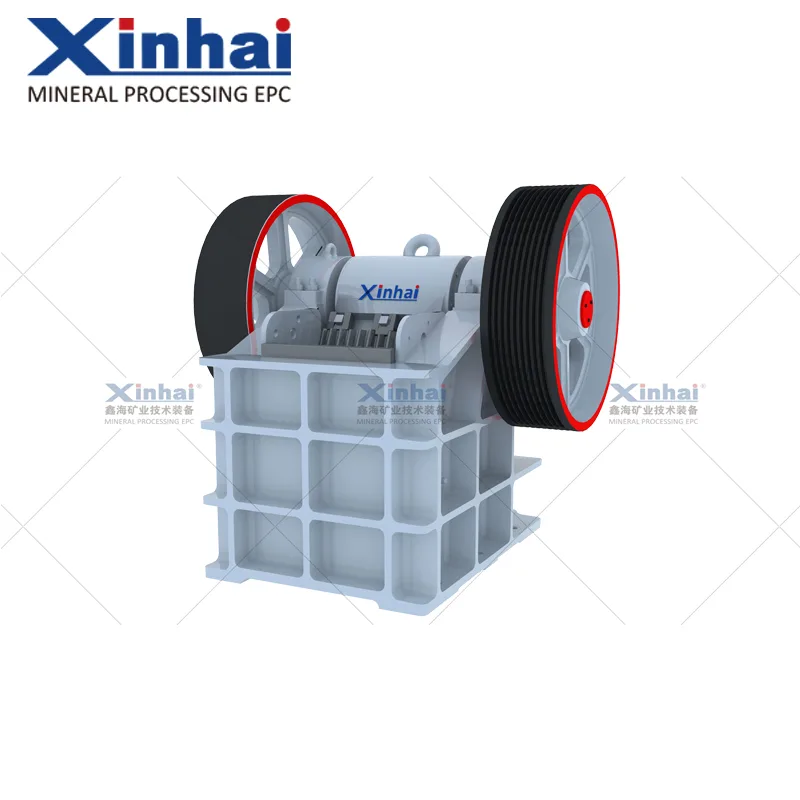
Jaw crusher
PE series for primary crushing and PEX series for secondary and fine crushing.
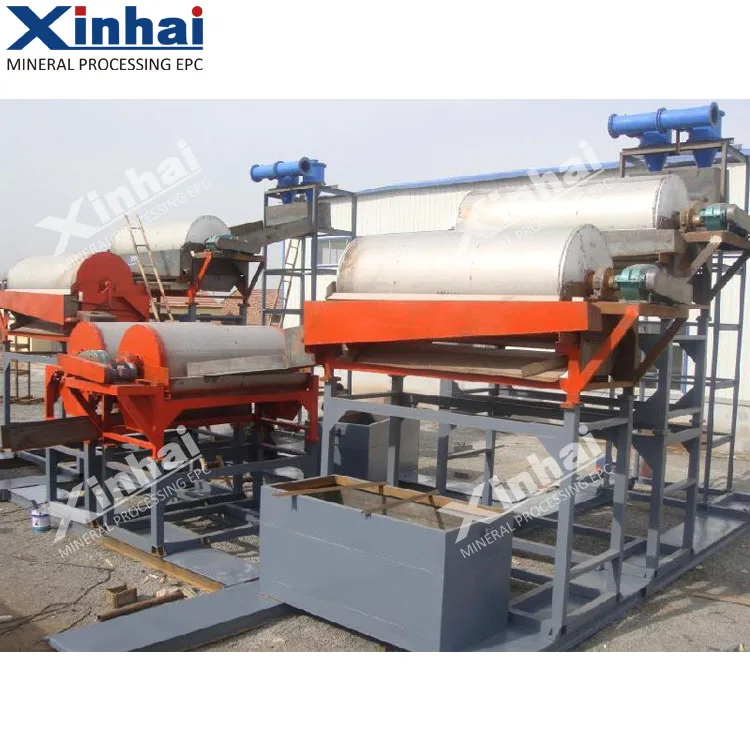
Dry magnetic separator
Dry drum separation for pre-concentration and iron removal.
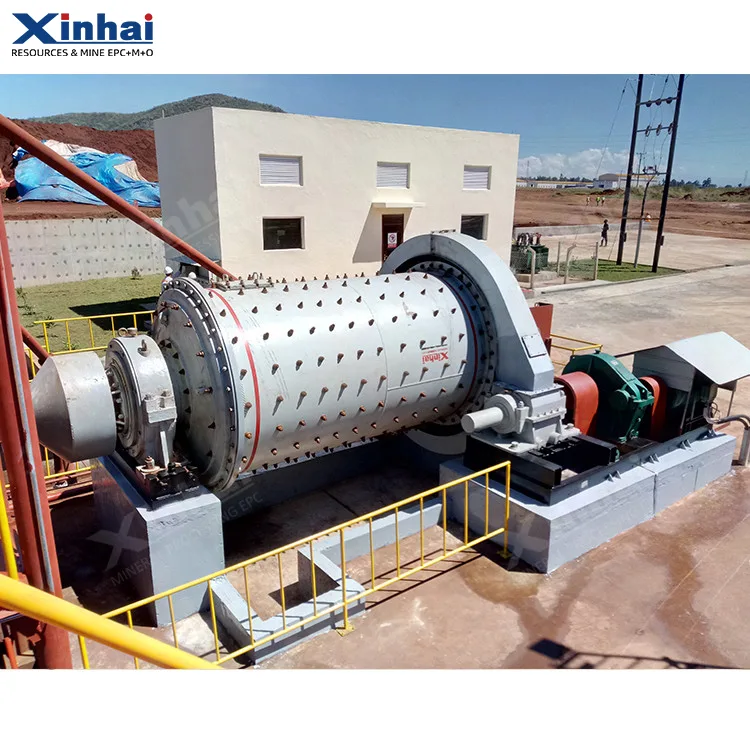
Ball mill
Wet grid mills for primary grinding and overflow mills for secondary grinding.
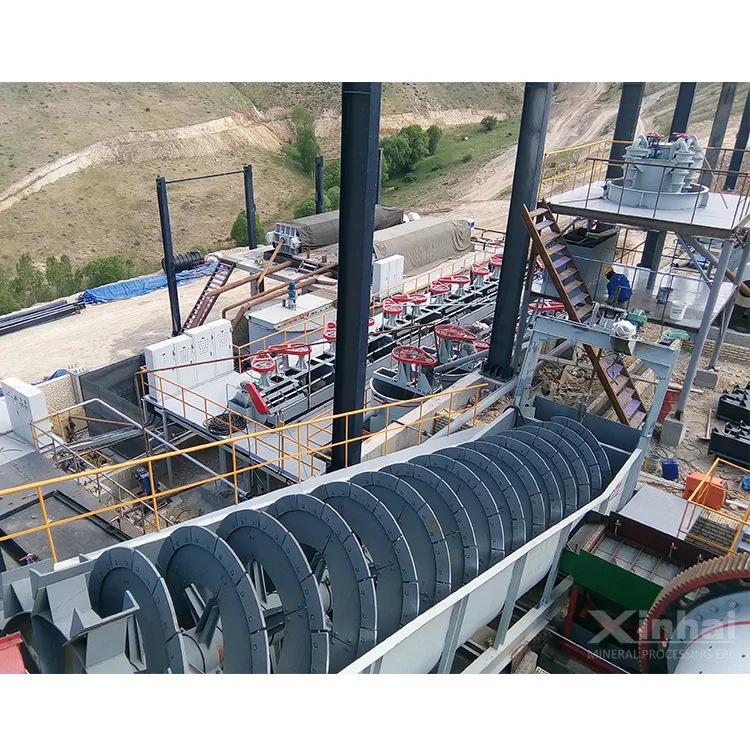
Spiral classifier
High weir classifier for closed circuit grinding and ore washing.
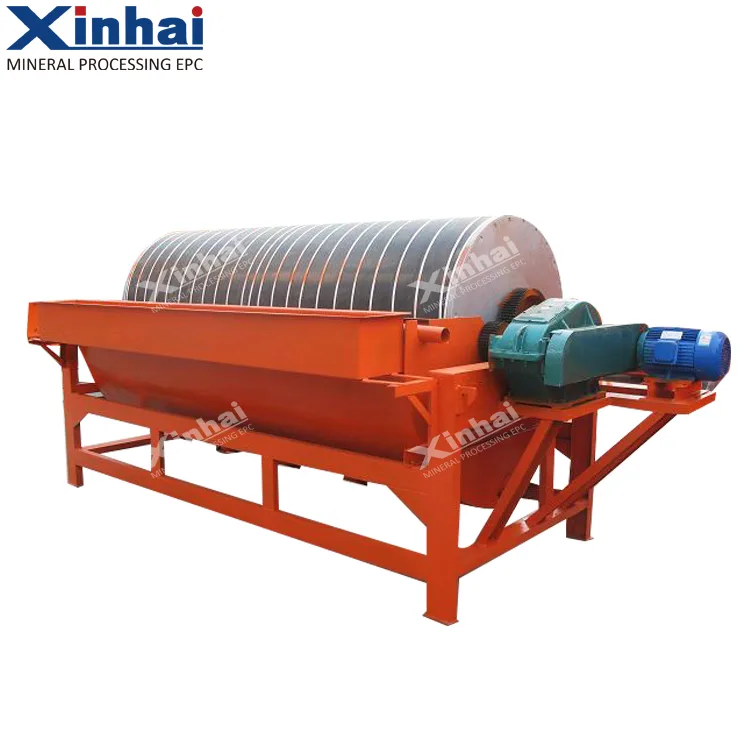
Magnetic separator
Wet and dry drum, high intensity and high gradient separators.
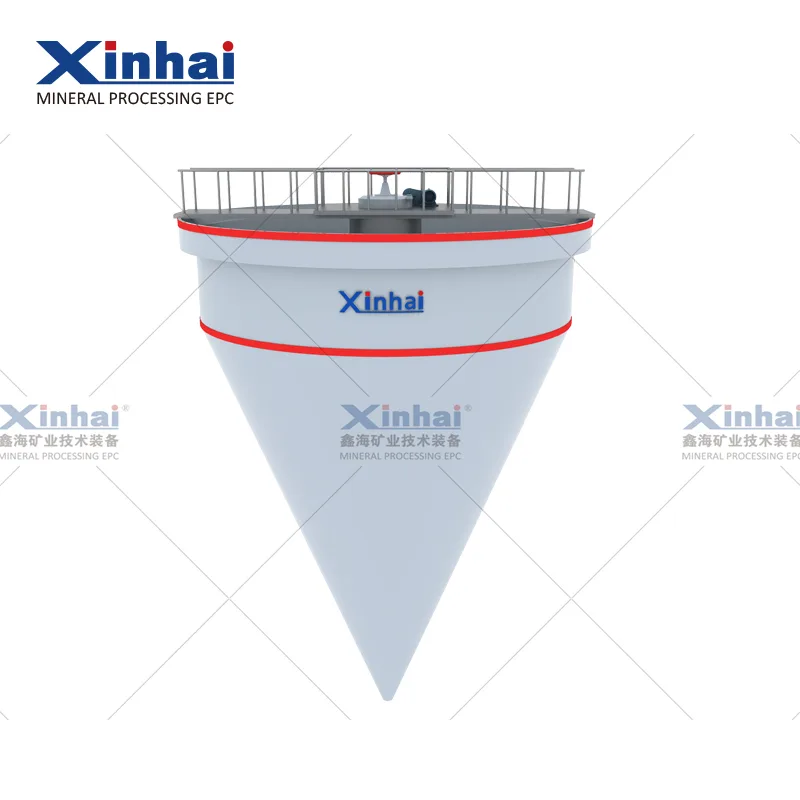
Thickener
Deep cone and high efficiency thickeners up to 100 m diameter.
Reference projects
Figures are those reported for these projects in the Xinhai project and test brochures.
3,500 t/d iron plant, concentrate at or above 65% Fe with yield around 31%
EPC+O3 Mt/a iron processing plant
Plant scope0.1 Mt/a high purity iron powder, TFe 52.77% at 48.06% recovery in test work
Test workCommon questions
What concentrate grade is achievable?
How are refractory iron ores handled?
Is dry magnetic separation useful before grinding?
Related
Mongolia case study
3,500 t/d iron concentrator delivered and operated under an EPC+O contract.
Case studyMagnetic equipment
Wet and dry drum, high intensity and high gradient separators from our own bases.
EquipmentTest work
Magnetic and roasting test work with field intensity and feed size as the controlled parameters.
Test workWhat to have ready before anyone quotes you a flowsheet
The data that decides an iron route, who produces each piece of it, and why the sample matters more than the assay.
Before a flowsheet exists, somebody has to answer one question about your ore: which mineral holds the iron, and how strongly does it answer a magnet? An Fe percentage won't tell you. Two ores that assay the same can need plants that cost very different money to build and very different money to run.
So an enquiry that gets a useful answer arrives with more than a grade.
What travels with the sample
- A composite, not a showpiece. Drill core or a channel composite covering the ore types you'll actually mine, weathered upper zone included. A hand-picked lump of massive magnetite gives a beautiful number and a worthless design basis.
- The full assay suite. Total Fe and FeO, since that ratio hints at the magnetite-hematite split. Then SiO2, Al2O3, P, S and loss on ignition. The JORC checklist asks reserve estimators what allowance they have made for deleterious elements, and everyone downstream of you will ask the same thing.
- Mineralogy and grain size. Liberation size sets grinding power, and grinding power moves operating cost more than any other line on the sheet.
- Moisture and clay content. Sticky, clay-bearing feed rules out some dry pre-concentration outright and changes how crushing and screening get selected.
- The product you intend to sell. Concentrate, pellet feed, sinter feed or lump, with the impurity ceilings your buyer will hold you to.
- Mine plan and tonnage. Head grade moves across a pit life. The circuit has to survive the first three years and the long-run average, and those are rarely the same ore.
Who is supposed to produce which number
Sample provenance and grade continuity belong to your geologist or Competent Person. Assays and mineralogy belong to an accredited laboratory. Route selection and equipment sizing belong to a process engineer, and that engineer should not also be the person who picked the sample. JORC's Table 1 comes at it from the data side, asking whether sample sizes suit the grain size of the material and how representative the metallurgical test work actually was.
Keep those three roles apart and most bad flowsheets die cheaply, on paper, before anyone pours concrete. Our test work programme and mine design practice are organised on that split, and what you send decides how much of the work is real.
When drum magnetic separation is the wrong answer
Four situations where low intensity magnetic separation doesn't earn its capital, and what replaces it.
Start with the case that equipment sellers rarely raise. Sometimes the ore is already close to a product.
1. Crushing and screening is sometimes the whole plant
Geoscience Australia describes hematite and magnetite ore processing alike as crushing, screening and grinding to produce lumps and fines, with magnetic separation the further step that turns magnetite into a concentrate. The mineral name on its own therefore does not decide whether you build a beneficiation plant. Grade and impurities do. Where the ore already sits at direct-shipping grade and inside the ceilings your buyer holds you to, a beneficiation plant is capital working against you: build the crushing and screening train, the stockyard and the haul route, then put the rest into logistics. That is a narrow group. The same agency records that many iron ore mines employ some form of beneficiation, and that ore processing facilities have been built at operating mines to treat low-grade iron ore. Where hematite grade slips, the arithmetic turns around again. Geoscience Australia notes that deposits once needed better than 60% Fe to be commercially viable, and that some now work at 56% to 59% Fe.
2. The iron is there but weakly magnetic
Hematite, goethite, martitised magnetite. Low intensity drums barely register them, and adding drums won't fix it. Each alternative carries a different bill. High intensity and high gradient separation is a power question. Reverse flotation is a reagent, water-quality and tailings-chemistry question. Magnetising roasting is a fuel question. Gravity separation is a particle-size question. Test work chooses among them. No catalogue can.
| Route | Where it fits | What it charges you |
|---|---|---|
| Dry pre-concentration | Coarse liberation, dry feed, barren rock worth rejecting early | Fails on wet or clay-bearing ore |
| Wet low intensity drums | Magnetite | Little help on weakly magnetic iron |
| High intensity / high gradient | Fine, weakly magnetic hematite and goethite | Power draw, matrix wear and blinding |
| Gravity (spirals, jigs) | Coarse liberation with real density contrast | Separation sharpness falls away in the fines |
| Reverse flotation | Silica rejection to lift final concentrate grade | Reagents, water quality, tailings handling |
| Magnetising roasting | Refractory ores that resist everything above | Fuel, off-gas handling and tight process control |
3. The concentrate is not the finish line
USGS states it plainly in its iron ore commodity summary: iron ore is used directly as direct-shipping ore, or converted into briquettes, concentrates, DRI, iron nuggets, pellets or sinter. It also records that United States resources are mainly low-grade taconite-type ores requiring beneficiation and agglomeration before commercial use. A fine magnetite concentrate can be hard to sell in that form. Pelletising or sintering then becomes a second project with its own capital, fuel supply and permits, and it belongs in the scope conversation on day one rather than at handover.
4. Liberation sits below what the mill can pay for
Finely disseminated iron pushes the grind finer, the finer grind pushes power consumption up, and past a certain point the deposit stops being a mine and becomes a research programme. That point is worth finding in a laboratory. Finding it in year two of operation is expensive. Route decisions on other ore bodies sit under our ore-type solutions, and the separators themselves come from our own manufacturing bases.
Where the delivery boundary should sit on an iron plant
Four contract shapes, and the acceptance numbers each one has to carry on an iron concentrator.
Same plant, same flowsheet, four contracts. What changes is who holds the packages, who absorbs interface risk, and who is standing in the control room the day the plant has to make grade.
What each shape actually moves
- EPCM. You hold the equipment and construction contracts; we engineer, procure on your behalf and manage the site. Price transparency stays at package level and so does your control. Interface risk stays with you as well, and on an iron concentrator that risk is unusually loaded: the separator supplier sizes against a grind the mill supplier has to deliver, and the dewatering plant is sized against a concentrate size distribution that neither of them owns.
- EPC. One contract, one counterparty, one completion date. Interface risk crosses the table. You hold fewer levers mid-project in exchange, and changes cost more. Our 1,200 t/d fluorite plant in Italy ran this way, with CE conformity carried through the delivery.
- EPC+O. Whoever built the plant stays to operate it, so ramp-up disputes lose their opposing side. The 3,500 t/d iron concentrator in Mongolia is delivered and operated on this basis, and the way its performance is reported shows why the shape suits iron: concentrate at or above 65% Fe, yield around 31%, and a secondary concentrate at 50 to 60%.
- Operation only. The plant exists and you want it run differently, so the contract buys operating discipline rather than steel. A 0.5 Mt/a wollastonite mining contract in Jiangxi runs on that basis, on fixed cost.
Remuneration shape matters as much as scope, and the two get confused. Our Zimbabwe spodumene delivery, which we built and then operated under an EPC+M+O contract, is remunerated on cost plus profit sharing; the Jiangxi wollastonite contract runs on fixed cost. Those two structures create opposite incentives, one paying against what the plant produces and the other against a service performed to a standard, and choosing the wrong one is a quiet, common mistake.
Writing the acceptance test on an iron plant
Whichever shape you sign, the performance test is the clause that decides what the shape was worth. Iron makes that clause harder than most ore types, for reasons worth setting out before basic engineering starts.
- Grade on its own is not a guarantee. Any concentrator can hit a headline Fe number by sending iron to tailings. The Mongolian plant is described by three figures rather than one: concentrate grade, yield, and the secondary concentrate that carries the middlings. Name grade, name recovery or yield, and name the head grade they are measured against, or the guarantee is decorative.
- Fix the product specification first. USGS quotes the world reference price against fines at 62% Fe, cost, insurance and freight, Tianjin Port, and that is the benchmark most iron revenue is indexed to. Selling into direct reduction is a different target: Midrex writes that direct reduction can operate on pellets of 65% Fe or lower, typical of blast furnace grade, while the preferred feed for a DR plant is 67% Fe or greater. The last few points of Fe are where the flotation and dewatering capital lives, so the product choice sizes the plant. It is an engineering decision wearing a commercial hat.
- Impurity ceilings belong in the same clause as Fe. Silica, alumina, phosphorus, sulfur, loss on ignition and product moisture. Reverse flotation is the stage that carries silica rejection, so whoever guarantees a silica figure has to own reagent supply and raw water quality with it. Guaranteeing concentrate chemistry while somebody else controls the water is a dispute waiting for a dry season.
- Say which ore the test runs on, and who supplies it. Head grade and the magnetite-to-hematite ratio both move across a pit life. A test run on the softest, highest-grade ore in the pit proves nothing about year four, because drum separation and the high intensity or flotation routes do not carry the same tonnage at the same power. Name the composite, its source and its assay in the contract, not in a commissioning email.
- Define off-spec feed before it turns up. Agree in writing whether feed outside the design envelope is a relief event for the operator or a performance failure. On iron the usual trigger is not a fall in Fe at all; it is a shift in mineralogy or a slug of clay out of the weathered zone, and both change which separator is doing the work.
- Tailings and water sit on the critical path. At a yield around 31%, most of what enters an iron concentrator leaves as tailings, so storage capacity and water recovery often set the schedule through permitting rather than through construction. Whoever holds the construction scope should also hold the interface to the tailings and water design.
Three questions that settle it
- Do you have an operating team, or would you be hiring one during commissioning? That is the EPC versus EPC+O decision stated honestly. A remote iron plant with no local operating pool hands you a commissioned facility and a recruitment problem on the same day.
- Is your funding drawn against fixed milestones? Lump-sum EPC prices that certainty into the contract. EPCM often looks cheaper at signature and stays open at the end.
- How variable is the ore? On an iron body the variability that counts is the magnetite-hematite split and the clay in the weathered zone, since those move the route rather than only the numbers. Variability rewards keeping the party that designed the circuit accountable for what it produces. Stable, well-characterised feed makes the cheaper, more fragmented structure defensible.
The delivery structures themselves are set out under EPC turnkey delivery for concentrator projects and contract mining and plant operation.
Sources
External references for the industry context on this page. Project figures come from our own project brochures.
Geoscience Australia - Iron (Australian mineral facts)Hematite and magnetite ore processing includes crushing, screening and grinding to produce hematite lumps and fines, and magnetite ore is further processed through magnetic separation to produce a concentrate; some deposits can now have iron grades between 56 and 59 percent iron and be commercially viable, where deposits previously needed more than 60 percent iron; many iron ore mines employ some form of beneficiation and ore processing facilities have been constructed at operating mines to beneficiate low-grade iron ores.
USGS Mineral Commodity Summaries 2026 - Iron OreIron ore is used directly as direct-shipping ore or converted to briquettes, concentrates, DRI, iron nuggets, pellets or sinter; low-grade taconite-type resources require beneficiation and agglomeration prior to commercial use; the quoted global price is for imported iron ore fines of 62 percent iron content, cost, insurance and freight, at Tianjin Port, China.
Midrex Technologies - DR-Grade Iron Ore Pellets: A Supply OverviewDirect reduction processes can operate with pellets having an iron content of 65 percent or lower, typical of blast furnace grade pellets, but the preferred feed for a DR plant has an iron content of 67 percent or greater.
JORC Code 2012 Edition (Joint Ore Reserves Committee, AusIMM / AIG / MCA)Table 1 asks whether sample sizes are appropriate to the grain size of the material, how representative the metallurgical test work was, and what allowances were made for deleterious elements.
Send the assay and the tonnage target for your Iron project.