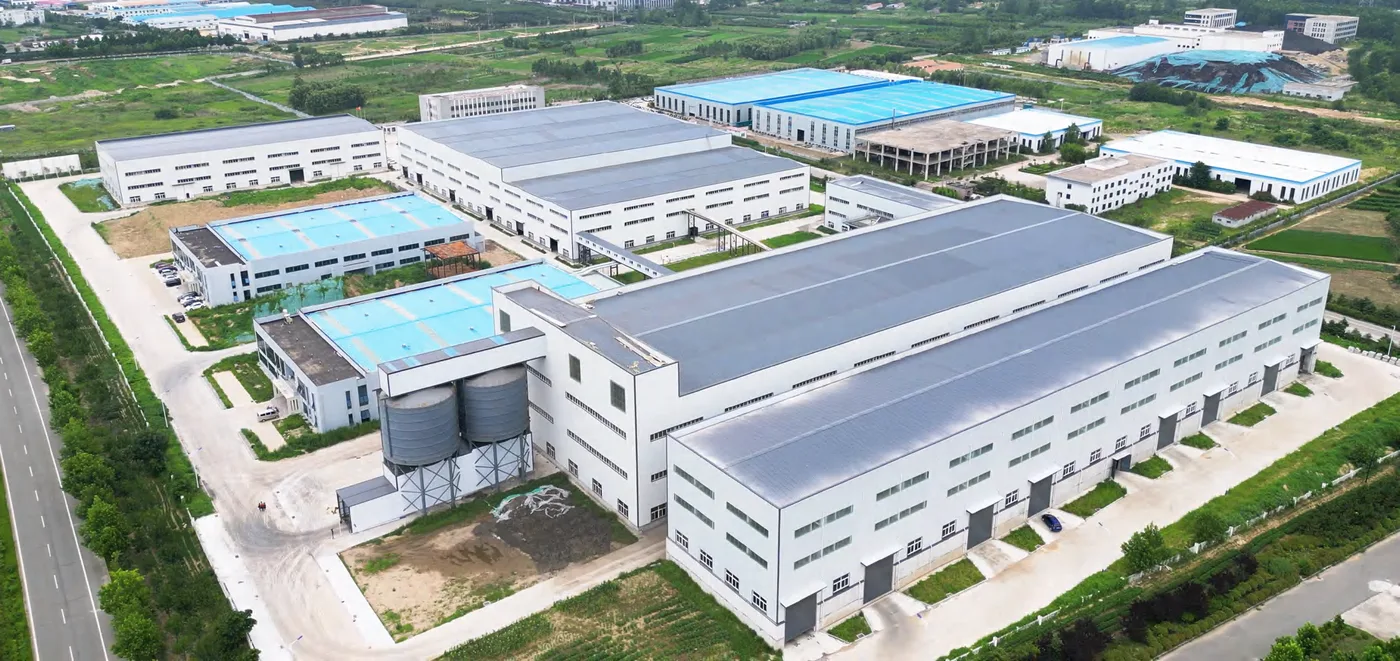
Design that carries the project from resource to construction drawings
Mine, plant and tailings designed in one institute, in the sequence a financier expects to see, with three dimensional BIM coordination and clash detection before anything is fabricated.
Stages and deliverables
| Stage | Core work | Deliverable |
|---|---|---|
| Scoping and PEA | Preliminary economic assessment, option screening | Concept design report |
| Prefeasibility, PFS | Method selection, infrastructure, financial evaluation | Feasibility study report |
| Feasibility, BFS or DFS | Orebody modelling, reserve estimation, full study | Bankable feasibility report |
| FEED | Process flow diagrams, general arrangement, CAPEX estimate | Basic engineering design report |
| Detailed design, DED | Structural drawings, construction drawings, material take-off | Issued-for-construction package |
Four things the design institute is built around
- Compliance with GB codes, Eurocodes, US and Australian standards
- Deliverables prepared for JORC, NI 43-101 and VALMIN reporting
- Modular engineering for fast erection on remote sites
- Design integrated with procurement, construction and operation

Digital delivery
Design work is coordinated in three dimensional BIM with automatic clash detection, and handed over with VR and AR based digital project delivery including virtual commissioning of the digital twin. The practical value is narrow but real: interferences between piping, structure and equipment are found before steel is cut, and the operating team can walk the plant before it exists.
Design decisions lock most of the life-of-mine cost. Xinhai puts that figure at more than 70% of life-of-mine cost committed during design, which is the argument for spending longer on the flowsheet than on the tender.
Related services
Test work first
Design inputs come from the metallurgical test report, not from a comparable plant.
Test workModular engineering
Where site access or schedule is the constraint, the plant is designed as shippable modules.
Modular plantsBuild it with us
The same institute supports procurement, construction and commissioning under an EPC contract.
EPC deliveryCommon questions
Which design stages does Xinhai cover?
Are the deliverables usable for financing?
How large a plant can be designed?
What does the design institute consist of?
The inputs a design institute cannot produce for you
Most projects that stall in engineering aren't stalled on engineering. They're stalled on inputs nobody was asked to produce.
Design eats data. When the data isn't there, the study still gets written — it just gets written on assumptions, and assumptions are what show up later as change orders. So before you brief any engineering house, settle who owns each input.
The resource side stays on your desk
Under the CIM Definition Standards that NI 43-101 relies on, a Mineral Reserve is the economically mineable part of a Measured or Indicated Resource, defined by studies at pre-feasibility or feasibility level with the Modifying Factors applied. A Pre-Feasibility Study is the stated minimum prerequisite for converting Resources into Reserves. And Inferred material must not be included in the economic analysis, production schedule or mine life of a publicly disclosed PFS or FS. Read that twice if your whole block model is Inferred. Your next dollar belongs in drill core, not in a flowsheet.
Reporting works the same way. JORC asks that public reporting be based on and fairly reflect documentation prepared by a Competent Person, that the company obtain that person's prior written consent to the form and context in which the work is reported, and that the person satisfy the Code's membership test and a minimum of five years' experience with the style of mineralisation and the activity being undertaken. An engineering contractor does not supply that person for you, and shouldn't. Bring your own geologist. We design against the model they sign.
The ore side is testable, and it's cheap next to getting it wrong
Send a sample that represents what you'll actually feed, not the richest intersection in the core shed. That means a composite spanning ore types, oxidation zones and the low-grade material that will inevitably enter the mill in year three. It also means an assay suite wider than the payable metal: acid-consuming carbonates, organic carbon that robs loaded gold, arsenic, clays, fluorine, whatever the local geology threatens you with. Xinhai reports around 200 mineral processing test programmes a year across 70+ ore types, run in a CNAS-accredited laboratory under ISO/IEC 17025, and the report a programme produces is the real design input. See test work and research for what a programme covers.
The site side is a list you can write this afternoon
- Water. Source, licensed volume, seasonal reliability, salinity. The water balance shapes thickening, filtration and recycling — not the reverse.
- Power. Distance to grid, firmness of that grid, or the fuel logistics behind gensets. A comminution circuit argument is usually a power argument wearing a different hat.
- Access. Road widths, bridge and axle limits, port handling and crane capacity. These put a hard ceiling on module size, which is why they belong in the design brief and not in the shipping plan. See modular processing plants.
- Climate and terrain. Rainfall intensity, seismic zone, altitude, temperature extremes, and how much flat ground exists within pumping distance of the pit.
- Legal and social. Permit sequence, land tenure, local content obligations, closure bonding.
Those last two bullets are Modifying Factors in the CIM sense — mining, processing, metallurgical, infrastructure, economic, marketing, legal, environmental, social and governmental. A design institute answers the mining, processing, metallurgical and infrastructure factors from the engineering side. The legal, environmental, social and governmental ones you produce yourself or buy from a local consultant. The economic and marketing ones need both desks at once, because the capital estimate is ours and the price deck is yours. Decide which name sits against each factor at kickoff, in writing.
Four projects that should stop short of the full ladder
The five-stage ladder on this page — scoping and PEA through issued-for-construction drawings — is not compulsory. Buying the whole of it when your project doesn't need it burns months, and buying none of it when it does is worse. Four situations where we'd tell you to spend elsewhere:
- Resource is entirely Inferred. Stop at scoping or PEA. A bankable study built on material that can't legally enter the cash-flow model is decoration.
- Small tonnage, short life, hard to reach. A standardised modular line usually wins. You give up some circuit optimisation and you get erection speed and shippability back. That's a trade, and it's often the right one.
- The plant already exists and underperforms. Redesign is rarely the fix. Recovery problems tend to live in the mineralogy, the reagent regime or the operating discipline, and they're diagnosed by test work plus an audit of the running circuit. Where the finding is that the plant is built right and run badly, contract mining and operation is the scope that addresses it.
- You already have an owner's engineer. Then buy discipline packages or management, not a turnkey wrap. Paying twice for the same interface is a classic.
Worth being blunt about one limit: our design institute's Class B qualification is a Chinese metallurgical-sector credential. It buys you an institute that can produce the drawings; it does not let anyone here seal them in your jurisdiction. Where local law requires a licensed local practice to stamp the issued-for-construction set, that practice is engaged alongside us, and the split gets written into the contract rather than discovered at permitting.
Three ways buyers get this wrong
- Copying the neighbour's flowsheet. Same district, same commodity, different mineralogy. Grind size, reagent scheme and recovery all move with liberation and gangue chemistry, and none of that is visible from the fence line.
- Designing from a high-grade composite. The plant then meets its numbers during commissioning and drifts for the next decade. Feed variability belongs in the test programme, not in the warranty dispute.
- Leaving tailings and water to detailed design. The Global Industry Standard on Tailings Management organises its expectations around six topic areas, 15 principles and 77 auditable requirements, and one of those topic areas asks for a multi-disciplinary knowledge base and site characterisation to be built early and used iteratively across the facility's life. Site investigation for the tailings facility is a long-lead item. Start it with the drilling, not with the drawings.
If you buy the design and somebody else builds it
Design is procurable on its own. Three things decide whether the package survives leaving our office: what is in it, who owns it, and who pays when it changes.
Plenty of owners buy engineering without buying the build. You may already hold a contractor, a local management house or an owner's team, and want the institute for drawings only. That is a normal purchase. Which contract letters end up on the cover — who holds the package contracts, who carries interface risk — is a separate question answered on EPC turnkey delivery for the build and contract mining and operation for the running plant. What follows is the part that decides whether a design bought on its own is buildable by somebody who did not draw it.
What the package has to contain before a third party can build from it
A design only its author can interpret is not a deliverable, it is a dependency. Specify the contents at contract signature, where it costs nothing:
- A design basis document naming the code set, discipline by discipline. Deliverables here are prepared against GB codes and, where the project calls for it, Eurocodes or US and Australian standards — but "where the project calls for it" has to be written down before detailed design, not discovered at fabrication. Where the destination jurisdiction attaches conformity marking to the plant as installed, the requirement reaches back into engineering and procurement: the fluorite plant delivered in Italy was carried under CE conformity throughout, which is a design instruction rather than a shipping formality.
- Process design criteria, mass and water balance, P&IDs and a control philosophy. Drawings say where the pipe goes. Only these say what the circuit was assumed to do, which is what an operator's engineer needs when the ore changes.
- An equipment list written as duty specifications. More on that below — it is the single item most often handed over in a form nobody else can tender.
- The 3D model in a neutral format, with the clash report. Native files tie you to the same software and the same office. A neutral export plus the clash log lets your contractor redo coordination when the layout moves on site, and it will move.
- Civil and structural interface data. Loads, anchor patterns, service points, and the hold points where vendor data has to be back before foundations are poured.
- Document control conventions. Units, document language, revision and transmittal protocol, and who is entitled to issue a revision. Dull to agree, and the reason things get built to superseded drawings on split contracts.
Who owns the drawings, and what owning them buys
Four different rights travel under the word ownership, and they are not the same purchase: use of the package on the one site it was drawn for; the right to issue it for competitive tender to builders who are not us; the right to reuse it on a second site or a duplicate line; and the right to modify it without the designer countersigning. Ask for each by name, because silence defaults to the narrowest one. Two consequences are worth saying out loud. Design responsibility tends to follow whoever last altered the drawing, so an unreviewed field change quietly moves liability to the party that made it. And as-built drawings with an updated model are a deliverable separate from the issued-for-construction set — if nobody is contracted to produce them, the plant gets operated for thirty years from documents that stopped being true during construction.
Who pays when the design changes
Changes arrive from three directions and they behave differently. Owner-driven changes are a negotiation under any contract shape. Interface-driven changes — the delivered machine differs from the assumption the layout was drawn on — are absorbed inside one organisation when design and build sit together, and become a claim between two contracts when they are split; the countermeasure on a split contract is to keep design under retainer through construction and commissioning, with an agreed turnaround time for vendor drawing review and one named person who may approve a deviation. Ore-driven changes are the expensive kind and the avoidable kind: a variability programme that reports after FEED redraws the flowsheet once structures and long-lead equipment are already committed. Close that programme out before basic engineering rather than alongside detailed design.
The awkward question about the equipment list
Ask it, because we would ask it in your position. Xinhai draws and also manufactures, with an in-house envelope reaching mills of 7 m diameter, flotation cells of 320 cubic metres, leaching tanks of 20 m diameter and thickeners of 100 m diameter. A layout drawn around sizes that one supplier happens to build is not a neutral document, whoever drew it. If you intend to tender the mechanical scope, require the list as duty specifications — throughput, feed and product size, installed power, materials of construction, footprint and foundation loads — so any competent vendor can price against it. If you intend for us to supply, ask for the same specification anyway: it is what a commissioning test is later measured against, and equipment manufacturing should be quoting to a duty, not to a model number. Either way you end up holding a package that can be checked by somebody other than its author, which is the only honest test of a design deliverable.
Sources
External references for the industry context on this page. Project figures come from our own project brochures.
CIM Definition Standards for Mineral Resources and Mineral Reserves (2014)A Pre-Feasibility Study is the minimum prerequisite for converting Mineral Resources to Mineral Reserves; Inferred Resources must not enter the economic analysis, production schedule or mine life of a disclosed PFS or FS; and the list of Modifying Factors.
JORC Code: Competent Person requirements (AusIMM / AIG / MCA)Public Reporting of Exploration Results, Mineral Resources or Ore Reserves must be based on and fairly reflect documentation prepared by a Competent Person; the company must obtain the Competent Person's prior written consent to the form and context of the report; and a Competent Person must hold recognised professional membership and a minimum of five years' relevant experience.
Global Industry Standard on Tailings Management (Global Tailings Review – UNEP, PRI, ICMM)The Standard is organised around six topic areas, 15 principles and 77 auditable requirements, and requires a multi-disciplinary knowledge base and detailed site characterisation to be developed and used iteratively across the tailings facility lifecycle.
Send us the ore, the tonnage target and the site conditions. We reply with a scoped proposal.