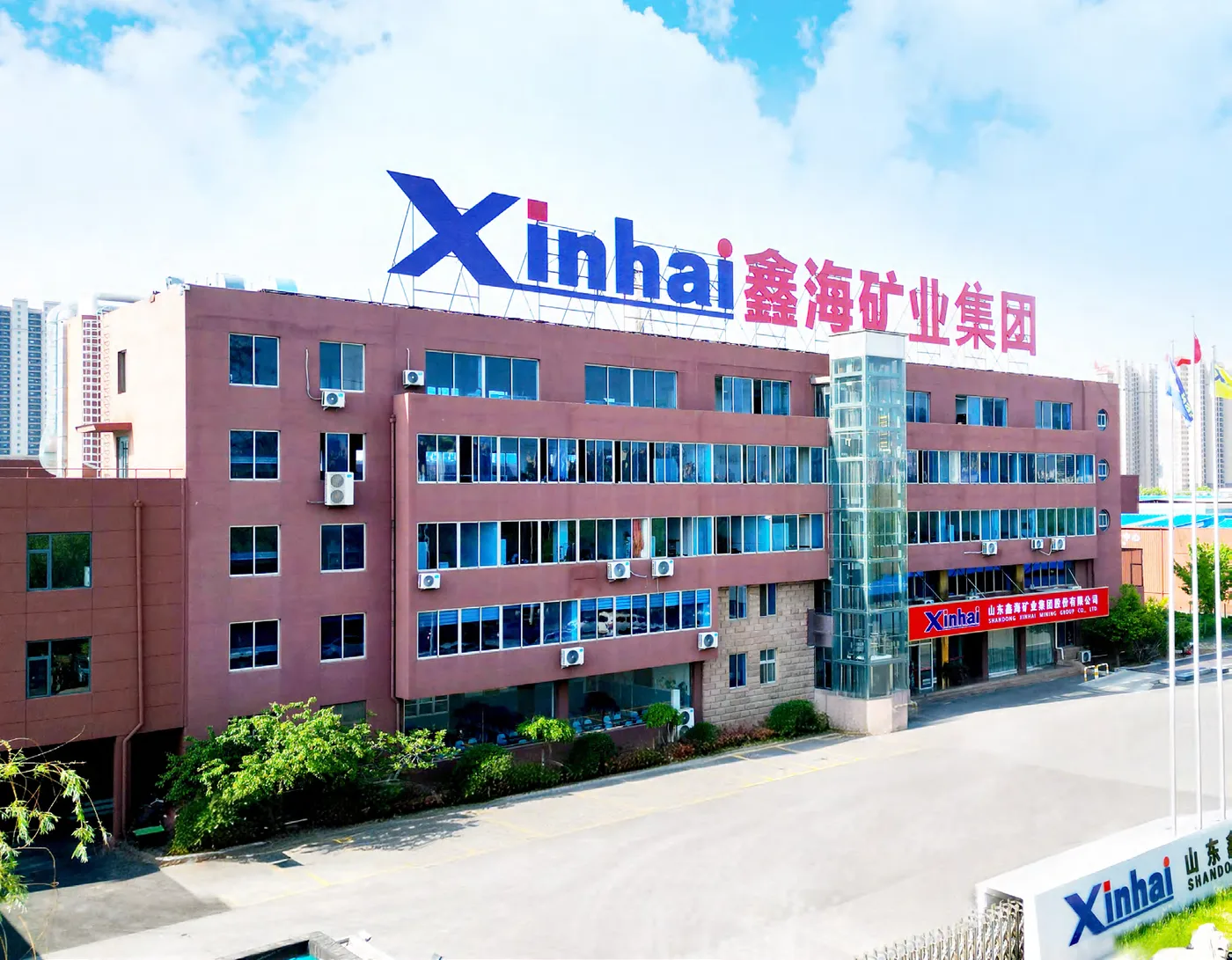
A mining group that invests in mines and builds them
Founded in 1997 and headquartered in Yantai, Xinhai runs two connected businesses: investing in mineral resources, and delivering mine services across the whole chain.
Two engines
- Mining investment and development
- Full industry chain mining services, EPC+M+O
- Branches in Australia, Kazakhstan and Ghana
- Headquarters at Yantai, Shandong, China

Investment positions
Xinhai participates as a shareholder in several international mining companies. Resource figures below are the ones published by Xinhai.
| Company | Commodity | Published resource |
|---|---|---|
| Ariana Resources Plc | Gold | 1.10 Moz at 1.52 g/t |
| St George Mining Limited | Niobium and rare earths | 280,000 t at 0.68% Nb2O5 |
| Flagship Minerals | Gold | 1.05 Moz at 0.69 g/t |
| Antilles Gold Limited | Gold, La Demajagua | 900,000 oz at 2.8 g/t Au |
| Verkhuba, Kazakhstan | Copper | 200,000 t at 1.4% Cu |
| Nachu | Graphite | 174 Mt at 5.4%, 98.5% purity product |
| SSH Group Ltd | Mining services, Australia | Service company shareholding |
How the group is organised
Research and design
Yantai Xinhai Mining Research and Design Co., Ltd. houses the mine research institute and the mine design institute.
Equipment and materials
Yantai Xinkuangfu Intelligent Equipment, Automation Technology and Material Technology companies cover machinery, control systems and wear materials.
Engineering and construction
Yantai Xinkuangfu Engineering Management Group holds the Class A mine engineering general contracting qualification.
Trade and overseas
Yantai Xinkuangfu Industry and Trade and Hong Kong Xinhai Mining Services support export and overseas contracting.
Where to look next
Technical strength
Three research institutes, five research centres and three manufacturing bases, with the equipment capability that follows from them.
Technical strengthQualifications
Construction, management system, product, laboratory and inspection certificates, listed with the issuing bodies.
QualificationsProject record
Delivered projects by region, with the reported outcome for each of the four detailed case studies.
ProjectsPurpose: turn mineral resources into long term value through engineering, manufacturing and lifecycle project services.
Two engines, and the question that comes with them
Holding equity in mining companies and bidding to build mines for other people are not neutral neighbours. One half of that helps you. The other half disqualifies us from something.
The investment engine isn't decoration. It puts us on the other side of the table often enough to know what an owner is signing, and what an owner regrets signing. That's the useful half.
Here's the half most contractors leave off the page. A company that is bidding to build your plant has a commercial interest in how your project gets described — that alone is the kind of circumstance the independence rules are written about, whoever the bidder is. In several jurisdictions the point isn't a matter of taste. It's written into the disclosure rules.
Keep the reporting with someone who has no stake
NI 43-101 treats a qualified person as independent of an issuer only where no circumstance could, in the opinion of a reasonable person aware of all relevant facts, interfere with that person's judgment regarding the preparation of the technical report. Section 5.3 then requires that independence for technical reports filed in defined situations, including where the document discloses for the first time mineral resources, mineral reserves or the results of a preliminary economic assessment on a property material to the issuer. JORC runs on the same instinct. Its clause 9 makes the company disclose any potential conflict of interest of the Competent Person or a related party, disclose any other relationship between that person and the company, and issue the report with that person's prior written consent as to the form and context in which it appears.
So don't ask us to sign your resource statement. Bring your own consultant, put their model in front of us, and we'll design against it. Our number is the plant. The orebody stays theirs.
One entity signs. The others owe you nothing unless you say so
A group can't be a counterparty. One named company will be — and every other entity listed above is a separate legal person with no obligation to you until the contract creates one. Which of our credentials carry legal weight outside China, and which are domestic only, is set out on qualifications. This is the part no certificate answers, and it is worth four questions in your first email rather than in contract review three months later.
- Put an entity against every block of scope, then make one of them carry all of it. Ask for design, manufacture, site works and export to be named with the performing company beside each, and for a clause keeping the contracting entity liable for the whole scope regardless of which affiliate performs it. Without that clause, a slippage in one shop turns into an argument about whose slippage it was, and you are not a party to the contract where the answer lives.
- Ask for security that outlives the argument. A parent company guarantee from the group holding company, or a bank performance bond, is what converts an affiliate's failure into your counterparty's problem. Check two things on the instrument: that it covers the same scope as the contract, and that it runs at least as long as the defects liability period. Security drafted narrower or shorter than the works is common and easy to miss at signature.
- Settle who owns the warranty before anything ships. The company that built a machine is usually the one issuing its warranty, and that is rarely the company signing your project contract. Either the contracting entity accepts warranty liability in its own name, or the manufacturer's warranty is assigned to you in writing and the manufacturer countersigns. Name the entity that will actually ship spare parts too — export frequently sits with a different company again, and a warranty you can't get parts against is a piece of paper. Equipment manufacturing sets out which base builds what.
- Send variations, notices and claims to one address. State which entity may issue and price a variation order, and that instructions from any other affiliate do not bind either side. If equipment supply sits on a separate export contract, check that both contracts carry the same governing law, the same dispute forum, and back-to-back notice periods for claims. Two contracts with two forums is how one delay becomes two arguments, in two places, at your cost.
Ask these before the quotation rather than during contract review. A contractor that has done international work will answer in a paragraph. The answers also move the price, which is the point — an entity that carries affiliate risk prices that risk in, and you would rather see it priced than discover it later.
Match the reference project to your own jurisdiction
Read the project record geographically, not only by tonnage. Most of it sits in Africa and Asia — gold, lithium, iron, copper, phosphate — and that's where site logistics, the labour model and the equipment supply chain have had the most rehearsal. Europe is thinner. The Italian fluorite plant at 1,200 t/d was our first full-scale EPC project in Europe, run with CE certification throughout.
When you ask for a comparable job, ask on three axes at once: ore type, throughput, and regulatory environment. Two out of three is easy to produce. Three is the one that tells you something. Where the third axis is weak, say so in your enquiry — it decides how much compliance work gets priced into the proposal instead of assumed away.
Sources
External references for the industry context on this page. Project figures come from our own project brochures.
National Instrument 43-101, Standards of Disclosure for Mineral Projects (consolidated text)Section 1.5 provides that a qualified person is independent of an issuer if there is no circumstance that, in the opinion of a reasonable person aware of all relevant facts, could interfere with the qualified person's judgment regarding the preparation of the technical report; section 5.3(1) requires independent qualified persons for technical reports filed in listed situations, including under paragraph (c)(i) where the document discloses for the first time mineral resources, mineral reserves or the results of a preliminary economic assessment on a property material to the issuer.
The JORC Code, 2012 Edition (Joint Ore Reserves Committee)Clause 9: any potential for a conflict of interest by the Competent Person or a related party must be disclosed in accordance with the Transparency principle; any other relationship of the Competent Person with the company making the report must also be disclosed in the Public Report; and the report must be issued with the prior written consent of the Competent Person as to the form and context in which it appears.
Send us the ore, the tonnage target and the site conditions. We reply with a scoped proposal.