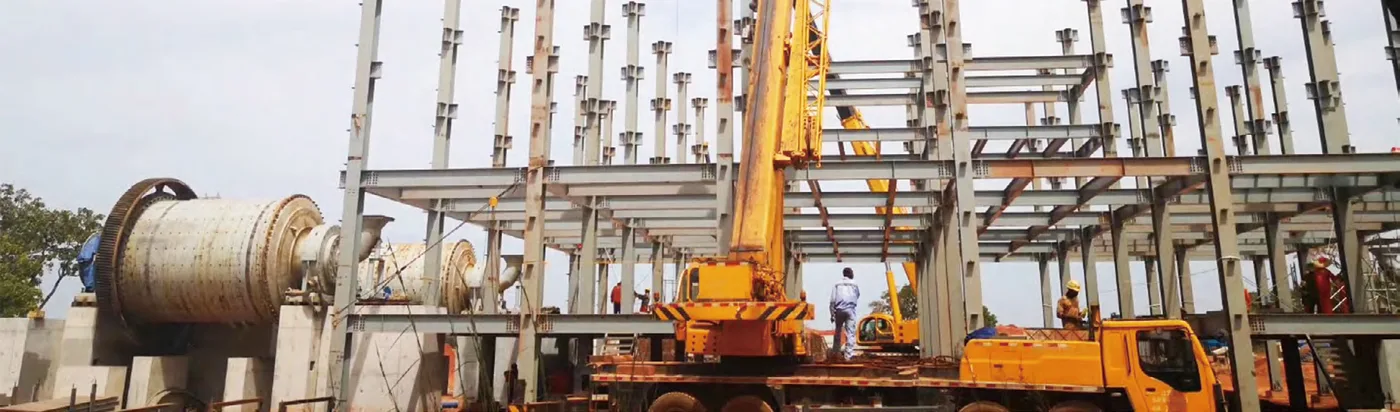
One contract from drawings to a plant that runs
Engineering, equipment supply, civil works, steel erection, installation and commissioning under a single contract, executed by our own design institute, factories and construction crews.
What sits inside E, P and C
Engineering
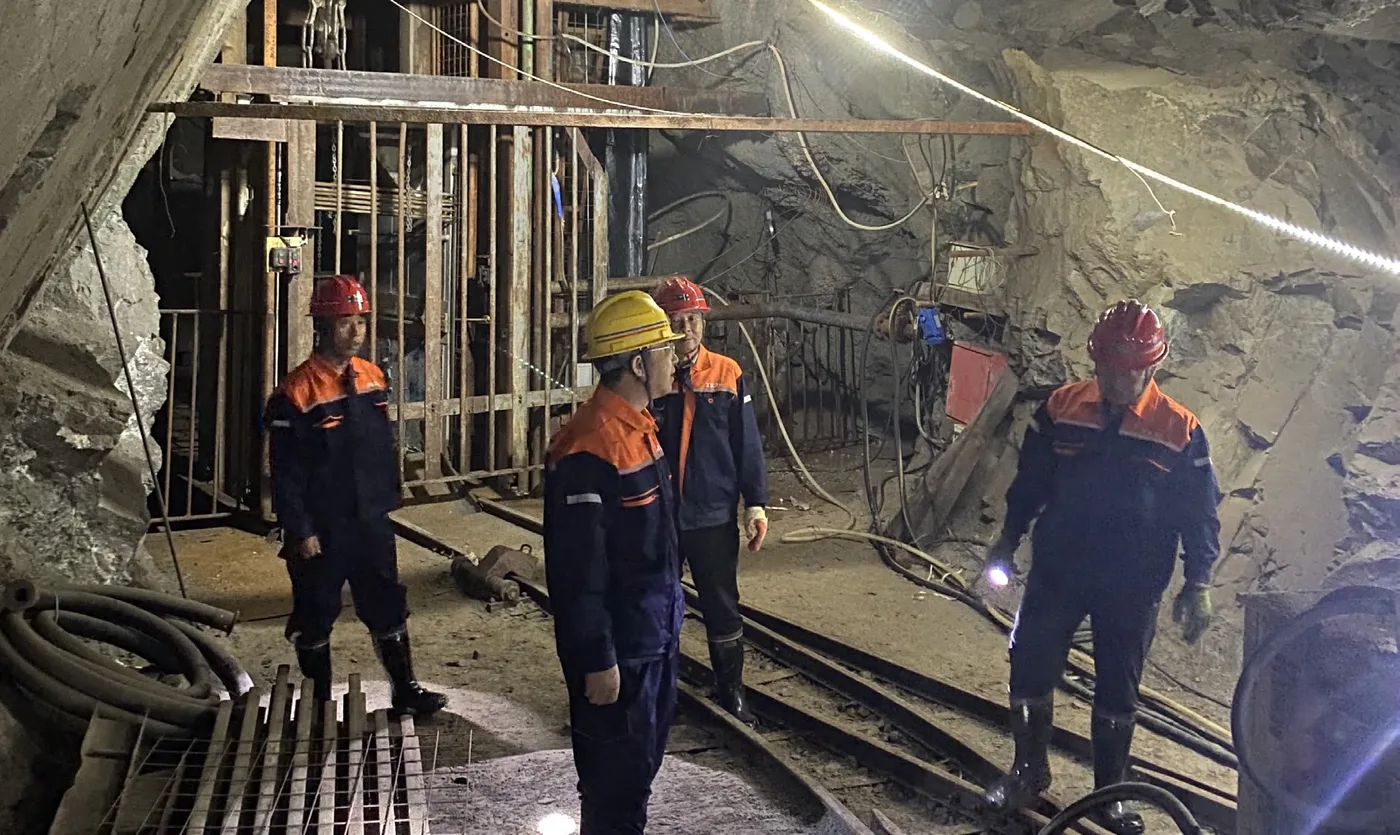
Project consulting, metallurgical testing at laboratory and semi-industrial scale, mine planning and design, flowsheet development, plant design, equipment selection and cost estimation, tailings storage design, plus slope stability, blasting and backfill test work.
Procurement
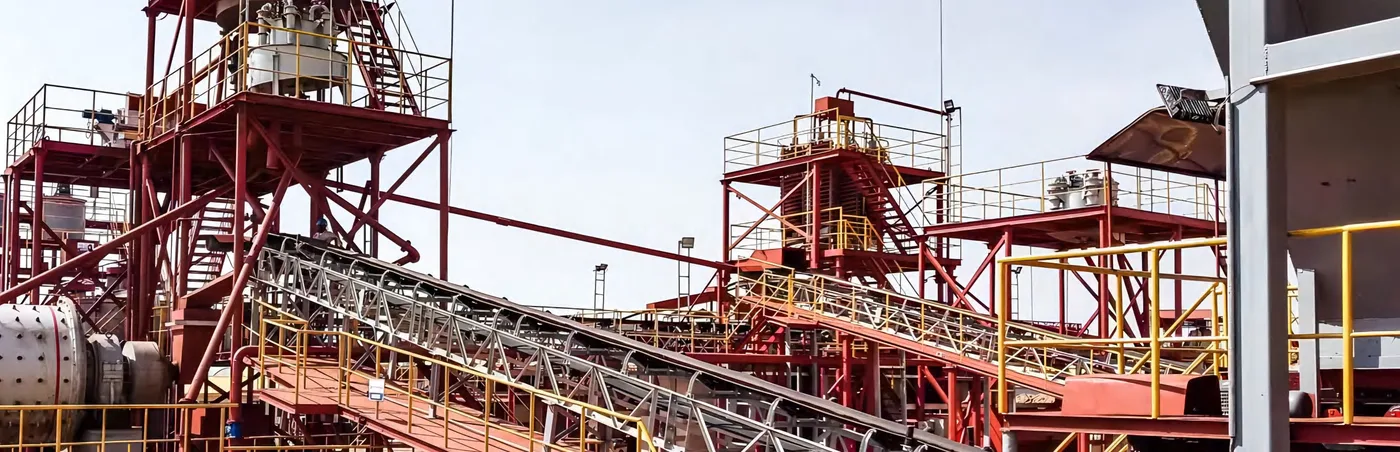
Mining and processing machinery, installation and support materials, modular buildings, steel structure workshops and complete modular production lines, manufactured then packed and shipped as one scope.
Construction
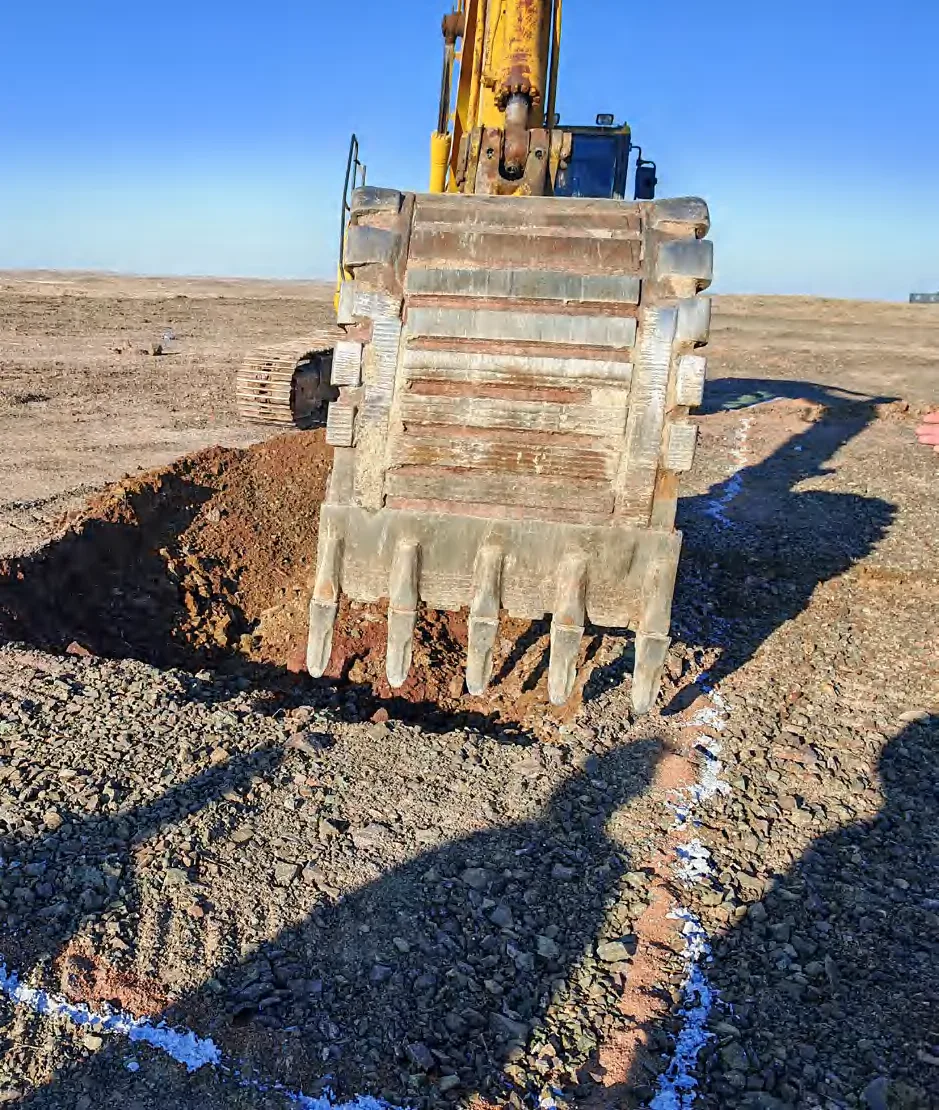
Shaft and tunnel work, drilling and blasting, plant foundations and buildings, tailings dam construction with seepage control and monitoring, steel structures, prefabricated site buildings, equipment installation and commissioning.
Held under a Class A construction qualification
- Class A general contracting for mine engineering
- Professional construction contracting qualification
- Grade III blasting operation qualification
- Tailings storage facility design qualification
Where cost and schedule usually leak
| Symptom | Root cause | Countermeasure in scope |
|---|---|---|
| Capital cost overrun | Design copied rather than derived from the orebody | Flowsheet from test work, one design per orebody |
| Late start-up | Equipment mismatch and uncoordinated site works | Capacity matched across the circuit, installation simulated before mobilisation |
| Rebuild immediately after commissioning | No owner of the plant after handover | Commissioning to nameplate, then optional operation contract |
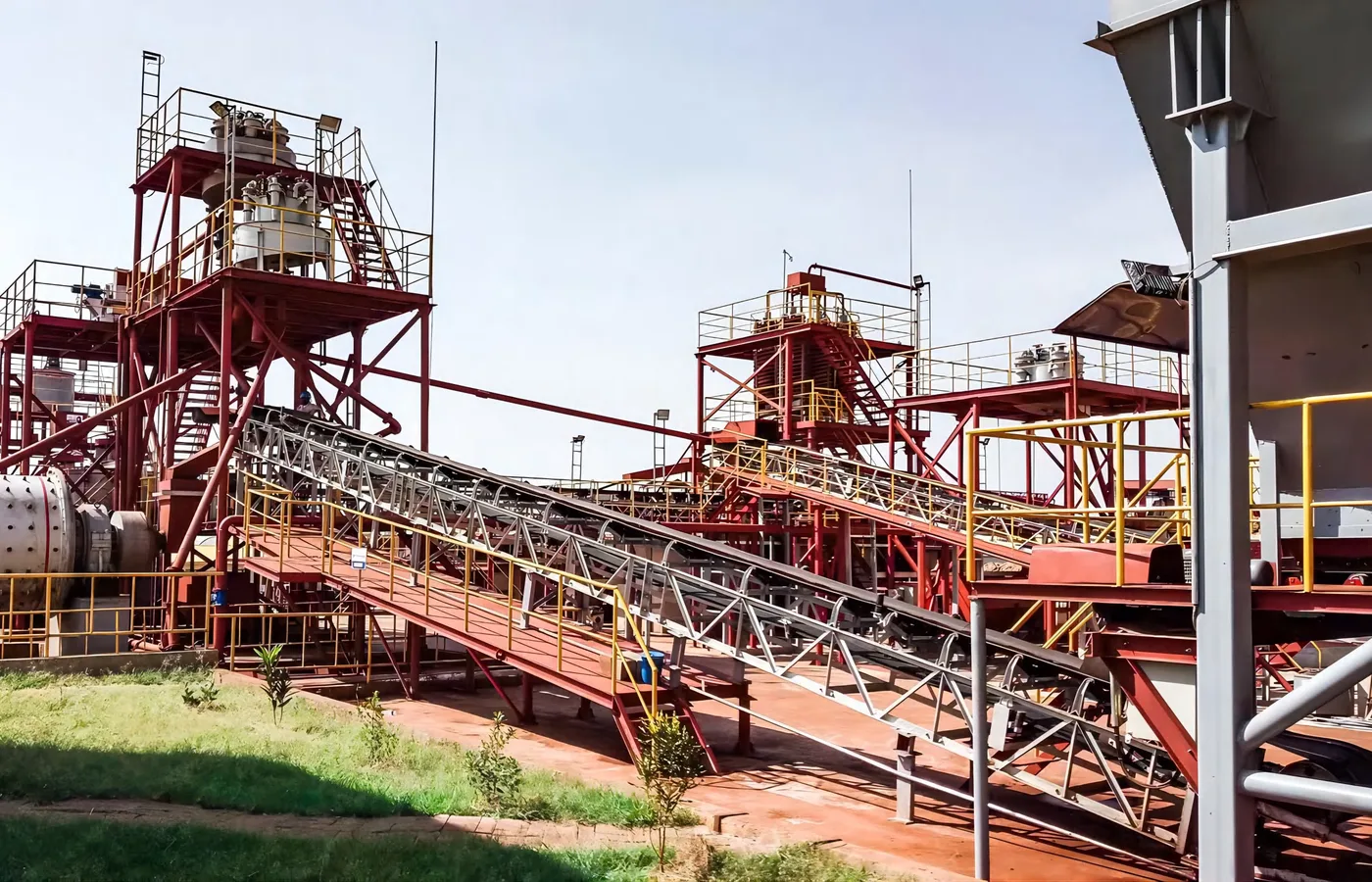
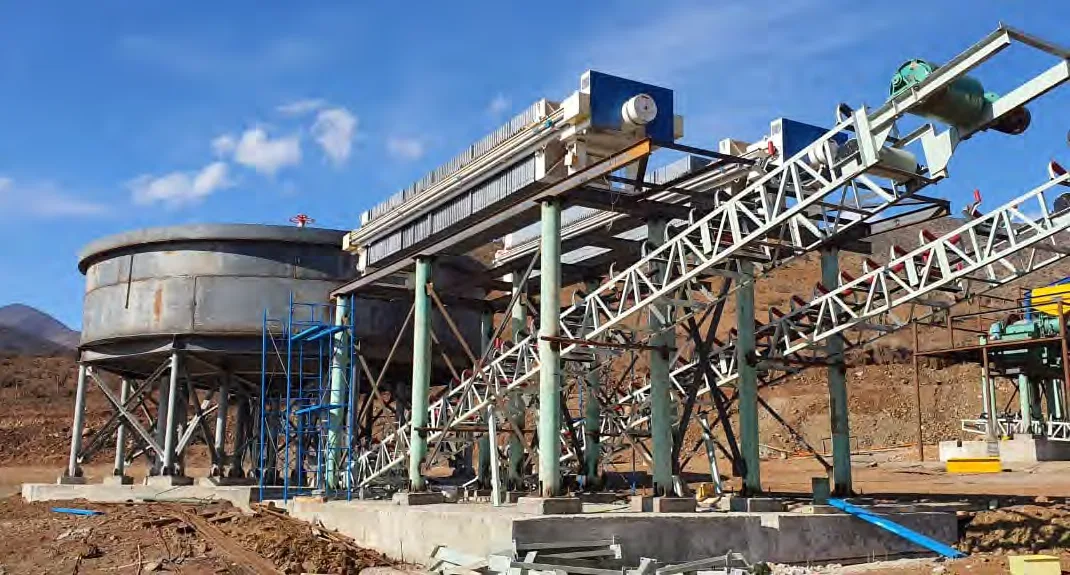
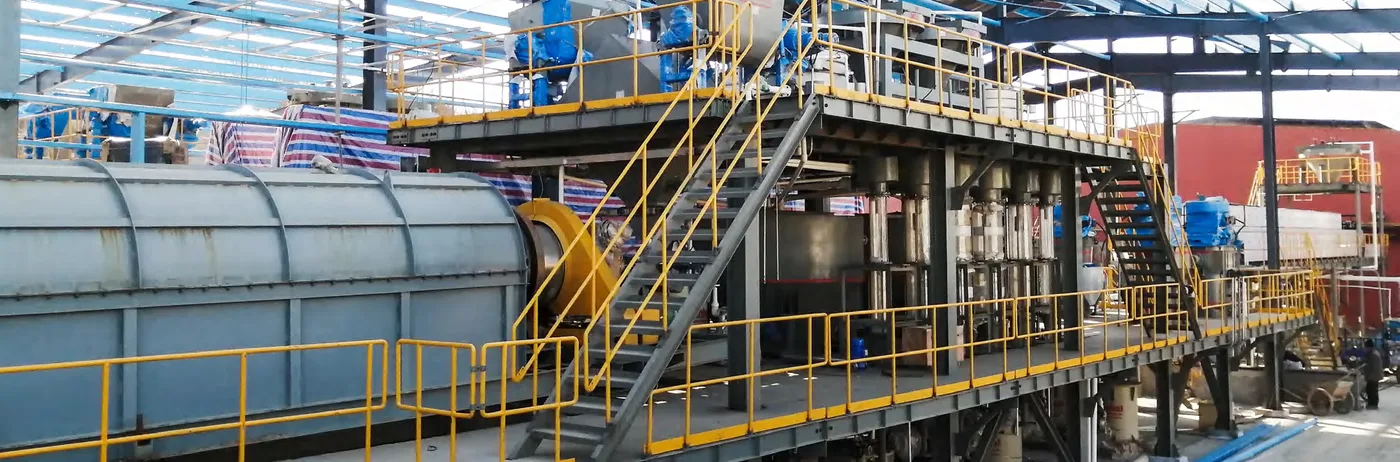
Construction and installation
Common questions
What does Xinhai's EPC scope include?
Does Xinhai hold construction qualifications?
How is overseas logistics handled?
EPC, EPCM, EPC plus operation: where the line gets drawn
Same letters, very different risk. The model you sign decides who owns the gaps between packages.
Buyers use EPC and EPCM as if they were the same product at a different fee. They're not. What the letters really describe is who owns the gaps — the space between the crusher package and the civil works, between the switchgear and the motor list, between the last commissioning test and the first tonne of saleable concentrate. Someone owns those gaps. Your contract decides who.
| Model | Who owns the gaps | Subcontracts sit with | Fits when |
|---|---|---|---|
| EPC turnkey, lump sum | The contractor, from design through commissioning | The contractor | You want one price and one counterparty, and your in-house engineering bench is thin |
| EPCM | You do. The contractor manages the work on your behalf | You, package by package | You have project controls staff, you want every package price visible, or the scope is still moving |
| EPC plus operation | The contractor, and it keeps carrying the plant after handover | The contractor | Ramp-up is the exposure that worries you, or you have no operating team in country yet |
| Operation only | You own the built asset; the contractor answers for agreed production and cost measures | You | The plant already exists — a restart, a brownfield lift, an underperforming circuit |
Where does the difference land in money? Three places. Variations: under lump sum, a change you request is one negotiation with one party; under EPCM it ripples through every affected package. Interfaces: an EPC contractor absorbs its own coordination errors, an EPCM owner pays for them. Ramp-up: the party that wrote the flowsheet is not always the party standing in the plant when it misses nameplate, and closing that gap is the whole point of an operation contract.
Neither route is cheaper in the abstract. Lump sum buys certainty and prices contingency into it. EPCM shows you every number and hands you the coordination job along with it. Ask one question before you choose: can your team staff package interfaces on site for the full build? If it can't, the risk hasn't gone anywhere under EPCM — it's sitting with you. Contract mining and operation sets out the models available once the plant runs, and modular delivery changes the construction scope enough that it's worth pricing as a separate option rather than a variant of the same bid.
When a turnkey contract is the wrong route
Four cases where we would rather sell you a smaller scope than a bad lump sum.
A turnkey contract is a good instrument for a defined scope. It gets expensive, or simply unbuyable, when the scope isn't defined yet. Four situations where we'd tell you to slow down.
The metallurgy isn't settled
If the flowsheet still has open questions, a lump sum price is a guess wearing a margin. That's not a commercial opinion, it's how the reporting codes are built. The JORC Code defines an Ore Reserve as the economically mineable part of a Measured and/or Indicated Mineral Resource, defined by "studies at Pre-Feasibility or Feasibility level" that apply Modifying Factors — and processing and metallurgical performance are named among those factors. The same code calls a Scoping Study an order of magnitude study and states it must not be used as the basis for estimating Ore Reserves. Price a build off one and the number will move. Settle the flowsheet through test work, take it into design, then buy the build.
The scope is a circuit, not a mine
Replacing a mill, adding a flotation row, retrofitting dewatering on a plant that already runs — wrap that in a turnkey contract and you buy contract overhead you don't need. Equipment supply with installation supervision is the cheaper shape. Manufacturing carries that scope on its own.
The site argues for modules
Difficult access, a short dry season, scarce skilled labour on the ground, a tonnage too small to repay heavy civil works. Each of those points away from conventional site construction. Modular plants move assembly into the factory and leave foundations and connections for the field. Price it both ways before you commit.
You already hold the design and the team
If your engineers have taken detailed design to issue-for-construction and you have people who can run packages, EPCM or a construction-only contract protects what you've already paid for. Don't buy engineering twice.
One boundary worth stating plainly. Two different certificates get named on this site and they are not interchangeable. The Class A construction qualification described further up this page is a Chinese licence to general-contract mine construction works; our design institute separately holds a Chinese metallurgical-industry design credential. One covers building, the other covers drawings, and neither confers statutory design approval in your jurisdiction. Overseas, deliverables come to you against the code set named in the contract, and local approval still runs through a locally licensed engineer of record. Treat any contractor who blurs that line as a schedule risk.
What to have ready before you ask for a price
Each item below becomes a line in the estimate. Whatever is missing becomes an assumption, and assumptions become variation orders.
The fastest proposals we issue are the ones where the owner turns up with data instead of a question. Here's what to gather, and who in your organisation actually produces it.
- A representative sample, not the best rock you own. Composite it across the zones, depths and grade ranges you intend to mine in the early years, and include the dilution you'll realistically send to the mill. Your geologist owns this one. A hand-picked high-grade sample yields a flowsheet that works on material you will never feed it.
- Characterisation, not just a head assay. Head grades, deleterious and penalty elements, mineralogy and liberation size, hardness and grindability, clay and slimes content where the ore is weathered. This is what sizes the comminution circuit and picks the separation route.
- The resource statement and its stage. Which code, which categories, how much of the tonnage sits in Inferred. It tells us whether we are designing for a mine life or for a first module.
- The product your buyer will actually accept. Concentrate grade, moisture limit, penalty elements, packaging and delivery point. Your offtaker sets this, not your process engineer, and it decides the back end of the plant: thickening, filtration, drying, handling.
- Site constraints, in writing. Topography and geotechnical data for foundations, the access road and port route with any axle load or width limits, power source and how reliable it is, raw water source and its seasonality, climate extremes and altitude, seismic conditions, and a candidate tailings location. None of it is exotic. All of it prices.
- Licence and permit status. Mining title, environmental approval stage, import duty treatment, local content obligations. Schedules die here more often than they die in the plant.
What happens to that package on our side: the sample goes to a CNAS-accredited laboratory under ISO/IEC 17025, scales up to semi-industrial testing when the ore behaves awkwardly, and test work and design sit within the same group rather than in separate companies. Xinhai reports around 200 processing test programmes a year across more than 70 ore types, and the design institute integrates 17 disciplines, which keeps flowsheet, layout, structures and the equipment list inside one organisation rather than across a contract boundary.
The misjudgement we see most: pricing a plant off a neighbouring operation because the two deposits look alike on a map. That is the copied-design failure listed in the cost-leak table further up this page, viewed from the estimating side rather than the delivery side. Two orebodies in one district can call for different grinding energy and a different reagent scheme, and the only way you learn which applies to yours is by testing your own ore. Our project record spans distinct ore types and jurisdictions, the 1,200 t/d fluorite plant in Italy among them.
Sources
External references for the industry context on this page. Project figures come from our own project brochures.
JORC Code 2012 (Australasian Code for Reporting of Exploration Results, Mineral Resources and Ore Reserves)Clause 29 defines an Ore Reserve by studies at Pre-Feasibility or Feasibility level applying Modifying Factors; the code lists processing and metallurgical factors among them, and clause 38 states a Scoping Study is an order of magnitude study that must not be used as the basis for estimating Ore Reserves.
ASX - Mining Reporting Rules for Mining Entities: Frequently Asked QuestionsExchange guidance quoting the JORC definition of a Scoping Study, used here to support the point that early-stage studies are not a basis for pricing a build.
AusIMM Bulletin - Can you dig it? Modifying factors and multi-factor riskSets out the categories of Modifying Factors and argues they interact rather than act in isolation, supporting the point that metallurgy, infrastructure and permitting have to be assessed together before scope is fixed.
Send us the ore, the tonnage target and the site conditions. We reply with a scoped proposal.