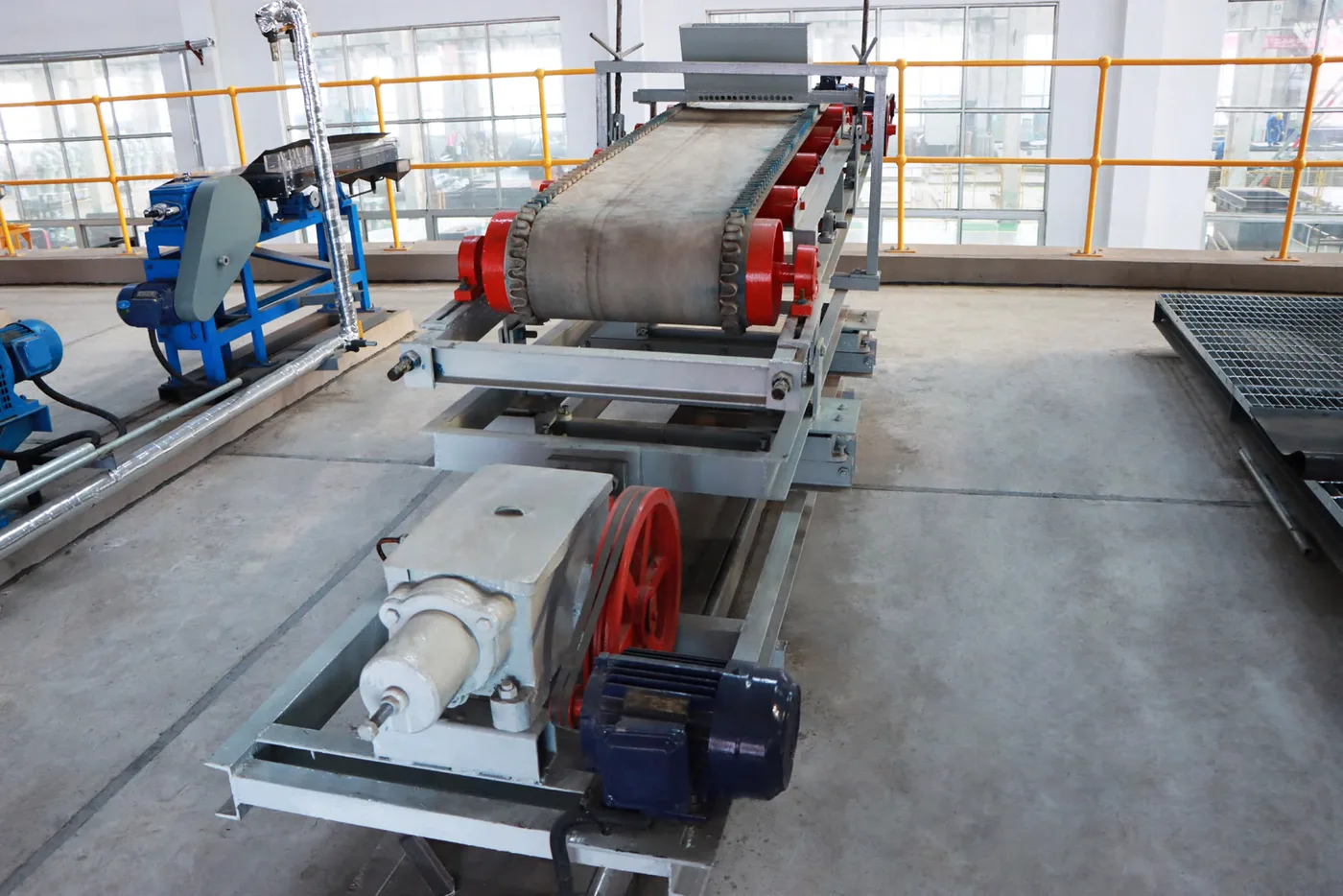
The plant we design is built in our own workshops
Three manufacturing bases produce more than 1,000 equipment models, including mills up to 7 m in diameter, 320 m3 flotation cells, 20 m leaching tanks and 100 m thickeners.
Three manufacturing bases
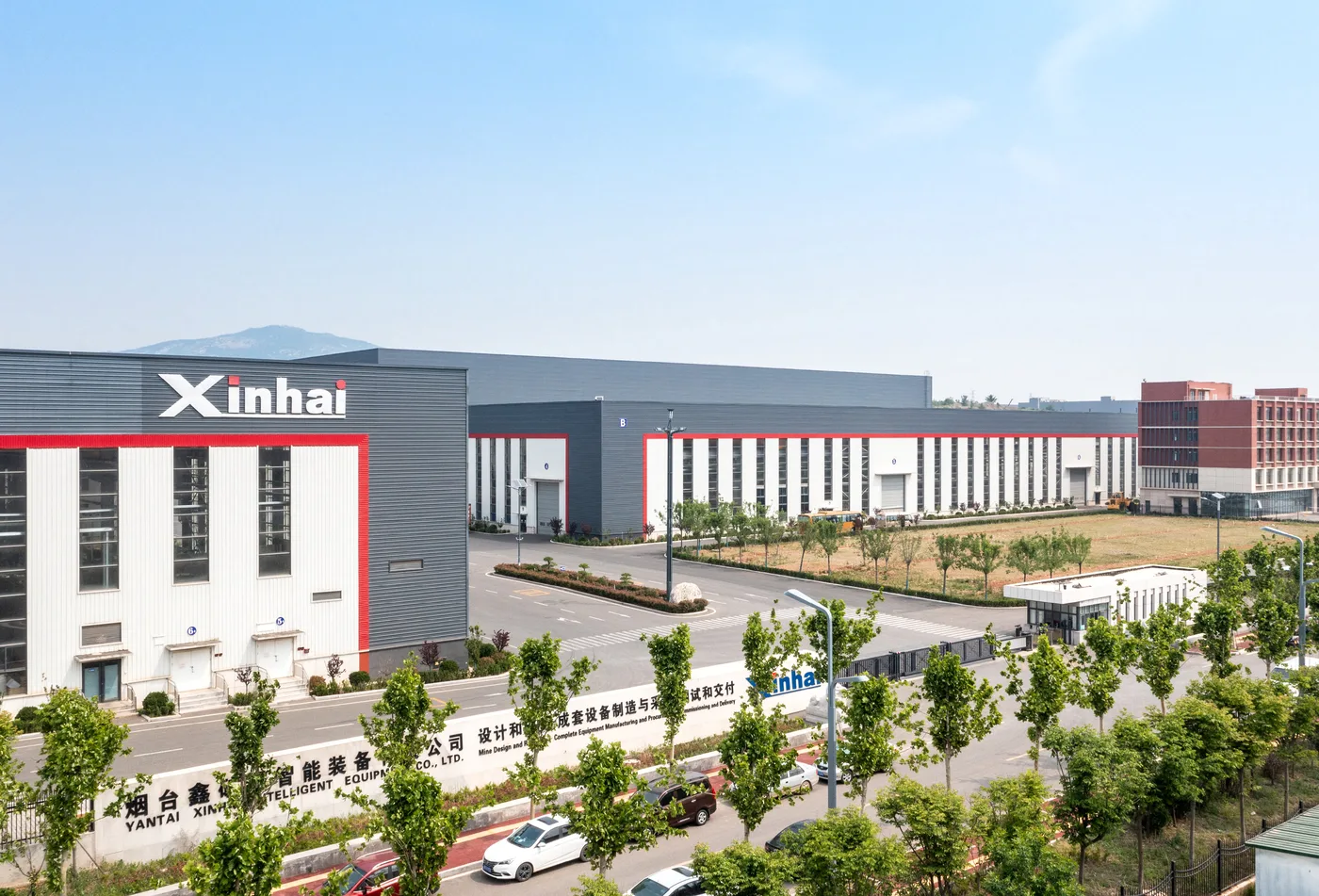
Xinhai describes the structure as one headquarters, three manufacturing bases and one research institute.
Advanced materials base
Wear resistant rubber, polyurethane and engineering plastics, including pump liners, impellers, cyclone liners and mill liners developed in the wear rubber research centre.
Mining equipment base
The 5G connected production base for processing and mining machinery, with heavy and light fabrication workshops and end to end digital management.
Modular and prefabricated base
Pre-assembly of modular processing plants and steel structures shipped as complete units for fast site erection.
Equipment range by process step
| Process step | Equipment |
|---|---|
| Crushing | Jaw, gyratory, cone, hammer, impact and roller crushers, high pressure grinding rolls |
| Screening | Circular, auto-centering, linear, dewatering, trommel and banana screens |
| Grinding | Autogenous mills, wet grid and overflow ball mills, rod mills, vertical stirred mills, dry ball mills, Raymond mills |
| Classification | Spiral classifiers, XC, XHCV and XN hydrocyclones, high frequency fine screens, air classifiers |
| Flotation | SF, JJF, XCF, KYF and BF type flotation machines and flotation columns |
| Gravity separation | Shaking tables, spiral chutes, jigs, centrifugal concentrators |
| Magnetic separation | Wet and dry drum separators, high intensity and high gradient separators |
| Gold extraction | Leaching and adsorption tanks, desorption and electrowinning systems, carbon regeneration |
| Thickening and filtration | Deep cone and high efficiency thickeners, filter presses, disc and ceramic vacuum filters |
| Feeding and conveying | Grizzly and electromagnetic vibrating feeders, belt conveyors, screw conveyors, bucket elevators |
| Slurry pumps and valves | Wear resistant rubber slurry pumps, foam pumps, submersible pumps, pinch and gate valves |
| Automation | Belt scales, dosing systems, samplers, on-line particle size and XRF analysers, flotation level and airflow control |
Equipment in the workshop and in the plant
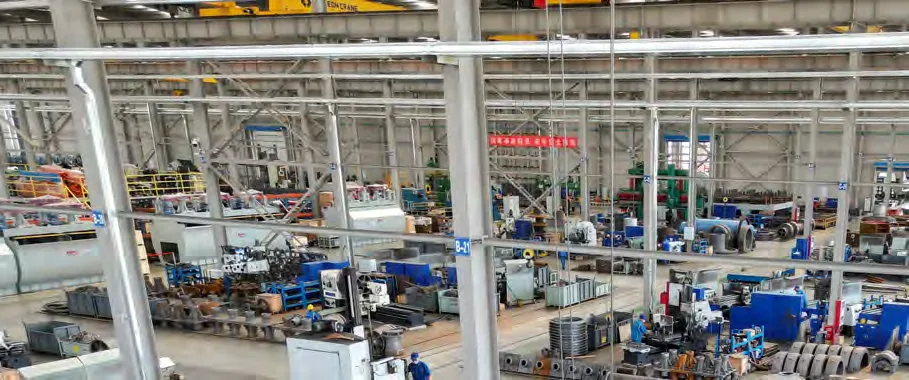
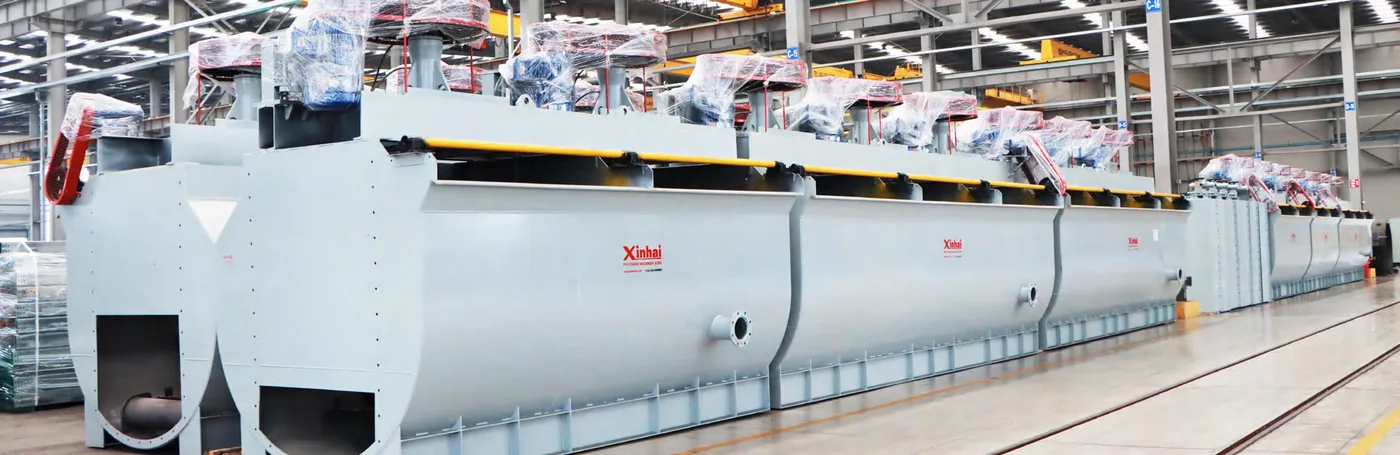
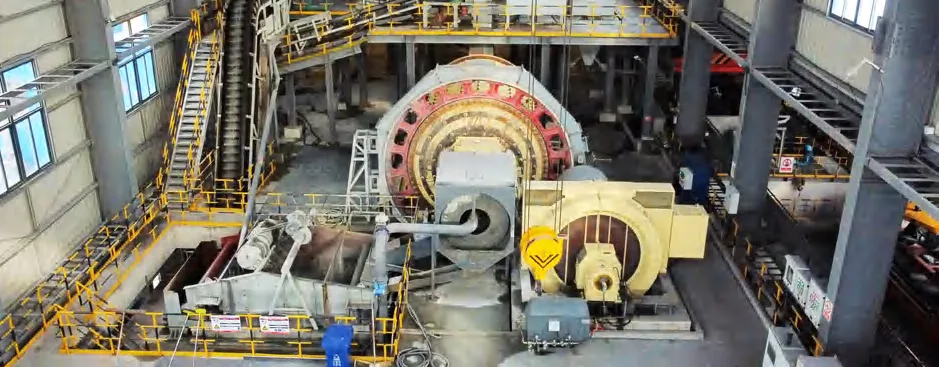
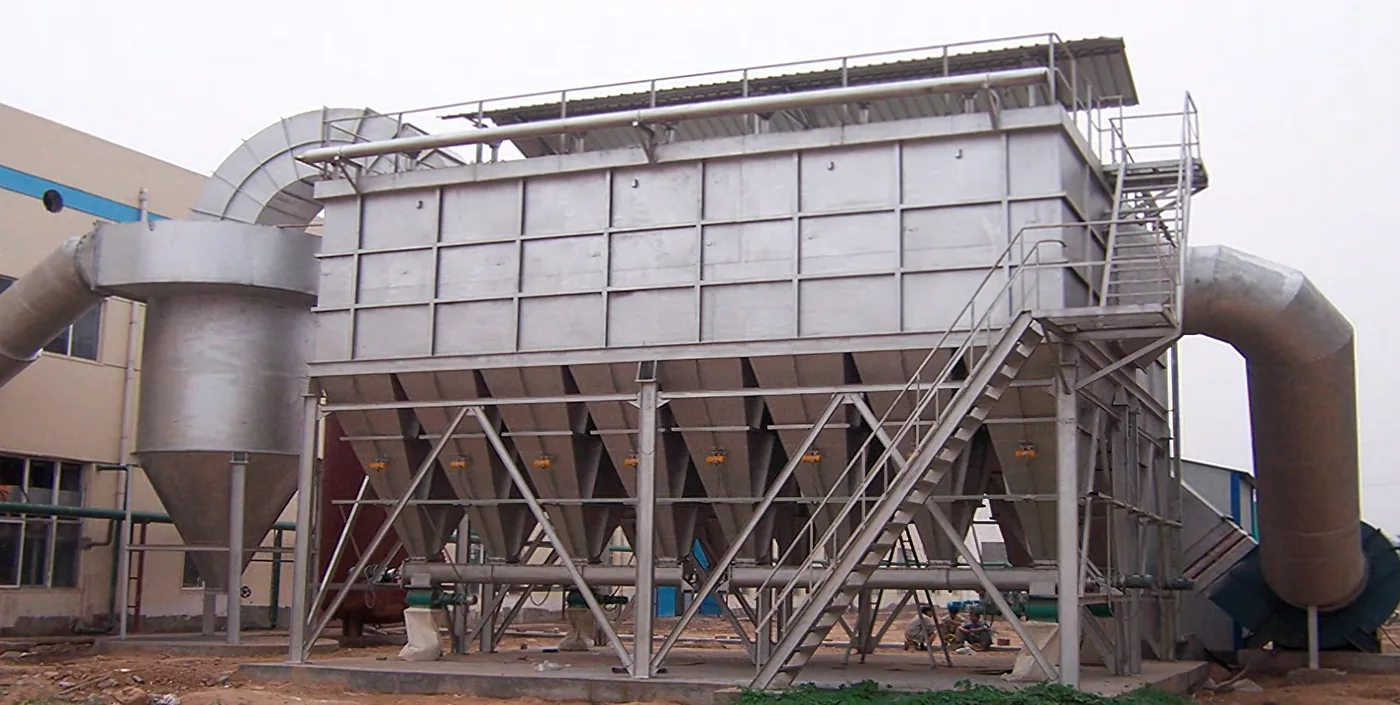
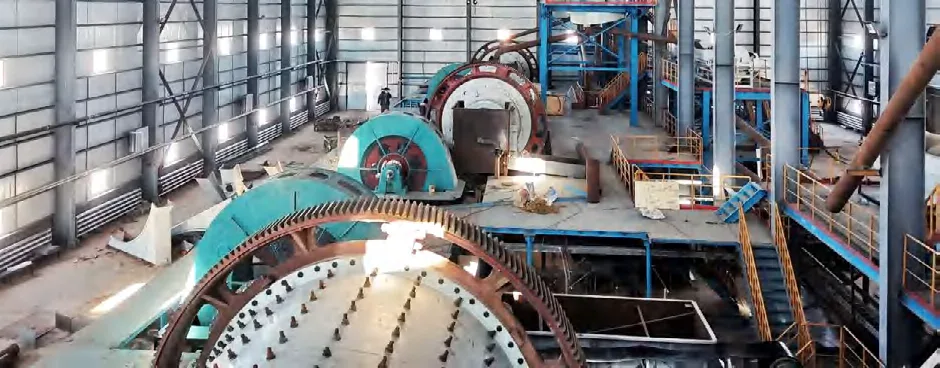
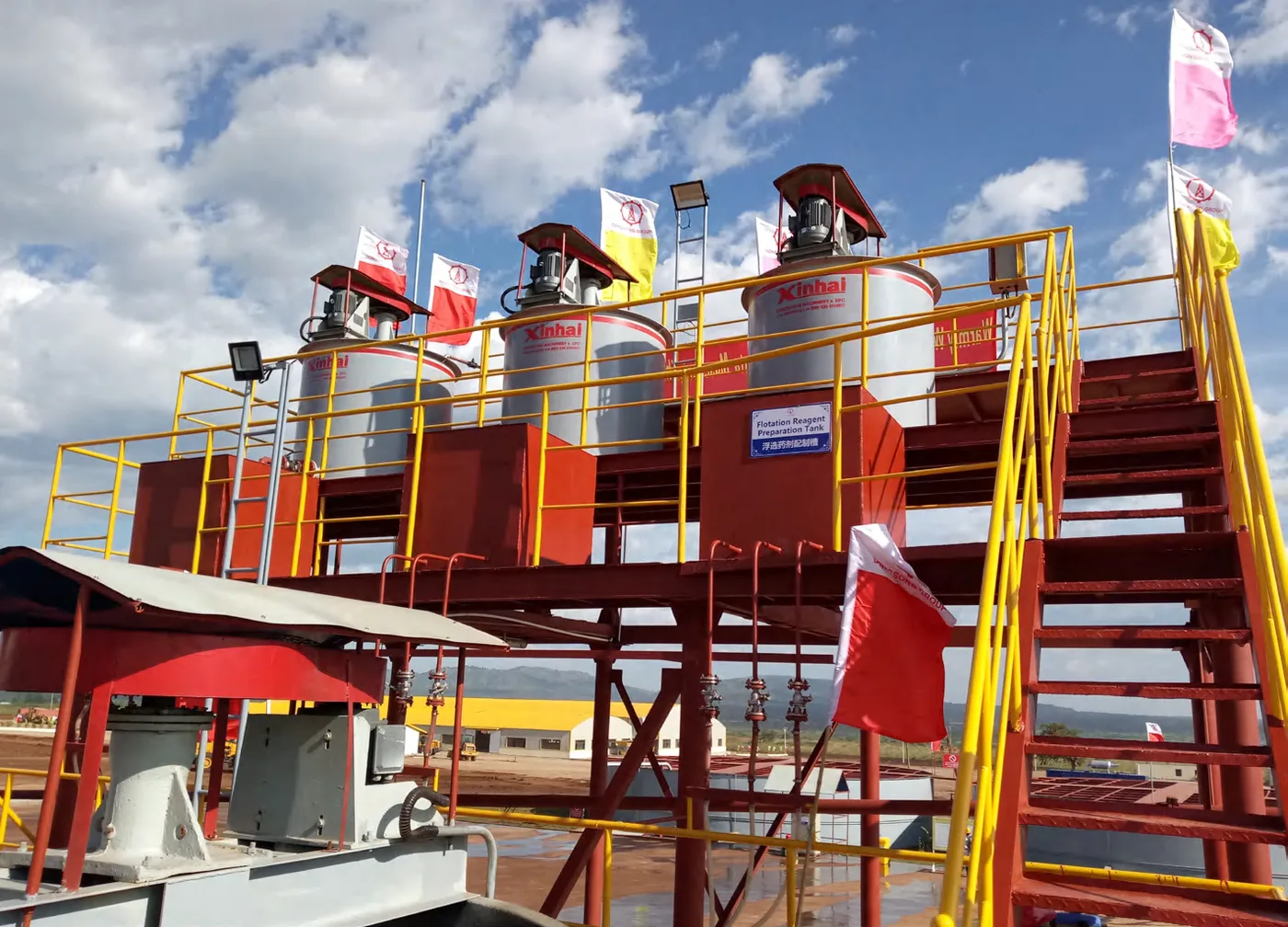
Large equipment capability
- Ball mills up to 7 m diameter
- Flotation cells up to 320 m3
- Leaching tanks up to 20 m diameter by 20 m high
- Thickeners up to 100 m diameter
- Complete main and auxiliary equipment for plants up to 50,000 t/d
What to have ready before you ask for an equipment quotation
Eight inputs decide the machine list. Six of them come from you, and none of them are a budget number.
A machine list is an output, not an input. Send us one first and we'll ask what produced it — because the same 3,000 t/d headline number can end up as three very different plants depending on how the ore breaks and where the site sits.
So before a quotation means anything, this is what has to exist.
| What we ask for | Why it changes the machine | Who normally produces it |
|---|---|---|
| A representative ore sample, in enough mass for bench work and a pilot run | Grindability and separation response set mill size, cell volume and the number of circuit stages. Nothing else does. | Your geologist or drilling contractor, sampled from the zones you'll actually mine first |
| A full assay suite, not only the payable metal | Penalty elements, clays and carbonaceous material change the route before they change the machine | An accredited analytical laboratory |
| Your reported Mineral Resource, and an Ore Reserve if you have one | Tonnage and mine life fix the plant rate. A plant sized off an unreported estimate is sized off nothing. | Your competent or qualified person, reporting under JORC, NI 43-101 or VALMIN |
| Grid data: voltage, frequency, firm capacity, outage record | Drive selection, starting method, and whether you need on-site generation at all | The utility, or your power consultant |
| Water: source, seasonal availability, salinity, permitted discharge | Sets thickener duty and filtration scope, and how hard the circuit has to recycle | Your site hydrology study |
| Site envelope: altitude, ambient temperature range, seismic and wind codes | Motor derating, structural loads, freeze protection, enclosure ratings | Your civil and geotechnical consultant |
| Logistics envelope: port, road width, bridge and axle limits, available site crane | Whether a mill shell ships whole or in segments, and whether a pre-assembled module can reach you | Your freight forwarder, with our shipping engineers |
| The destination market's compliance regime | Fixes the conformity route for the machinery and the welding certification for site steel | You, with us |
Who should generate the test data
Not the equipment supplier alone. That's a real conflict, and buyers are right to be uneasy about it. The defensible arrangement is test work done under an accreditation that covers laboratory competence rather than the vendor's opinion — ISO/IEC 17025 exists for exactly that, and Xinhai's mine research institute runs a CNAS-accredited laboratory on that basis. The company reports roughly 200 test programmes a year across more than 70 ore types. If you'd rather split it, use an independent laboratory for the check tests and hand us the report; we'll design to somebody else's data without complaint. What we won't do is size a circuit off a neighbouring mine's flowsheet.
You can read how that test sequence runs on our test work and research page, and how the report turns into drawings across the design institute's 17 engineering disciplines.
When buying the machines from us is the wrong move
In-house manufacturing is an advantage in most cases and a liability in a few. Both are worth knowing before you commit.
Some of the time it isn't. Here's where we say so.
Above our published machining ceiling
The intelligent equipment institute publishes hard limits: ball mills to 7 m diameter, flotation cells to 320 m3, leaching tanks to 20 m by 20 m high, thickeners to 100 m, and complete main and auxiliary equipment for plants up to 50,000 t/d. Those are ceilings, not marketing. If your study calls for a single grinding line beyond that, the honest answer is a multi-line configuration, a split supply with another fabricator, or a different comminution strategy — and that's a conversation to have during the study, not after the order.
Brownfield retrofits where the civil works rule
When you're dropping equipment into an existing building on existing foundations, the constraint isn't the machine. It's the bolt pattern, the headroom and the crane rail. A like-for-like replacement from whoever built the original line can land cheaper than re-engineering the structure around a better machine. Ask for both numbers before you assume the better machine wins.
High-mass, low-value items
Structural steel, walkways, simple tanks, concrete. Freight and duty on those can exceed the fabrication saving. Where a competent local fabricator exists, we'd rather qualify them and supply the drawings than ship steel across an ocean. What doesn't localise well is anything with a wear-life claim attached — liners, impellers, cyclone parts — because that's where materials engineering, not welding, decides the outcome.
When you don't have test data yet
Then you're not buying equipment. You're buying test work, and anyone quoting you a machine list at this stage is guessing on your behalf.
| Route | What you're buying | Fits when | Risk you keep |
|---|---|---|---|
| Single equipment supply | Named machines against your specification | You have an engineer of record and a flowsheet you trust | Circuit balance, interfaces, and the gap between individual machine guarantees and plant output |
| Matched full plant set | Every main and auxiliary item sized against one circuit calculation | You want one specification standard across the plant | Civil works, erection and commissioning management |
| Modular pre-assembled plant | Skidded or containerised modules tested before they ship | Remote sites, short lead times, scarce site labour, staged expansion | Transport envelope and module footprint constraints |
| EPC or EPCM | Engineering, procurement and construction under one contract or one management team | You want a single party answerable for the plant, not for the boxes | Less interface risk, more dependence on one counterparty |
Where the delivery boundary sits, and what travels with the machine
Certificates, guarantees and interface risk all move when the contract type moves.
Two things buyers routinely conflate: certification of a machine, and certification of the company that welded it. They're different documents with different scopes, and mixing them up shows up late — usually at the border or at the first regulatory inspection.
Compliance follows the destination, not the factory
Machinery placed on the EU market has to go through conformity assessment, carry an EU declaration of conformity and be CE marked; higher-risk categories need a notified body. Machinery placed on the EU market today is assessed under Directive 2006/42/EC; Regulation (EU) 2023/1230 replaces it from 20 January 2027. Xinhai's fluorite plant in Italy — our first full-scale EPC project in Europe — ran under CE certification throughout, and that project page sets out the scope.
Canada works differently. CSA W47.1 certifies the fabricator, not the product: fabricators and erectors welding structures under the standard have to hold company certification, administered by the Canadian Welding Bureau, covering welding supervisors, procedures and welder qualification. Xinhai holds CSA and CWB welding certification alongside ISO 9712 for non-destructive testing and ISO 9001, 14001 and 45001 for the management systems. Check which of these your jurisdiction actually requires before you weight them in a bid comparison — a certificate that doesn't apply where you're building is worth nothing.
What the boundary decides
Under equipment supply, guarantees attach to machines. Each one can meet its own curve while the plant misses its number, and that gap is yours. Under EPC, the interfaces come with the contract. Under EPCM we manage the packages while you hold them. And under EPC+M+O, our own operations team runs the plant afterwards — which is the only arrangement where the people who chose the equipment still have to live with it.
The results our brochures record for the 2 Mt/a spodumene operation in Zimbabwe come from that last model: mill throughput above design capacity by 7.6%, equipment utilisation at 95.7%, and 364 days from signature to production. Ask us for the equivalent record on any delivery model you're considering, and tell us which one you want priced.
Sources
External references for the industry context on this page. Project figures come from our own project brochures.
JORC — The Australasian Code for Reporting of Exploration Results, Mineral Resources and Ore ReservesSupports the requirement that the tonnage and grade used to fix a plant rate come from a Mineral Resource or Ore Reserve publicly reported under a recognised code. JORC is published by the Joint Ore Reserves Committee of the AusIMM, the Minerals Council of Australia and the Australian Institute of Geoscientists.
EU-OSHA — Regulation (EU) 2023/1230 on machinerySupports the statement that machinery placed on the EU market requires conformity assessment, an EU declaration of conformity and CE marking, with notified body involvement for higher-risk products, and that Regulation (EU) 2023/1230 applies from 20 January 2027 in place of Directive 2006/42/EC.
CWB Group — CSA W47.1 certification of companies for fusion welding of steelSupports the statement that CSA W47.1 certifies the fabricator or erector rather than the product, is administered by the Canadian Welding Bureau, and covers qualification of welding supervisors, welding procedures and welding personnel.
Send us the ore, the tonnage target and the site conditions. We reply with a scoped proposal.