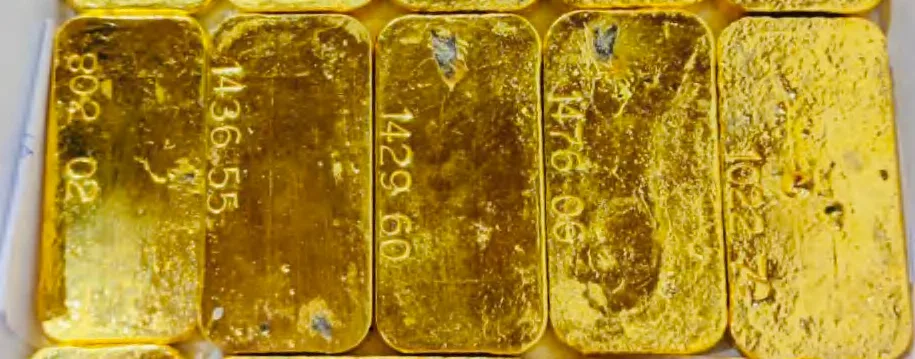
Gold: four routes, chosen by the ore rather than by habit
Free milling, refractory, alluvial or low grade, the route follows the test result. Xinhai has delivered gold plants across West Africa, East Africa and Central Asia.
Process route
Which route applies depends on gold liberation, carbon content and the presence of sulphides. Test work settles it before the flowsheet is drawn.
Crushing and grinding
Jaw and cone crushing followed by ball milling in closed circuit with hydrocyclones, to the liberation size the test work identifies.
Gravity recovery
Where coarse free gold is present, centrifugal concentrators and shaking tables recover it before leaching, which reduces reagent consumption.
Flotation or leaching
Sulphide associated gold is floated to a concentrate. Free milling ore goes to cyanide leaching, either carbon-in-pulp or carbon-in-leach, where adsorption runs alongside leaching.
Desorption and refining
Loaded carbon is stripped in a desorption and electrowinning system, then the carbon is regenerated and returned to the circuit.
Tailings handling
Thickening and filtration, with dry stacking where water balance or regulation requires it.
Equipment in this circuit
Manufactured at our own bases and matched to the circuit capacity, not bought package by package.
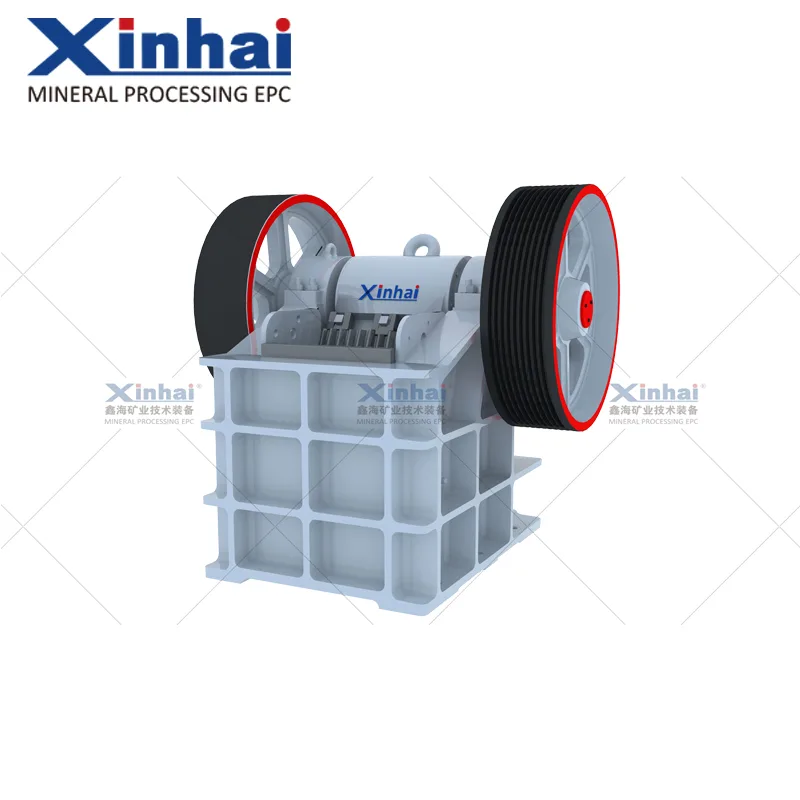
Jaw crusher
PE series for primary crushing and PEX series for secondary and fine crushing.
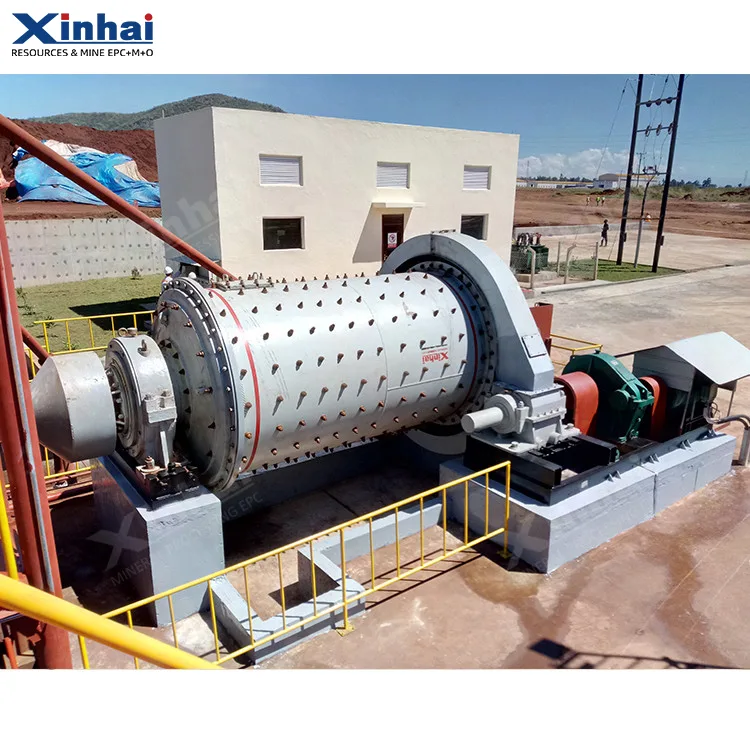
Ball mill
Wet grid mills for primary grinding and overflow mills for secondary grinding.
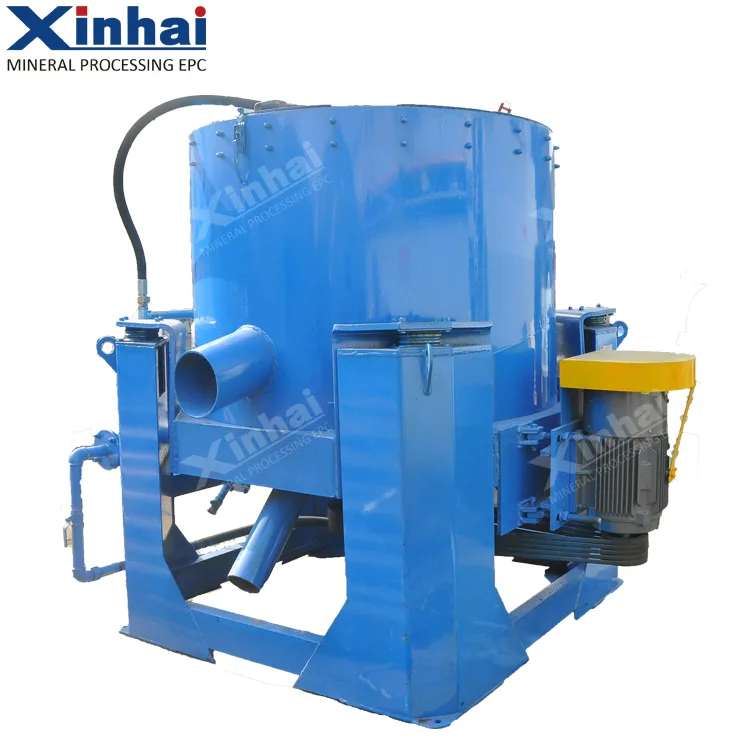
Centrifugal concentrator
Continuous recovery of free gold and other heavy minerals.
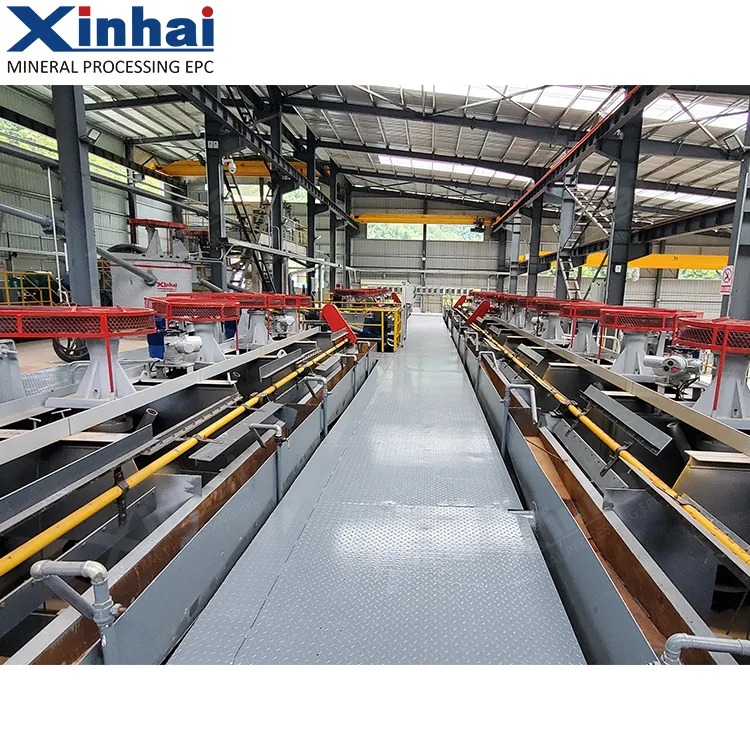
Flotation cells
SF, JJF, XCF, KYF and BF machines up to 320 m3, plus flotation columns.
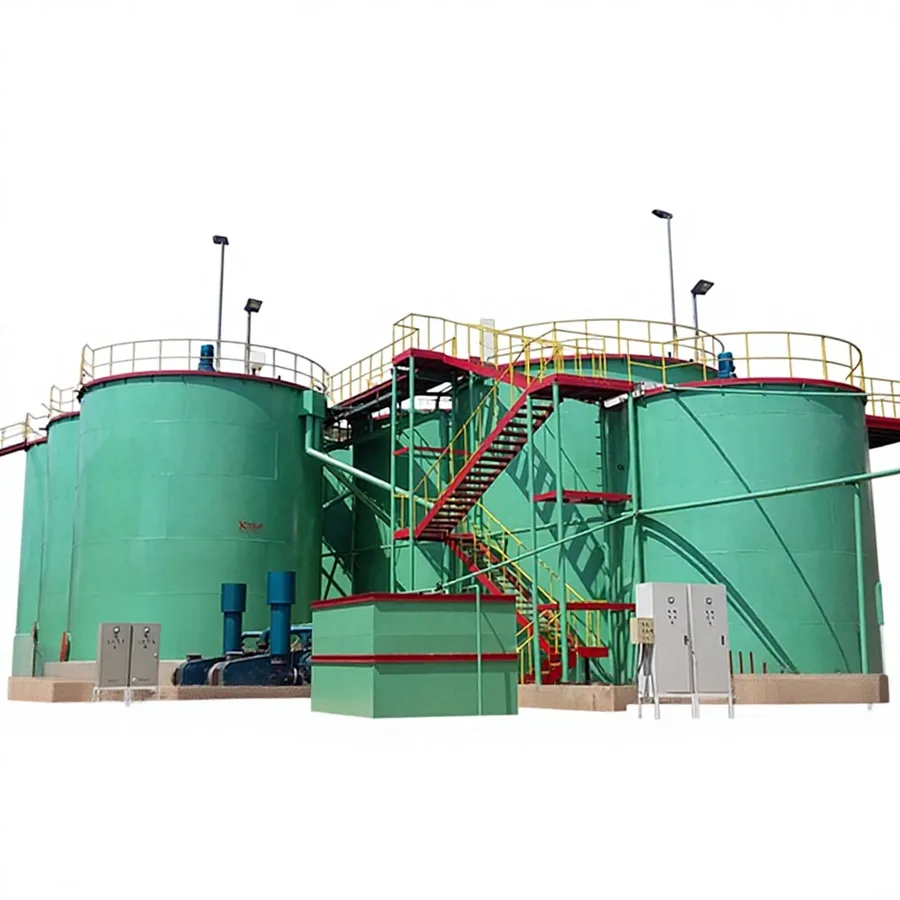
Leaching and adsorption tank
Double impeller tanks up to 20 m diameter for CIP and CIL circuits.
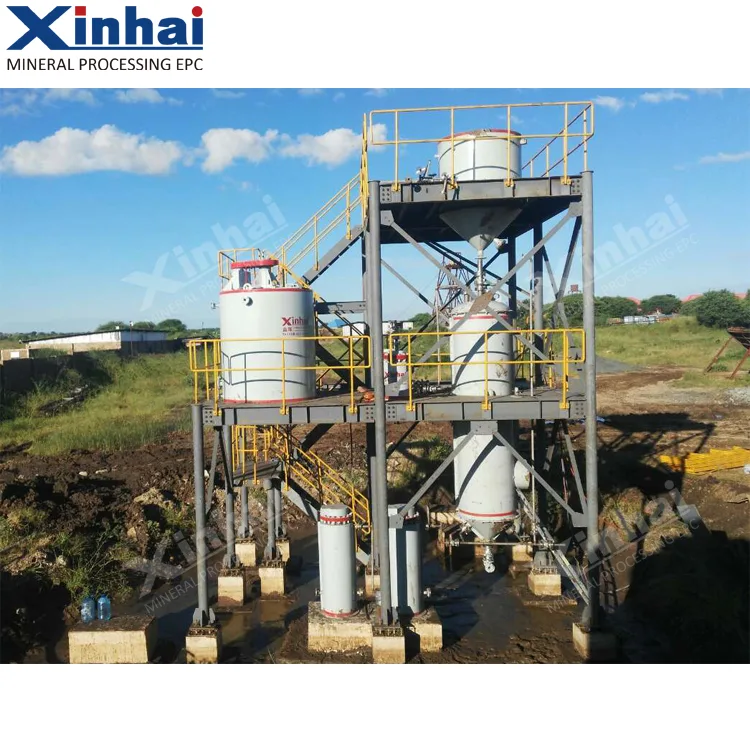
Elution and electrowinning
Desorption, electrowinning and carbon regeneration as one package.
Reference projects
Figures are those reported for these projects in the Xinhai project and test brochures.
3,000 t/d gold mine and plant, 1.2 g/t feed, overall recovery around 93%
EPC+M+O4,000 t/d gold carbon-in-pulp plant
Plant scope500 t/d gold project, mining and processing optimised, local team trained
EPC+O1,000 t/d gold processing plant
Plant scope1,200 t/d gold processing plant
Plant scope1,200 t/d gold processing plant
Plant scope700 t/d rock gold processing plant
Plant scope150 t/d gold processing plant
Plant scopeCommon questions
When is CIL better than CIP?
Can gravity recovery be added to an existing plant?
What test work does a gold project need before design?
Does Xinhai operate gold plants as well as build them?
Related
Test work first
Leach, flotation and gravity test work on your sample decides which of the four routes applies.
Test workGuinea case study
3,000 t/d gold mine and plant delivered and operated under one contract.
Case studyOperation contracts
Eight cooperation models for running the mine and the plant after commissioning.
OperationWhen the cyanide route is the wrong answer
Most gold enquiries arrive asking for a CIL plant. The leach test sometimes answers a different question.
Cyanide dissolves the gold it can reach. A large share of the gold sitting in undeveloped deposits is gold it cannot reach: locked inside sulphide grains, or hosted in ore carrying organic carbon that pulls dissolved gold straight back out of solution. When bottle roll extraction comes back poor, grinding finer and trying again is rarely the fix. It's a signal to change route.
What the ore rules out
| How the ore behaves | What the test shows | Where the route goes |
|---|---|---|
| Free milling, oxidised | High extraction at a moderate grind, low reagent consumption | CIP or CIL, the circuit described above |
| Carbonaceous, preg-robbing | Gold dissolves, then reports back into the residue | CIL, so activated carbon competes with the native carbon in the same tank |
| Sulphide-locked, refractory | Poor extraction at any grind; sulphur and often arsenic run high | Flotation to a concentrate, then a separate decision on oxidation |
| Coarse free gold, alluvial | Most of the gold reports to a gravity product in the laboratory | Gravity circuit; a leach plant may not be justified at all |
| Low grade, high tonnage, arid site | Moderate extraction on coarse crushed material | Heap leach, which is a different capital and footprint question entirely |
Refractory ore gives you three answers, and they aren't equivalent
Floating locked gold into a sulphide concentrate is the easy part. What happens to that concentrate is the real decision. Sell it, and a smelter or toll treatment plant absorbs the metallurgical problem in exchange for a treatment charge and payable terms you don't control. Oxidise it yourself, through roasting, pressure oxidation, bacterial oxidation or ultra-fine grinding, and you've added a second plant with its own test programme and a capital line well beyond the leach circuit. Or define the refractory material out of the mine plan and take the oxide first. All three are defensible. Designing a conventional leach plant and hoping isn't.
The zone you reach in year four
Oxide near surface. Transition below it. Fresh sulphide under that. A single composite averages all three and describes none of them. The JORC Code asks reserve reporters to state the nature of the metallurgical domaining applied, alongside whether the proposed process is well-tested technology or novel in nature. Read that as a metallurgical instruction rather than a disclosure chore: recovery belongs to a domain, not to a deposit. Size a plant on the oxide cap and the circuit meets the transition ore with nothing prepared. Split the samples by domain before design begins, and the mine schedule tells you which year each one arrives.
One more thing about borrowed numbers. The 1.2 g/t feed and roughly 93% overall recovery reported for the Guinea plant describe that orebody under that flowsheet. They're a record of what happened, not a forecast for your ore.
What to have ready before you ask for a gold plant price
The quality of the answer you get back is set almost entirely by what you send with the enquiry.
The assays that actually move a flowsheet
Head grade on its own tells us very little. These are the numbers that change the drawing:
- Cyanide-soluble gold against total gold. The gap between the two is your refractory fraction. In our experience it is the single most informative figure in a gold enquiry, and it is often missing.
- Organic carbon, with a preg-robbing check. A total organic carbon number on its own does not settle CIL-or-CIP; the preg-robbing test is what does.
- Sulphide sulphur and arsenic. Both drive the oxidation decision, reagent consumption and the shape of your environmental case.
- Copper and silver. Cyanide-soluble copper quietly rewrites a reagent budget. Silver changes elution, electrowinning and how the doré is refined.
Gold assays badly at small sample mass, because it's coarse and unevenly spread. On coarse-gold ores ask the laboratory for screen fire assay and duplicates through the programme. That cost is trivial next to the decisions it carries. What a test programme needs in sample mass scales with the test itself, so ask before you ship rather than after.
The site facts nobody sends
Water comes first, and it's usually an afterthought. Source, salinity, recycle ratio and climate set the water balance, and a reagent scheme tuned on clean laboratory water can behave differently on saline or recycled process water, which is the water the plant will drink for its whole life. In an arid setting that same question decides whether tailings go to thickened disposal or dry stacking.
Then the unglamorous list: installed or available power, altitude, ambient temperature range, haul distance to port, and the road that reagents arrive on. Cyanide is a controlled import in many jurisdictions and it travels as a regulated dangerous good, so delivery frequency and on-site storage belong in the layout from the start. The International Cyanide Management Code covers that whole chain, not just your plant: it's a voluntary certification programme open to gold and silver mining companies, cyanide producers and cyanide transporters, verified by independent third-party audits on a triennial cycle. Lenders and offtakers may ask where you sit against it, so it's worth deciding early rather than retrofitting.
Two more that come up constantly on brownfield ground. If the area has been worked artisanally, the old tailings may carry mercury, which reports into a cyanide circuit and has to be dealt with before leaching, not during. And gold is the one commodity where the security design of the plant, from the gravity room to the smelting house, is an engineering input rather than an afterthought.
And what you want at the other end
Tell us the product. Doré on site, or a flotation concentrate sold to a third party, changes the plant. So do the tonnage target, whether you intend to expand later, and whether schedule pressure makes a modular build worth the premium. A project that states its target lets us scope against it. A project that doesn't gets a test proposal, which is the honest answer anyway.
Delivery models, and who ends up holding which risk
EPC, EPCM, EPC plus operation and contract operation split the same scope four different ways.
The technical work barely changes between these models. The allocation of risk changes completely, and it's worth being explicit about before a proposal is drafted.
| Model | Who holds the interfaces | What it means on a gold plant |
|---|---|---|
| EPC turnkey | Contractor holds engineering, supply and construction | Acceptance criteria are written against a defined feed specification. Ore outside that specification is a variation, not a failure, so the specification deserves as much attention as the price |
| EPCM | You hold the packages and the contracts; the manager holds coordination and schedule | You carry vendor interface risk and you gain competitive tendering on every package, which suits owners with their own team and financiers who want visible pricing |
| EPC plus operation | Contractor stays through production | The party that sized the circuit is the party running it. That aligns incentives, and it needs variability data rather than one composite, because the plant will see ore the composite never described |
| Contract operation of an existing plant | Plant already built; the scope is running it | The baseline is measured rather than predicted, so the conversation starts with current feed and current performance instead of a test report |
Xinhai works across all four. According to the company's published figures, Xinhai reports more than 600 mine EPC+M+O projects in over 100 countries and regions, with the turnkey and operation pages setting out what shifts inside each.
What no contract model transfers
Tailings accountability, for one. The Global Industry Standard on Tailings Management sets 15 principles and 77 requirements across the whole life of a facility, from siting and design through construction, operation, closure and post-closure. It requires an Engineer of Record to be engaged, an Independent Tailings Review Board where the consequence classification is Very High or Extreme, and public disclosure of facility information. Engineering and building the facility can sit inside an EPC scope. Being accountable for it cannot. That distinction catches owners out, and the time to face it is at the siting study, not at the audit.
Recovery is the other one. You won't get a recovery percentage from us before the test report exists, on gold or on any other ore type, because that number is a property of your sample rather than of our equipment. Performance criteria in a contract are written against a stated feed, a stated grind and a stated reagent regime. Anything quoted before those exist is a sales figure.
Where does that leave a project that hasn't started testing? In a good place, usually. Send the assays you already hold, the tonnage you're studying and the site constraints listed above, and the reply will be a test scope and a route shortlist rather than a plant price. The price comes second. It should.
Sources
External references for the industry context on this page. Project figures come from our own project brochures.
JORC Code, 2012 Edition (Joint Ore Reserves Committee, AusIMM / AIG / MCA)Table 1 Section 4 lists, under Metallurgical factors or assumptions, whether the metallurgical process is well-tested technology or novel in nature, and the nature of the metallurgical domaining applied together with the corresponding recovery factors, plus allowances for deleterious elements and the existence of bulk or pilot scale test work.
The International Cyanide Management Code (International Cyanide Management Institute)The Cyanide Code is a voluntary, performance driven certification programme of best practices covering cyanide production, transportation and use in gold and silver mining, open to mining companies, cyanide producers and cyanide transporters, with compliance determined by triennial audits conducted by independent third-party auditors.
Global Industry Standard on Tailings Management (Global Tailings Review, co-convened by ICMM, UNEP and PRI)The Standard sets 15 Principles and 77 auditable Requirements across the whole tailings facility lifecycle including closure and post-closure; Requirement 8.7 requires an Independent Tailings Review Board for facilities classified Very High or Extreme, Principle 9 requires an Engineer of Record to be appointed and empowered, and Topic Area VI requires public disclosure of tailings facility information.
Send the assay and the tonnage target for your Gold project.