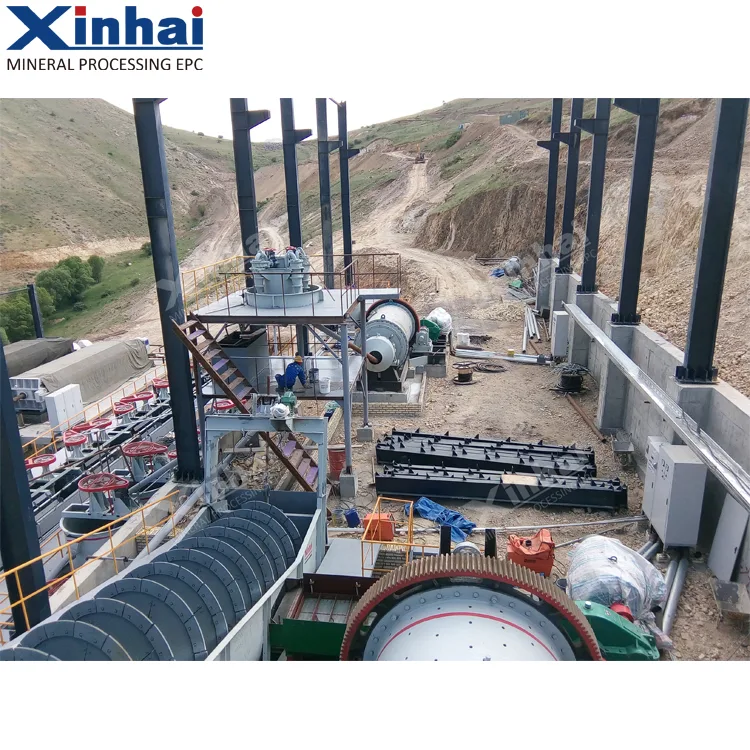
Lithium: dense medium separation where flotation cannot do it alone
Spodumene and petalite ores treated by a combination of dense medium separation, gravity recovery of tantalum and niobium, mica flotation and spodumene flotation.
Process route
Lithium ores rarely respond to one method. The Zimbabwe programme is the clearest example: petalite would not separate by flotation, so dense medium separation was tested and adopted.
Crushing and screening
Three stage crushing with screening to prepare a size range suited to dense medium separation.
Dense medium separation
Petalite is recovered by DMS, verified in the laboratory with tetrabromoethane heavy liquid and at pilot scale with ferrosilicon medium.
Grinding and classification
The DMS product is ground and classified ahead of the separation circuits.
Gravity and desliming
Tantalum and niobium are recovered by gravity separation, then the pulp is deslimed before flotation.
Mica then spodumene flotation
Mica is floated first, then spodumene, producing the lithium concentrate.
Equipment in this circuit
Manufactured at our own bases and matched to the circuit capacity, not bought package by package.
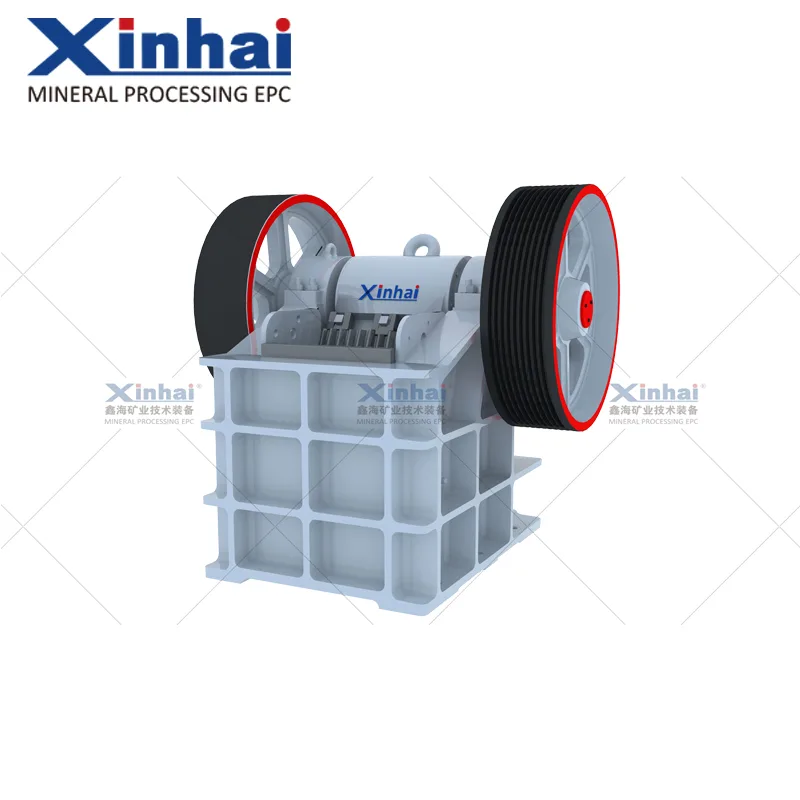
Jaw crusher
PE series for primary crushing and PEX series for secondary and fine crushing.
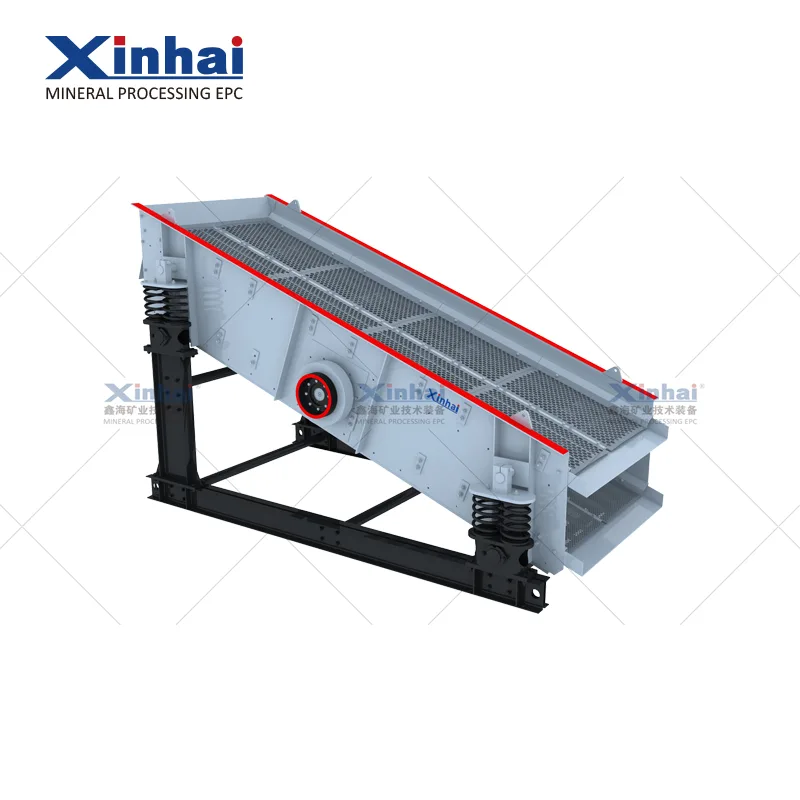
Vibrating screen
Circular, linear, dewatering and banana screens for sizing and dewatering.
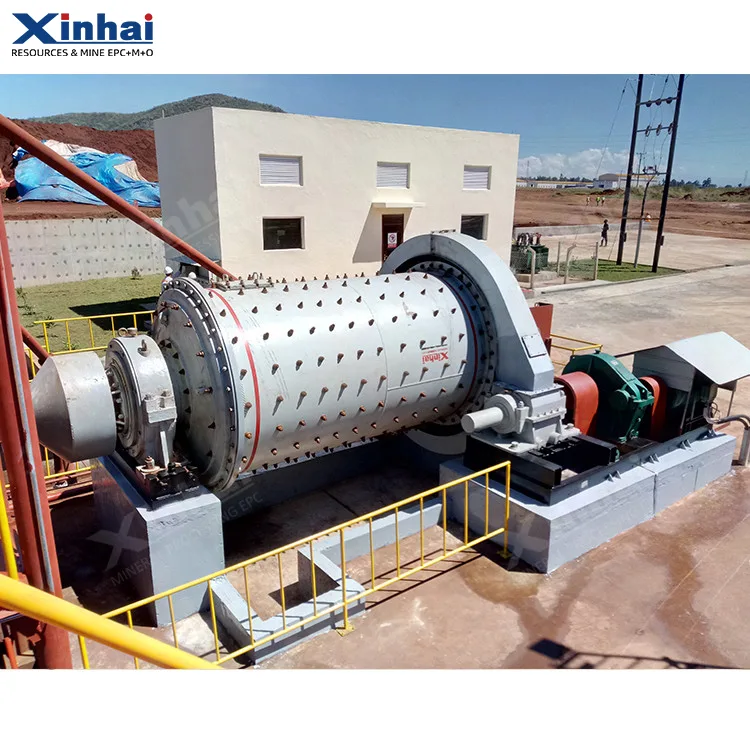
Ball mill
Wet grid mills for primary grinding and overflow mills for secondary grinding.
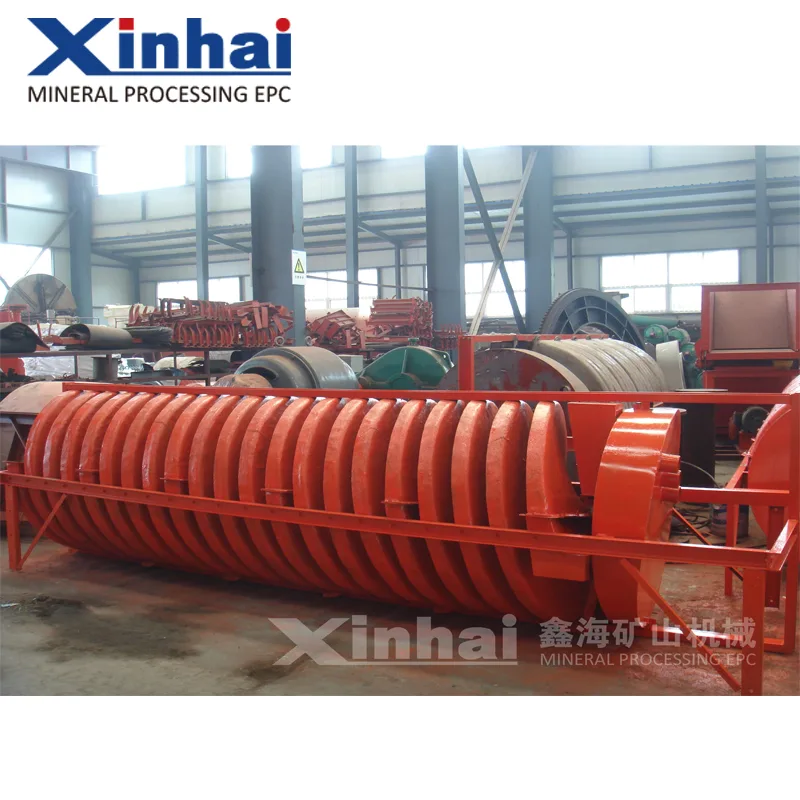
Spiral chute
Roughing duty on heavy mineral sands and alluvial deposits.
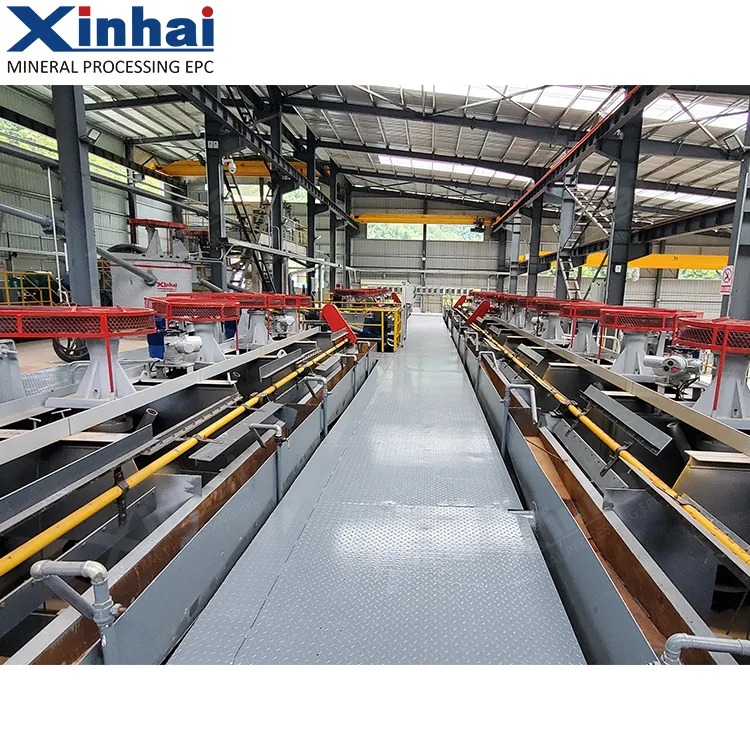
Flotation cells
SF, JJF, XCF, KYF and BF machines up to 320 m3, plus flotation columns.
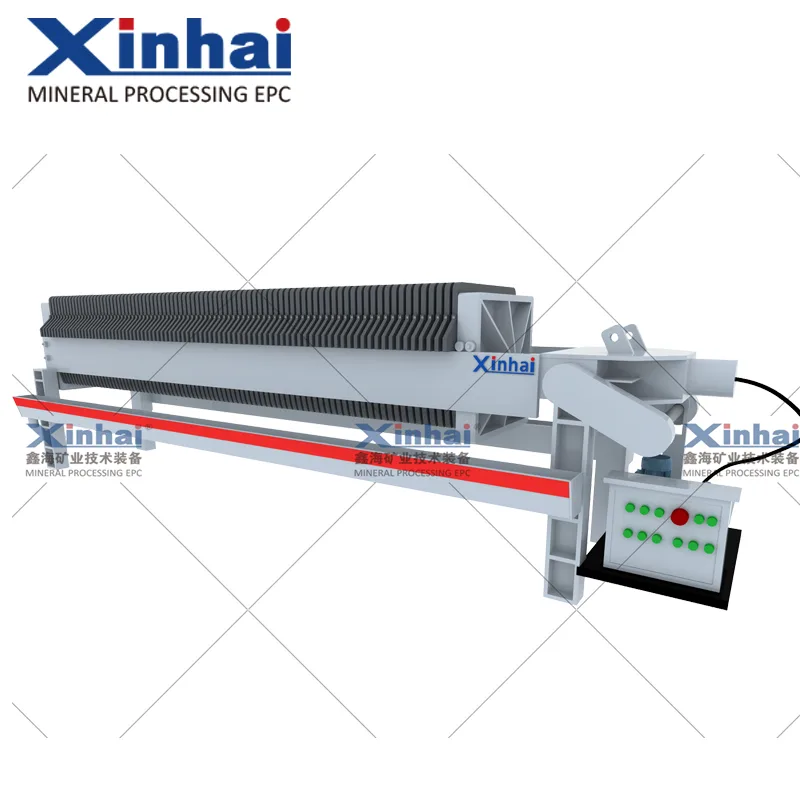
Filter press
Plate and frame and membrane presses for concentrate and tailings dewatering.
Reference projects
Figures are those reported for these projects in the Xinhai project and test brochures.
2 Mt/a spodumene plant, recovery 59.5% to 69%, concentrate above 5.5%, 364 days to production
EPC+M+OTailings retreatment test, lithium concentrate at 3.83% Li2O and 57.92% recovery
Test workCommon questions
Why use dense medium separation on a lithium ore?
Can lithium be recovered from tailings?
How fast can a lithium plant be built?
Before the flowsheet: is your lithium even in a mineral?
Some of the lithium resource families below cannot be treated by a concentrator at all. Establish which one you own first.
Most of the world's lithium isn't in rock you can crush. USGS Professional Paper 1802 breaks present and potential sources down by deposit type, citing Evans (2012): closed-basin brines 58%, pegmatites and lithium-enriched granites 26%, lithium clays 7%, and oilfield brines, geothermal brines and jadarite at 3% each. Read that before you read any flowsheet. The circuit above is a mineral concentrator, and for several of the sources on that list a concentrator is simply the wrong purchase.
| What you actually have | What gets built | Does this page apply? |
|---|---|---|
| Pegmatite, spodumene or petalite dominant | Crushing, dense medium separation, grinding, flotation, dewatering | Yes. This is the route. |
| Pegmatite, lepidolite dominant | The same equipment list, with the mica stage becoming the product stage | Partly. See below. |
| Closed-basin, oilfield or geothermal brine | Evaporation ponds or a direct-extraction chemical plant | No. Nothing here transfers. That is a chemical engineering scope. |
| Claystone or hectorite | Leaching and chemical processing | No, and we will say so rather than quote you a concentrator. |
Then ask which mineral is carrying the lithium
A head grade of so-much Li2O tells you the deposit is worth a conversation. It does not tell you what to build. The same USGS paper lists lithium at 3.73% by weight in spodumene, 2.09% in petalite and 3.58% in the mica lepidolite. Three minerals, three densities, three surface chemistries, one assay that hides all of it.
Lepidolite is where this bites hardest. In the flowsheet above mica is floated off ahead of the spodumene as something to get rid of. In a lepidolite-dominant ore that stage becomes the product stage. Same cells, opposite intent, and a completely different reagent regime downstream. Quantitative mineralogy by domain is what settles it, which is why test work comes before design here rather than alongside it. Compare the routes across our other ore types and you'll see the same pattern: the mineral picks the circuit, not the metal.
Particle size decides more of your recovery than reagents do
Each separation stage works inside a size window. Your lithium either lands in one or it doesn't.
Reagents get the attention in most enquiries. Size decides more of the answer.
A 2025 review of coarse-particle lithium beneficiation in Scientific Reports puts dense medium separation to work over roughly 0.5-75 mm for early gangue rejection. Mechanical flotation of spodumene, the same review reports, does its useful work in the 38-150 µm range. Conventional gravity separation is a third window again: shaking tables, jigs and spirals, which that review notes struggle to retain particles below 0.075 mm. Three windows, a gap between the coarsest and the finest, and a slimes population under the bottom of all three that none of them serves, which is exactly why desliming sits where it does in the sequence above.
The number that sizes your plant
How much of your lithium lands in each of those windows after crushing? That single distribution moves capex, water demand and recovery more than any reagent choice you'll make. A head assay cannot answer it. A size-by-size assay can, run on material selected to span the ore domains rather than on the best intersection in the core shed.
Ask your metallurgical lab for lithium deportment by size fraction, per domain, and get it before design fixes crusher and mill sizes. Who produces that data matters as much as the data. It is a metallurgical deliverable on a geologically selected sample, and when it arrives late the plant gets sized on assumptions nobody wants to own later.
Crush size is a commitment, not a setting
Over-crush and value falls out of the dense medium window for good. It doesn't come back. It reappears as flotation feed, as extra grinding power, or as slimes, and each of those is a worse economic outcome than the one you skipped. Crush size belongs to the flowsheet, and the machines are then built to it. That is the order our equipment manufacturing works in.
What pre-concentration is worth, stated honestly
The same review reports mass rejection of 20-60% while holding lithium recoveries above 90%, and energy savings of up to 50% for coarse particle routes. Treat those as the published spread across the ores studied. They are not a number for your model. Where your ore sits inside the range depends on liberation size and on how much waste is genuinely separable at coarse size, and only your sample knows.
Test sensor-based sorting on the same sample while you're at it. The review describes laser sorting applied to contaminated low-grade lithium ore at 14-25 mm and 25-75 mm. Dry, water-light, and worth ruling in or out early rather than discovering it after the water balance is fixed.
Where our scope stops, and what your offtake has to say about it
A concentrator sells mineral concentrate. Getting that boundary wrong distorts every number downstream of it.
Lithium trades in three forms, as USGS Professional Paper 1802 puts it: mineral concentrates, mineral compounds, and refined metal. We build the plant that makes the first one.
Concentrate and chemical are two purchases, not one
Roasting spodumene and leaching it into carbonate or hydroxide is chemical plant engineering. Different discipline, different hazard profile, different contractor. Our quote covers the concentrator, its tailings facility and the site infrastructure around it, whether that lands as EPC turnkey or a wider operating scope. It does not cover a conversion plant, and a proposal that quietly bundles both is worth reading twice.
Budget against the right price series too. USGS reported spodumene at 6% lithium oxide leaving Australia at about $800 per ton in January 2025, rising to about $970 in November, while the U.S. annual average fixed-contract price for battery-grade lithium carbonate was $9,000 per ton over the same year. Two products. Two markets. One of them is what your plant sells.
Two traps in the offtake
- Pricing a petalite product against a spodumene benchmark. Petalite carries roughly half the lithium of spodumene by weight, so a clean petalite concentrate cannot reach the 6% Li2O grade the market quotes. No circuit fixes stoichiometry. Price it as its own product, and settle that wording before engineering starts.
- Assuming the direct-use market will take the difference. Lithium minerals do go straight into glass and ceramics as concentrates, but USGS puts ceramics and glass at 4% of global end use. It's a real door. It's a narrow one, with its own impurity limits.
By-products: only once somebody has signed for them
Pegmatite ore rarely carries lithium alone, which is why gravity recovery of tantalum and niobium appears in the circuit above. A tailings retreatment test programme in our engineering archive produced mica, caesium, feldspar and quartz alongside the lithium concentrate on that sample. Every one of those is another circuit to build, staff and maintain.
So make it a commercial decision, not a metallurgical reflex. A by-product without a buyer is capex that builds a stockpile. Where quartz and feldspar are genuinely saleable, the purification duty is its own problem with its own spec, closer to what the quartz sand route deals with than to lithium flotation. Send us the assay suite you already have, say which by-products your offtake actually names, and the scope comes back drawn around that answer rather than around a wish list. The full delivery record on the Zimbabwe 2 Mt/a plant shows how that scope reads when it's settled.
Sources
External references for the industry context on this page. Project figures come from our own project brochures.
USGS Professional Paper 1802-K: Lithium (Critical Mineral Resources of the United States)Deposit-type shares of present and potential lithium sources (closed-basin brines 58%, pegmatites 26%, clays 7%, oilfield/geothermal brines and jadarite 3% each, citing Evans 2012); lithium content by weight in spodumene, petalite and lepidolite; hectorite as the sedimentary lithium mineral; and lithium trading in three forms, mineral concentrates, mineral compounds and refined metal.
USGS Mineral Commodity Summaries 2026: LithiumSpodumene (6% lithium oxide) f.o.b. Australia prices of about $800 per ton in January 2025 rising to about $970 in November; the $9,000 per ton U.S. annual average fixed-contract price for battery-grade lithium carbonate in 2025; ceramics and glass at 4% of global end use; and lithium minerals used directly as mineral concentrates in ceramics and glass.
Opoku et al. (2025), An overview of coarse particle beneficiation of lithium ores, Scientific ReportsDense medium separation employed for early gangue rejection over the coarse 0.5-75 mm range; conventional gravity separation (shaking tables, jigs and spirals) struggling to retain fine particles below 0.075 mm; mechanical flotation of spodumene effective at 38-150 micrometres; mass rejection of 20-60% at lithium recoveries above 90%; energy savings up to 50% for coarse particle beneficiation; and laser sorting of low-grade lithium ore at 14-25 mm and 25-75 mm.
Send the assay and the tonnage target for your Lithium project.