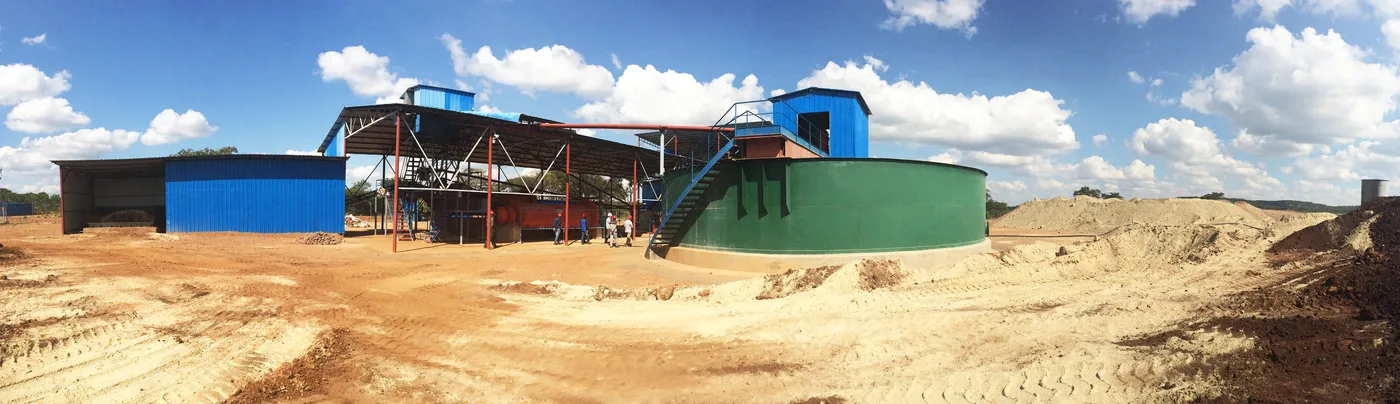
Build the plant in the factory, assemble it on site
Main equipment and steel structures are pre-assembled and tested at our manufacturing base, so field work reduces to foundations and module connection.
Why it changes the schedule
Factory pre-assembly
Main equipment and steel structures are assembled and tested inside the manufacturing base, where quality control is better than any remote site can offer.
Fast erection
On site the work is foundations and module connection, which compresses the build from months of field construction to weeks.
Lower site risk
Weather, labour availability and site logistics affect a much smaller share of the programme.
Repeatable design
Standardised module units can be reused across projects, which shortens engineering as well as construction.
Where modular is the right answer
- Small and medium plants that need to start fast
- Remote sites or regions with weak construction infrastructure
- Projects where time to first production drives the economics
- Expansions that must connect to an operating plant
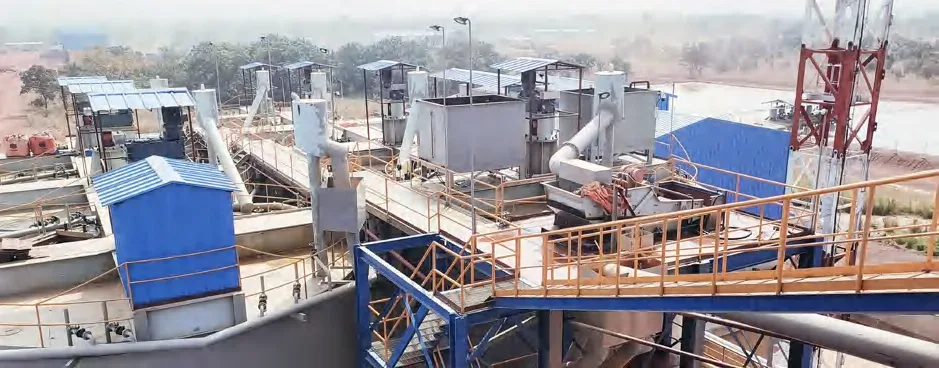
How it connects to the rest of the scope
Designed as modules
The design institute has a dedicated modular engineering team, so modularisation is a design decision rather than a packing exercise.
Mine designBuilt in our own base
The modular and prefabricated manufacturing base is one of the three Xinhai production bases.
ManufacturingErected by our crews
Foundations, module connection, installation and commissioning stay inside the EPC scope.
EPC deliveryWhen modular is the wrong call
The honest limits of pre-fabrication, and how to tell before you commit steel.
Modular delivery is a construction method. It doesn't change your flowsheet, your recovery or your ore body. So before anyone quotes you a module count, be clear about what the method can carry and what it can't.
The equipment envelope decides it first
Our manufacturing ceilings run to ball mills at φ7 m, flotation cells at 320 m³ per unit, leach tanks at φ20 m × 20 m and thickeners at φ100 m. Read that last one again. A thickener at the top of that range is not a module and never will be. At that diameter the unit travels as plate, shell sections, rake components and drives, and it gets erected in the field no matter whose name is on the contract.
That's the real boundary, and it isn't tonnage. Modular stops paying at the point where the largest single item in your flowsheet won't travel assembled, because everything sequenced around that item now waits for field erection anyway.
The route can veto the design
Module size is set by the weakest link between the fabrication yard and your pad: port crane capacity, road width, bridge axle limits, overhead clearance, permitting time for oversize loads. Cap the envelope at a flat rack and the module count multiplies. Every extra module is another set of connections, another alignment check, another chance for a flange to arrive out of tolerance. The schedule advantage erodes quietly, and it erodes on site where it costs the most.
An unsettled flowsheet is the expensive case
Pre-fabrication buys schedule by freezing decisions early. If the ore is variable and the flowsheet is still moving between scoping, prefeasibility and feasibility, freezing early is precisely what you don't want. Wait. Finish the test work first, then modularise. Bench and pilot work is cheap next to re-cutting fabricated steel.
Modular, conventional, or both
| Decision driver | Points to modular | Points to field erection |
|---|---|---|
| Largest single item | Ships assembled inside the transport envelope | Exceeds the envelope and must be site-built |
| Site access | Remote, thin local construction market | Established industrial area with skilled trades |
| Schedule pressure | Time to first production drives the economics | Capital cost dominates and time is available |
| Flowsheet certainty | Locked by completed test work | Still moving between study stages |
| Local content rules | No in-country fabrication requirement | Mandated local fabrication or labour hours |
| Expansion plan | Add duplicate module trains later | One large train sized once for the life of mine |
Most projects land somewhere in the middle. Reagent preparation, dewatering, sampling and assay, electrical rooms, control rooms and smaller gravity or thickening duties skid up cleanly. Primary crushing and large grinding usually don't. A plant that is half modular is a perfectly good answer, as long as the split follows the equipment list rather than a sales preference. Where the answer comes back conventional, the delivery route is ordinary EPC turnkey construction.
What to have ready before you ask for a quote
The data pack that turns an indicative range into a scoped proposal.
Most enquiries arrive with a tonnage target and little else. We can still reply, but the reply is a range, and ranges move. Here is what turns a range into a scoped proposal.
The ore package
A representative sample. Not your best intersection. Sample selection should follow the geological and block model, so the composite reflects what the plant will treat over its life. CIM's best practice guidelines are written to assist the Qualified Person in the planning, supervision, preparation and reporting of a mineral resource and mineral reserve estimate; the same planning discipline belongs on the metallurgical composite, settled before the sample is cut rather than argued about after. Send enough mass for bench work with material left over for a confirmatory run, because re-sampling means another shipment, another queue in the laboratory, and a schedule slip nobody put in the plan.
With it, send the assay suite: payable elements, penalty elements, and the gangue that will decide your reagent bill. Every item on that list lands somewhere in the module split. Mineralogy and liberation size set the grind, and the grind sets the mill, which is the item most likely to break the transport envelope and push the front of the plant into field erection. Hardness indices size the crushing and grinding power draw, and that draw decides whether the switchroom ships as one containerised electrical building or has to split in two. The reagent suite sets how many mixing, dosing and storage skids the reagent area needs, and whether any of them carry handling requirements that change the shipping mode. If there is clay, slimes or fine material, settling and filtration behaviour matters too: dewatering sizes the back half of the plant, a thickener at the large end of our manufacturing range cannot travel assembled at all, and the back half is where we most often watch module counts go wrong. Xinhai reports roughly 200 test work programmes a year across more than 70 ore types, according to the company's published figures. The laboratory is CNAS-accredited and operates to ISO/IEC 17025.
The site package
Modules still sit on concrete, and concrete still needs soil data. Read each item below for what it does to the module split, not only for the box it ticks.
- Topography and a geotechnical investigation at the plant pad. A module concentrates its mass onto a few bearing points instead of spreading it through a field-built structure, so bearing capacity and settlement decide the foundation type under each unit, and a weak result pushes you toward more and smaller modules, or toward piling. Topography also fixes where a crawler crane can stand and how far it has to reach, which caps lift weight before a single drawing exists.
- Water source, seasonal availability, water chemistry. Chemistry drives materials selection, and materials selection decides whether water treatment and reagent make-up can be built as repeatable skids or have to become lined and alloyed one-offs that give back most of the fabrication advantage.
- Power: grid connection distance and reliability, or the generation you will build yourself. This decides whether the substation, switchroom and control room arrive as pre-wired modules already tested in the shop, or stay field-built with cable pulled on site. Pre-wired electrical rooms are among the more dependable gains in modular scope, and the call is settled by data you either have or you don't.
- Climate extremes, seismic zone, altitude. Seismic category sets bracing and anchorage inside the module frame, and it sets the restraint that holds the module down on the deck. Cold-climate enclosure adds cladding, insulation, width and weight, and width is exactly what the transport envelope has least of.
- Access road, camp, laydown area. Laydown size decides how many modules can be staged at once, which fixes the erection sequence, which fixes the shipping sequence, which fixes the fabrication sequence in the yard. The yard schedule sits downstream of your laydown area, whether or not anyone drew it that way.
None of this is exotic. It is simply, routinely, late.
The logistics package
Nearest usable port and its heavy-lift capacity. Road classification from port to site. Bridge and culvert limits. Overhead clearances. Permit process and lead time for abnormal loads. Crane availability at site, or whether the crane is another thing you are shipping.
This is the package buyers leave out most often, in our experience, and it produces a failure mode we see repeatedly: a module size chosen for fabrication efficiency that the receiving route cannot physically accept. It surfaces after fabrication. That is the worst possible moment for it to surface.
Who signs which number
Three numbers drive a modular plant decision, and they should not all come from the same desk.
- The resource. Reported under a recognised code. Under JORC, public reporting of Exploration Results, Mineral Resources or Ore Reserves has to be based on and fairly reflect documentation prepared by a Competent Person, and the company has to obtain that person's prior written consent to the form and context in which it reports; NI 43-101 reporting runs on the equivalent Qualified Person under the CIM standards. The whole point of those codes is that an outside reader can rely on the estimate.
- The recovery and the flowsheet. From test work on your sample, signed by the metallurgist who ran it. Recovery depends on ore type and is confirmed by test work before design. A recovery figure quoted before test work is a sales number wearing an engineering font.
- The capital cost and the schedule. From the engineering contractor, estimated against the first two rather than against a catalogue. Our design institute integrates 17 disciplines and works through the normal ladder of scoping, prefeasibility and feasibility, then FEED, basic and detailed design. That progression is covered under full lifecycle mine design.
If one party signs all three, the estimate contains no independent check. Worth noticing before you fund it.
Where the scope boundary actually sits
Modules are the process plant. The rest of the project still has to be built.
"Modular plant" describes the process plant. It does not describe the mine. Confusing the two is where modular schedules go to die.
What arrives on the ship, and what doesn't
Modules cover the process line. They do not cover the tailings storage facility, the water supply, the power line, the haul roads, the workshops or the camp. Those stay conventional civil works, and they stay on the critical path. If the modules land in weeks while the tailings facility takes far longer, the tailings facility is your schedule; the plant simply waits, fully assembled, for somewhere to put the tailings. So tailings belongs in the engineering scope from the first study, not bolted on afterwards. It is a design discipline inside our institute, and our project record includes a 3,000 t/d graphite tailings storage facility design in Tanzania.
Certification crosses the border with the steel
A pre-assembled unit shipped into a jurisdiction is machinery placed on that market, subject to whatever that market demands. For the European Economic Area that means an EU declaration of conformity and CE marking, with the framework moving from the 2006 machinery directive to Regulation (EU) 2023/1230, which applies from 20 January 2027. Our 1,200 t/d fluorite EPC in Italy, the first full-scale Xinhai EPC in Europe, ran with CE certification throughout.
Ask about welding as well. A module is a welded steel structure that gets lifted, shipped, then lifted again. Xinhai holds CSA W47.1 certification, which the Canadian Welding Bureau administers and which certifies the company rather than the product: welding procedures, welders, supervisors and welding engineers all have to be qualified and stay qualified. Non-destructive testing follows ISO 9712. Put those questions to any fabricator quoting you modules, ours included.
EPC, EPCM, EPC+O: the difference is who owns the seams
- EPC. One contract. Design, fabrication, shipping, erection and commissioning sit with us, and so does the interface risk between them. You pay for that transfer inside the price, and you should expect to.
- EPCM. You hold the contracts; we manage the engineering and the delivery. Less embedded contingency, more load on your owner's team. It works when that team already exists.
- EPC+O. We hand over a running plant and stay to operate it, which changes how the design gets made, because an engineer who has to live in the plant specifies maintenance access differently. Xinhai reports more than 600 mine EPC+M+O projects across 100+ countries and regions, according to the company's published figures.
- Contract operation. The asset stays yours; production performance becomes ours. Covered under contract mining and operation.
The useful question was never modular against stick-built. It is who owns the seam between the module and everything it bolts to: foundations, tailings, power, water, and the people who will run it on a wet Tuesday in year three. Get that boundary written down before the drawings start.
Sources
External references for the industry context on this page. Project figures come from our own project brochures.
JORC – Competent Person's Consent Form and reporting requirementsPublic Reporting of Exploration Results, Mineral Resources or Ore Reserves must be based on and fairly reflect documentation prepared by a Competent Person, and the company must obtain that person's prior written consent to the form and context in which it reports.
CIM – Estimation of Mineral Resources and Mineral Reserves Best Practice GuidelinesThe guidelines are intended to assist the Qualified Person in the planning, supervision, preparation and reporting of Mineral Resource and Mineral Reserve estimates.
CWB Group – CSA W47.1 certification of companies for fusion welding of steelCSA W47.1 certifies the fabricating company, requiring qualified welding procedures, welders, supervisors and welding engineers.
EU-OSHA – Regulation (EU) 2023/1230 on machineryMachinery placed on the EU market needs an EU declaration of conformity and CE marking; the regulation applies from 20 January 2027.
Send us the ore, the tonnage target and the site conditions. We reply with a scoped proposal.