Lead and zinc: selective flotation on ores that rarely cooperate
Copper, lead and zinc polymetallic ores treated by preferential flotation or bulk flotation followed by separation, with concentrate regrinding where liberation requires it.
Process route
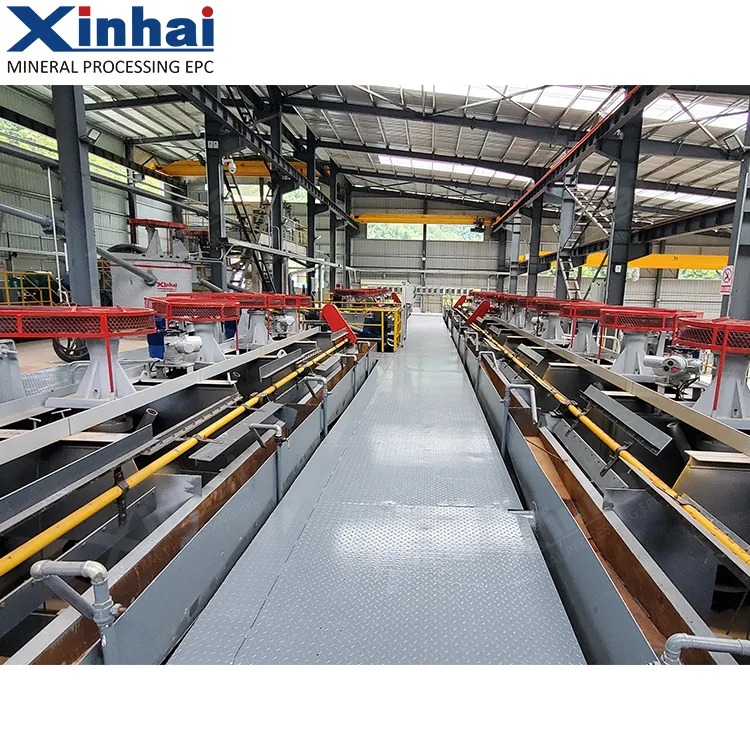
Polymetallic sulphides are the hardest flotation problem in the base metal group, because depressants for one mineral usually affect another. The reagent regime comes out of locked cycle tests.
Crushing and grinding
Crushing and closed circuit ball milling to the liberation size established by test work.
Preferential or bulk flotation
Either lead is floated first with zinc depressed, or a bulk concentrate is produced and separated afterwards, depending on the ore.
Concentrate regrind
Bulk concentrate is reground where composite particles limit the cleaner grade.
Separation and cleaning
Selective flotation splits the bulk concentrate into lead, zinc and, where present, copper products, each cleaned in several stages.
Dewatering
Thickening and filtration for each concentrate stream, and tailings handling.
Equipment in this circuit
Manufactured at our own bases and matched to the circuit capacity, not bought package by package.
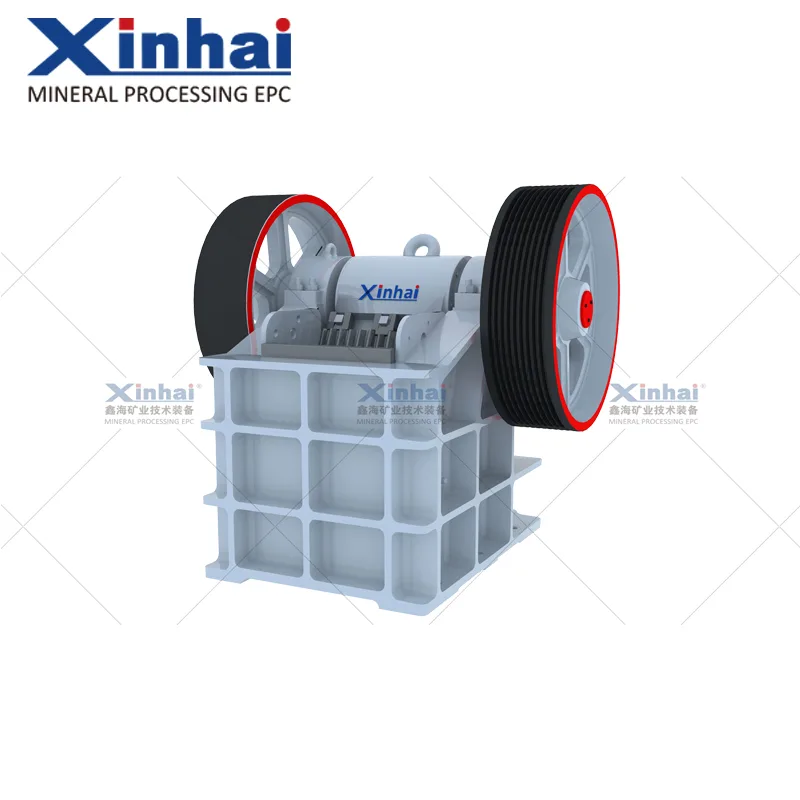
Jaw crusher
PE series for primary crushing and PEX series for secondary and fine crushing.
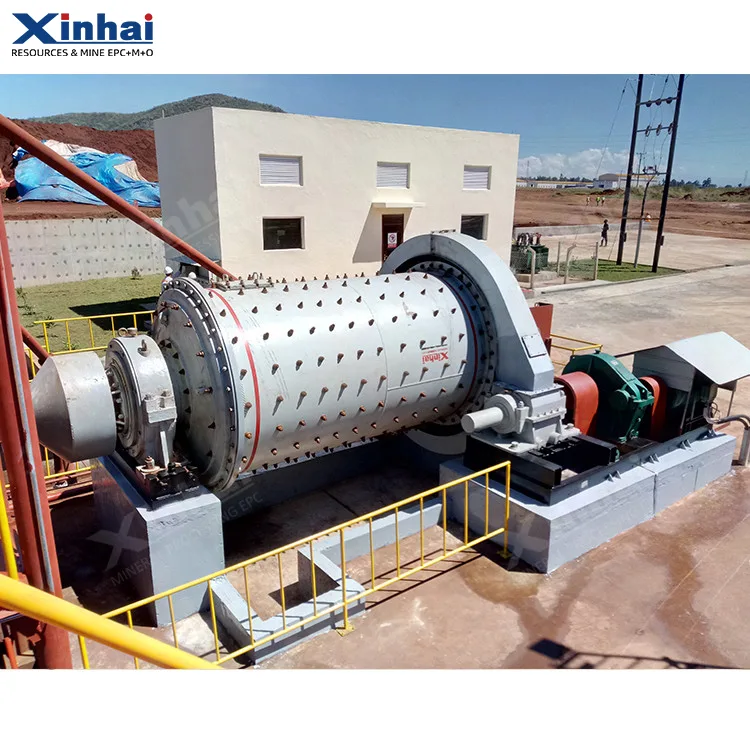
Ball mill
Wet grid mills for primary grinding and overflow mills for secondary grinding.
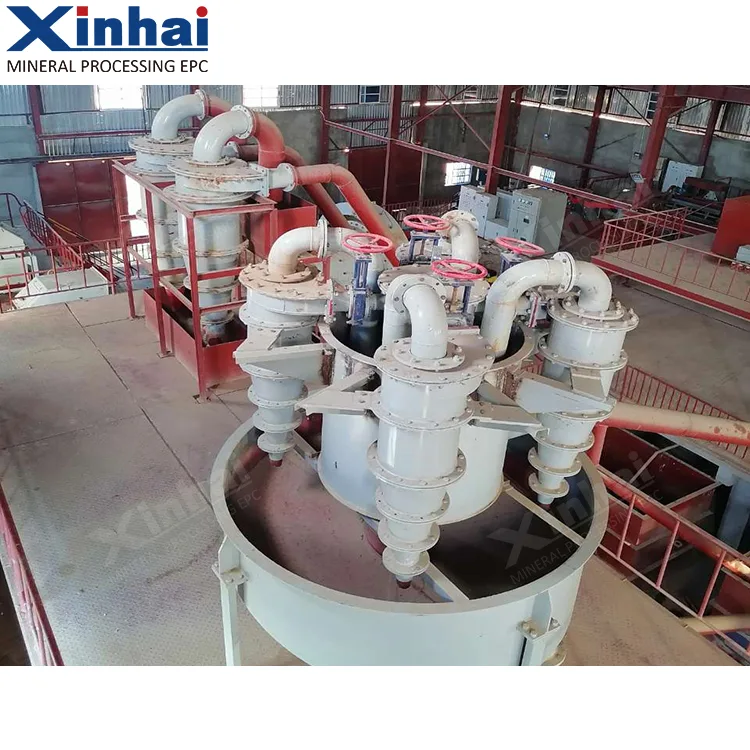
Hydrocyclone
XC, XHCV and XN series for classification, desliming and thickening duty.
Flotation cells
SF, JJF, XCF, KYF and BF machines up to 320 m3, plus flotation columns.
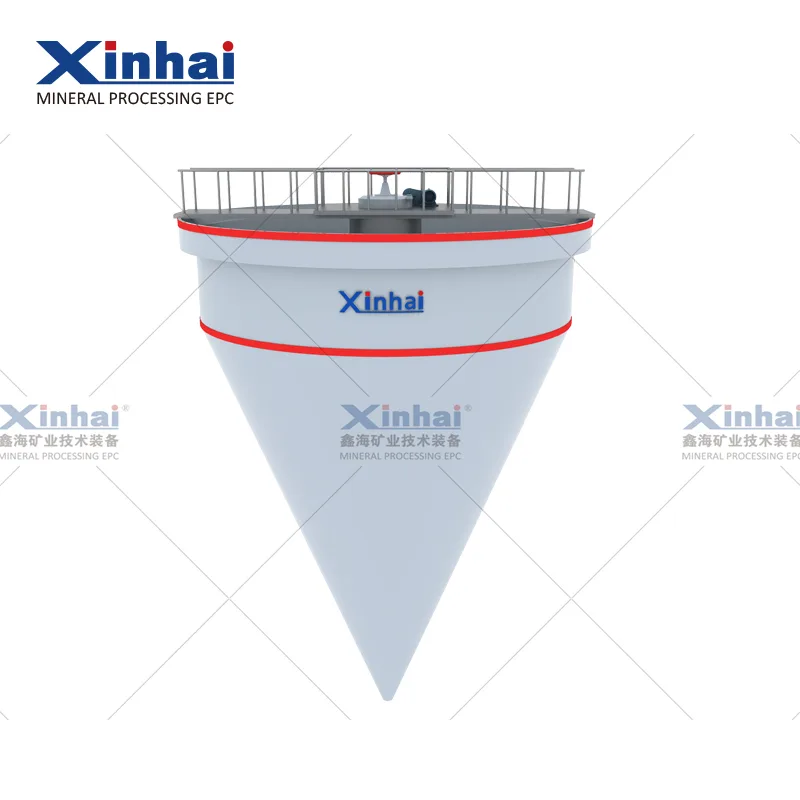
Thickener
Deep cone and high efficiency thickeners up to 100 m diameter.
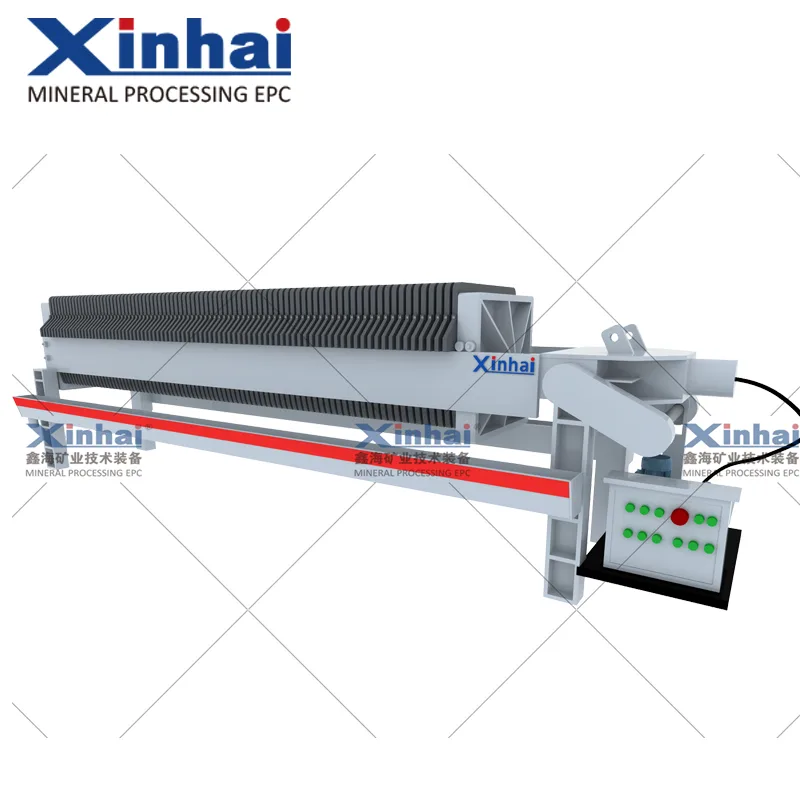
Filter press
Plate and frame and membrane presses for concentrate and tailings dewatering.
Reference projects
Figures are those reported for these projects in the Xinhai project and test brochures.
0.99 Mt/a lead and zinc processing plant
Plant scope500 t/d lead and zinc processing plant
Plant scope1,100 t/d copper and lead processing plant
Plant scopeCommon questions
Preferential or bulk flotation, which is better?
How are silver credits handled?
What about oxidised lead-zinc ores?
Before the quote: what a polymetallic enquiry has to arrive with
Lead-zinc enquiries rarely stall on capacity. They stall on missing data.
A one-line email and one good-looking rock. It's a common way enquiries reach us, and one reason so many of them stall. Nobody can size a polymetallic circuit from a hand specimen. Here is what actually moves an enquiry to a flowsheet.
The sample, and how it was chosen
Send composites, not your best material. Split them the way your geologist already splits the orebody, by ore type, by depth, by mineralisation style, because a preferential circuit that behaves on one domain can misbehave on the next and a single blended composite hides exactly that. Sample mass follows the test. Bench flotation runs on modest charges; a semi-continuous campaign needs bulk material. Confirm the charge each test needs before the crate leaves site.
The assay suite is wider than Pb and Zn
Pb, Zn, Cu, Fe, S, Ag and Au is where you start, not where you stop. Minor elements decide the economics on both sides of the ledger. The USGS deposit model for Mississippi Valley-type lead-zinc ores records germanium, gallium and cadmium at recoverable economic levels in some deposits. A different group of trace elements matters for the opposite reason: arsenic, antimony, bismuth and mercury are the names that turn up on the penalty schedule of a smelter contract. Get both groups measured before a flowsheet exists. Rejecting a penalty element is a circuit design decision, not a commissioning adjustment.
Mineralogy, not only chemistry
An assay tells you how much silver the ore holds. It doesn't tell you where the silver sits, substituted in galena, in discrete sulphosalts, or locked inside sphalerite, and that answer decides which concentrate ends up carrying the payable metal. Iron in sphalerite works the same way: iron-rich sphalerite resists the usual depressant regime, and you'd rather learn that in a laboratory than in a cleaner bank. Gangue counts as well. USGS lists dolomite and calcite among the dominant minerals of these carbonate-hosted ores and puts their iron sulfide content generally below 5%, which is a very different pH and depression problem from a pyritic massive sulphide feed.
What the site imposes
Water source and water chemistry, grid power or on-site generation, road and port access, altitude, frost depth, seismicity. None of it changes the mineralogy. All of it changes how the plant gets built, and whether a modular plant is the sensible form. Our test work group needs the sample; the design institute needs the site data. Send both at once and you save a round trip.
Where preferential flotation stops being the answer
Four feeds that need a different route, and the data that decides each one.
Two orebodies can both be labelled lead-zinc and still need different plants. Choosing the route from the deposit's name is a recurring judgement error in tender documents, and once a tender has specified preferential flotation the flowsheet is locked before anyone tested whether the ore supports it.
| If your feed is | Why the standard route struggles | What we would examine instead | What settles it |
|---|---|---|---|
| Oxidised, or mixed oxide and sulphide | Sulphide collectors have little to attach to on oxidised surfaces, and blending drags the sulphide circuit down with the oxide fraction | Sulphidisation ahead of flotation, amine flotation of the zinc oxide minerals, or a leach route; sometimes two circuits rather than one | How Pb and Zn split between oxide and sulphide phases, read by size fraction |
| Coarse-grained, hosted in barren carbonate | Nothing fails. You are simply paying to grind waste rock | Dense medium pre-concentration ahead of the mill, rejecting host rock at coarse size | Heavy liquid separation on the bench, then a pilot dense medium campaign — the same test sequence we ran on the Zimbabwe spodumene ore, where dense medium separation was adopted after flotation could not separate petalite |
| Galena and sphalerite finely intergrown | Cleaner grade caps out because composite particles never liberate at the primary grind | Regrind capacity on the rougher or bulk concentrate, plus an honest look at whether a saleable bulk product beats a poor separation | Liberation analysis by size fraction, then locked cycle tests at more than one grind |
| Small tonnage, or a short reserve life | A full selective plant's capital never gets paid back | Modular plant, staged capacity, or toll treatment through a neighbouring mill | The reserve statement and the mine plan, not metallurgy |
The scale question people skip
USGS puts the median Mississippi Valley-type deposit at 7.0 million tonnes grading roughly 7.9% Pb plus Zn, and notes these deposits usually occur in districts of several to as many as 400 deposits rather than standing alone. Read that as a plant brief and it says something concrete. Many lead-zinc orebodies are individually small, so the capital case often rests on feeding one mill from several of them, or on a plant that can be moved.
Our own lead-zinc references sit at opposite ends of that spread: a 0.99 Mt/a lead and zinc plant in Inner Mongolia and a 500 t/d lead and zinc plant in Heilongjiang, with a 1,100 t/d copper and lead plant in Namibia somewhere between. Same pair of payable metals, plants of a different order. Crushing stages, surge capacity, the number of cleaner stages that can be justified, whether the concentrate leaves by truck or by container, the size of the maintenance crew the site can carry: all of that moves with tonnage, and none of it copies across. A route can be metallurgically sound and still fail on tonnage. That is a mine planning answer rather than a flotation answer, and it belongs in the conversation early.
Concentrate terms, and how they set the delivery boundary
Two payable products out of one ore, and a set of contract questions a single-metal plant never has to answer.
The smelter is a design input, not an afterthought
Concentrate has to go somewhere, and that somewhere may not be in your country. USGS reports that nearly all United States lead concentrate has been exported since the last domestic primary lead refinery closed in 2013, while zinc ore and concentrate reaching US buyers over 2021–24 came mainly from Peru, Canada and Turkey. Long concentrate journeys are ordinary. They also mean the treatment charge, the payable metal schedule and the penalty list of a smelter you may never visit are inputs to your cleaner circuit.
Companion metals sharpen the point. USGS records domestic lead coming from five Missouri lead mines plus byproduct output at two Alaskan zinc mines and two Idaho silver mines, and counts 4 primary silver mines against 31 base- and precious-metal operations that produce silver as byproduct or coproduct. Most silver revenue rides on somebody else's concentrate. Silver most often follows the lead concentrate, but that is an outcome of where the silver sits in the ore, not a rule, and confirming it on your ore is half a flotation question and half a contract question.
What a lead-zinc handover has to define
The delivery shapes themselves are set out on EPC turnkey delivery and contract mining and operation, and choosing between them before the enquiry goes out changes what gets quoted; what follows is what a two-product polymetallic plant adds on top of whichever shape you pick.
Which ore the performance run is fed. An acceptance test has to name its feed: which domain, which grade range, which mineralogy. Where an oxidised upper zone sits over primary sulphide, a run fed from sulphide stockpiles proves nothing about the first years of the mine schedule, and a run fed from the oxide zone condemns a circuit that was never drawn for it. Tie the acceptance feed to the mining sequence, and write down in advance what happens when the plant meets a domain the test programme never saw.
Two products, two sets of numbers. Lead concentrate and zinc concentrate each carry a grade and a recovery, and the two pull against each other. Depress harder to keep lead out of the zinc product and lead units go to tailings; ease off and the zinc concentrate arrives at the smelter carrying a deduction. A single blended recovery figure hides that trade completely. Each product line needs its own acceptance criteria, and the contract needs a stated order of priority for the case where the ore will not give both at once.
Where the silver credit lands. When the payable silver rides in the lead concentrate, the party running the flotation circuit is steering a revenue line that may sit on someone else's account. Set out whether silver is assayed in both concentrates, which party the credit belongs to, and whether silver sits inside the acceptance test or outside it. A reagent regime tuned only for Pb and Zn grade can quietly move silver into the product that pays less for it.
Who owns the moisture number. A polymetallic plant ships two cargoes, and each is certified on its own. Lead concentrate and zinc concentrate are separate bulk cargo shipping names in the IMSBC Code mineral concentrates schedule, classified Group A for the liquefaction risk, so each carries its own transportable moisture limit determined on its own material. That means two filter duties rather than one, and they rarely land in the same place: a dense galena product and a fine sphalerite cleaner product do not dewater alike. The Code puts the signed TML certificate and the moisture declaration in the shipper's hands, not the plant builder's, so a scope that ends at filter cake leaves the owner certifying a number somebody else designed for. Name in the contract who determines each limit, who samples the cake and how often, and who carries it when a parcel is turned away at the load port.
Sources
External references for the industry context on this page. Project figures come from our own project brochures.
Mississippi Valley-Type Lead-Zinc Deposit Model (Leach, D.L., and Taylor, R.D., 2009, U.S. Geological Survey Open-File Report 2009-1213)Median MVT deposit size of 7.0 million tonnes at about 7.9 percent Pb+Zn; districts of several to as many as 400 deposits; recoverable economic levels of germanium, gallium and cadmium in some deposits; dominant minerals sphalerite, galena, pyrite, marcasite, dolomite and calcite in dolostone and limestone hosts; iron sulfide content generally less than five percent.
Lead, Mineral Commodity Summaries 2026 (U.S. Geological Survey, February 2026)US lead was produced by five lead mines in Missouri plus as a byproduct at two zinc mines in Alaska and two silver mines in Idaho; nearly all lead concentrate production has been exported since the last primary lead refinery closed in 2013.
Zinc, Mineral Commodity Summaries 2026 (U.S. Geological Survey, February 2026)Import sources of zinc ores and concentrates for 2021-24: Peru 50 percent, Canada 19 percent, Turkey 18 percent, Republic of Korea 7 percent.
Silver, Mineral Commodity Summaries 2026 (U.S. Geological Survey, February 2026)In 2025 silver was produced at 4 silver mines and as a byproduct or coproduct from 31 domestic base- and precious-metal operations.
IMSBC Code, 2023 amendments (IMO Resolution MSC.539(107), adopted 8 June 2023)Group A consists of cargoes which may liquefy or undergo dynamic separation if shipped at a moisture content in excess of their transportable moisture limit; TML is the maximum moisture content considered safe for carriage in ships not complying with 7.3.2; LEAD CONCENTRATE and ZINC CONCENTRATE are listed bulk cargo shipping names under the Mineral concentrates schedule, hazard classification Group A; under 4.3.2 the shipper shall provide the ship's master with a signed certificate of the TML and a signed certificate or declaration of the moisture content.
Send the assay and the tonnage target for your Lead and zinc project.