Oxidized Gold Ore: Why It Leaches Differently
Field notes on what oxidized gold ore is, why it leaches without pre-treatment, and the tests that decide between heap leach and CIL.
What Oxidised Gold Ore Actually Is
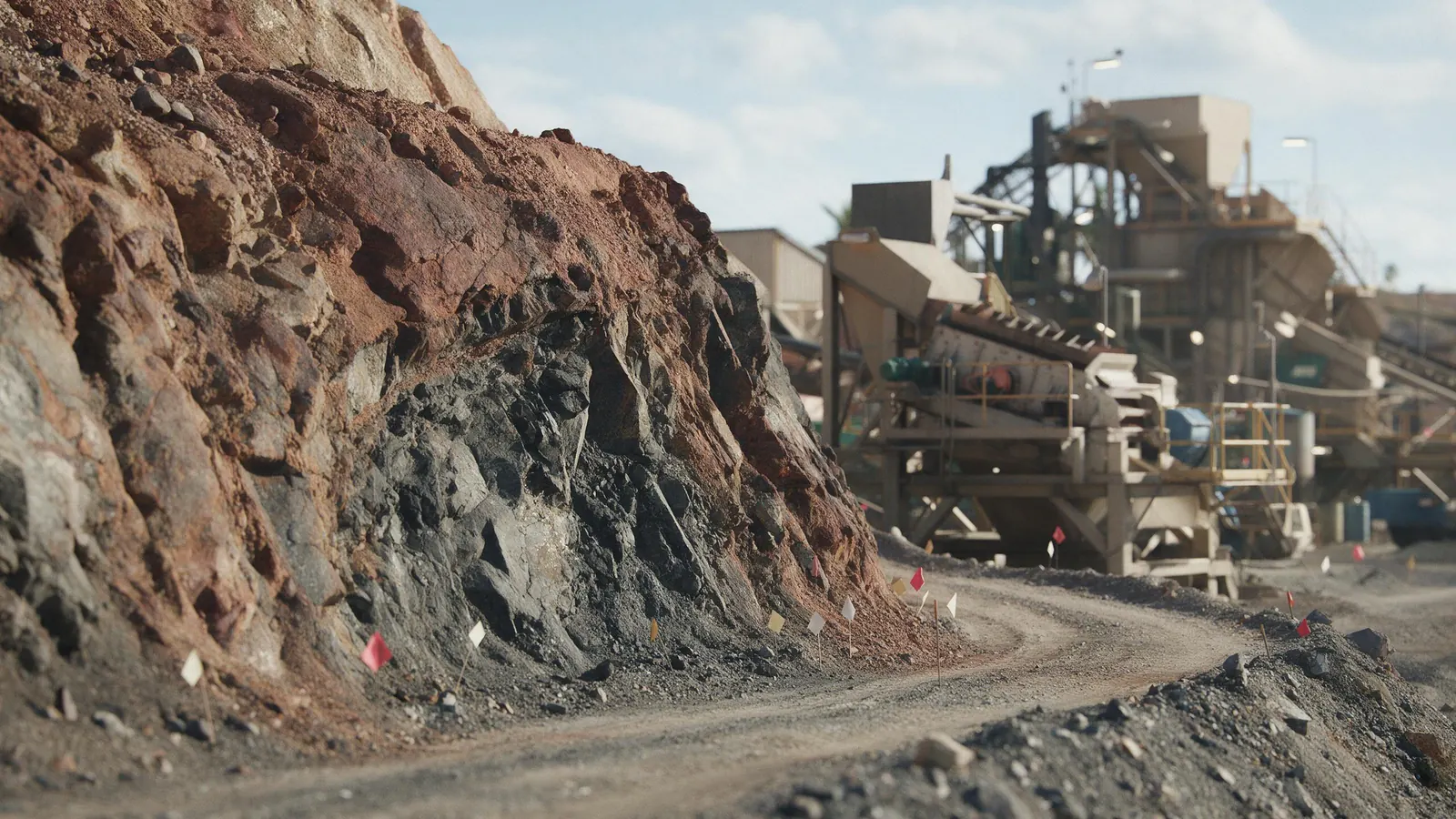
Say a mine owner asks why their oxidized gold ore leaches without a pre-oxidation step while the sulphide ore next door won't. That question frames nearly every decision in this corner of gold metallurgy. Oxidised gold ore is the weathered product of a sulphide gold deposit that has been exposed to air and water. The gold itself does not oxidise. The host sulphides do. Pyrite, arsenopyrite and their relatives break down. They leave behind yellow to red iron oxides, iron hydroxides, clays and quartz gangue. The United States Geological Survey describes the rusty rind as yellow to red ferric oxide and ferric hydroxide phases, limonite, replacing FeS2 minerals.USGS oxidised sulphide guide
That weathering does two favours for a plant. It opens pore space. It exposes gold particles that would otherwise sit locked inside sulphide grains. The result is a free-milling ore that can go straight to leaching. Fresh sulphide ore often needs oxidation before cyanide will touch the gold. Weathered ore doesn't. But oxidised ore is not a single material. The oxidation front can be deep in one part of the pit and shallow in another. Blending starts there. You'll see why that matters when the grade control model disagrees with the plant feed, which it will. For a broader classification, see types of gold ore.
Why Oxidised Ore Usually Leaches Well
It's not a promise.
The weathered rock is more porous and more friable than the fresh sulphide below. That reduces grinding energy, because the rock doesn't need to be ground as fine to expose gold surfaces. Gold occurs as free or exposed particles. Cyanide dissolves liberated gold without pre-treatment. In primary metallurgical processes for gold bearing ores, gold is extracted with an alkaline cyanide solution, as ASTM E1600 puts it. If the gold is already liberated or near surface, the cyanide has a short path.
Gold particle exposure isn't uniform. Some gold sits in cracks left by dissolving pyrite. Some sits as fine inclusions in iron oxides. Those differences change leach rate. A bottle roll that reaches its plateau quickly tells you one story. A column that takes far longer to get there tells you another.
Don't confuse usually with always. Recovery depends on the ore body, not just the weathering. Some oxidised ores leach quickly. Others lose time to preg-robbing or cyanicides. You need testwork before you quote anything to a board. A bottle roll costs far less than a wrong flowsheet.
Problems That Can Still Kill a Project
Three problems recur on oxide projects. Clay and fine particles. They can seal a heap leach pad, cut percolation, and leave solution running over the top instead of through the ore. Copper-bearing oxides. They consume cyanide, often faster than the gold does. Variable oxidation depth. One bench of a pit might be fully oxidised, the next only half. If you design for one metal accounting, you'll chase it the whole mine life.
A deeper oxidation profile can also mean more secondary iron minerals. Those can be fine and slippery. They pack tight in a heap. Even a modest clay fraction can cut percolation sharply. Lower grades are common in oxide zones too. That pushes a mine toward larger throughput just to keep contained gold up. Not every project dies from cyanide chemistry. Some die from percolation and blending decisions made too early. A heap that never drains properly is a slow-moving financial problem, and nobody sees it in a bench-scale test.
Diagnostic Tests Before Choosing Heap Leach or CIL
The first test a metallurgist reaches for is a bottle roll. It's quick and cheap. It gives a first read on leach kinetics and ultimate recovery under agitation. Column leach tests come next if heap leach is on the table. They are slower and need weeks, not days, because they measure how solution actually percolates through a column of crushed ore.
Cyanide consumption tests show what the reagent bill will look like. Copper solubility tests show whether cyanide-soluble copper will sit in your feed. A clay and fines assessment, sometimes just a wet screen and a percolation column, tells you whether a heap will breathe or plug. Mineralogy and grade distribution show whether the gold is at surface, in fractures, or trapped in residual sulphides. Yantai Xinhai Mining Research & Design Co., Ltd. holds CNAS laboratory accreditation to ISO/IEC 17025 for this kind of work. For the leach chemistry, see gold leaching.
| Test | Question it answers | Heap leach implication | CIL implication |
|---|---|---|---|
| Bottle roll | How fast and how far gold dissolves under agitation | Sets an upper recovery target | Directly informs leach residence time |
| Column leach | Does solution percolate through crushed ore at a useful rate | Confirms or rejects heap leach | Not critical, but shows coarse ore behaviour |
| Cyanide consumption | How much cyanide is lost per tonne of ore | Controls reagent cost and permits | Controls tank reagent inventory |
| Copper solubility | Will copper dissolve and consume cyanide | High copper can kill heap economics | High copper may need sulphuric acid pre-leach |
| Clay and fines | Is there enough fine material to block percolation | Low permeability is fatal | Can be tolerated with agitation |
| Mineralogy and grade distribution | Where is the gold, and is it truly oxidised | Defines cut-off and stacking plan | Defines blend and grind target |
Heap Leach vs CIL: How the Test Results Decide
The choice isn't ideological. Heap leach suits a permeable, low-grade ore body where slower recovery is acceptable and capital is constrained. CIL suits higher grade, clay-heavy or finely ground ore where you need faster recovery and can afford an agitation plant. If the column test shows percolation falling apart, heap leach is off. If the bottle roll shows good recovery but the column stalls, CIL starts looking better.
Why would an owner choose CIL if heap leach is cheaper to build? Because a heap that doesn't drain is not a plant. There's no single cut-off number that flips the decision. It's a combination of grade, clay content, copper, particle size and site elevation. You run the tests, then you run the trade-off. Sometimes a combined approach makes sense: heap leach the low-grade rind and CIL the deeper sulphide transition.
When oxidation depth varies, blending strategy matters more than the flowsheet. A plant that sees half oxidised ore and half transition ore will swing. That's why you blend by benches, not by daily shovel. Your heap leach test columns need to be built from representative composites, not a single lucky drill core.
From Testwork to Flowsheet: What a Processing Plant Needs
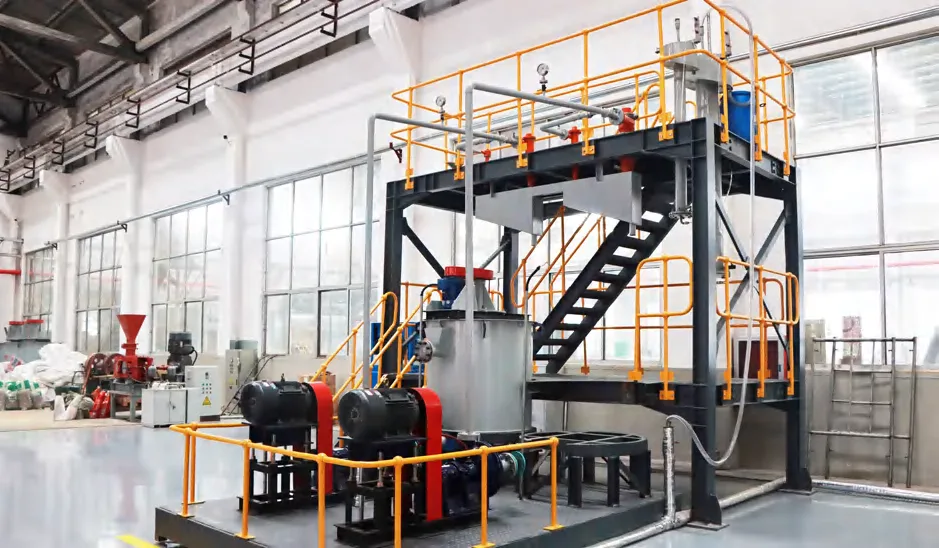
Once the route is set, the plant has to support it. Crushing and grinding produce a size where gold is accessible. Classification keeps oversize out. Leaching and adsorption follow. For CIL, the equipment train includes leach tanks, carbon retention screens, and a desorption and electrowinning circuit. Heap leach needs stacking, solution ponds, and a carbon or zinc recovery step. Thickening and tailings handling sit at the back. See gold processing solutions.
For heap leach, the stacking height and solution application rate come from the column test. For CIL, the tank size and carbon concentration come from the bottle roll. The flowsheet is not a catalogue. It's a response to measured behaviour. If the mineralogy shows fine gold, you may add a regrind mill. If it shows residual sulphides, you may need a small pre-aeration circuit.
Cyanide management sits everywhere, because cyanide is toxic and the environmental controls are not optional. The International Cyanide Management Code promotes safe and environmentally responsible management of cyanide used within the gold and silver mining industry. Your process design has to show how cyanide is stored, mixed, monitored and detoxified before tailings leave the plant.
How an EPC Contractor De-Risks an Oxidized Gold Project
An EPC contractor earns its fee by making the testwork drive the design. The process engineers who run the bottle rolls should be the same team that writes the piping and instrumentation diagrams. That continuity is worth more than a stack of sales claims. When a contractor controls engineering, procurement and construction, the design does not get lost between a laboratory report and a fabrication shop. Xinhai reports more than 600 mine EPC+M+O projects, according to the company's published figures, and the pattern is the same: testwork-led design, then procurement built to the flowsheet, then construction done to the drawings.
Procurement without testwork is a gamble. You'll see contractors offer a list of standard equipment before the drill core has even been logged. That's backwards. The testwork should narrow the equipment list. If copper is present, the cyanide circuit may need a larger detox section downstream. If clay is present, the heap leach stacking system changes. Those choices have to be made before fabrication, not after.
Mine construction management and operation management close the loop. If the same group handles plant start-up, the lab-to-debugging continuity is real. Ask any contractor whether the same engineers who ran the column tests will be on site for commissioning. If the answer is no, keep asking. For a closer look at the equipment train, see gold processing solutions or about the company.
Frequently asked questions
What does oxidized gold ore look like?
It commonly shows rusty yellow to red staining from iron oxides and hydroxides, often limonite, replacing the original sulphide minerals. The rock may be friable and clay-rich, with quartz gangue. The gold itself is usually invisible.
What rock is most likely to have gold in it?
Gold is most commonly recovered from orogenic deposits formed by hydrothermal fluids moving along crustal-scale faults in metamorphosed volcanic or siliciclastic sedimentary rock. The host rock can vary, so the geological setting matters more than any single rock name.
What are signs of gold in the ground?
Visible gold is rare. More useful signs include iron oxide staining after sulphides, quartz gangue, hydrothermal alteration, and a position on a crustal-scale fault. These are geological clues, not proof, so they still need to be tested.
How do you test oxidized gold ore before choosing a processing route?
Run a bottle roll and a column leach test. Measure cyanide consumption and copper solubility. Check clay and fines for percolation. Complete the mineralogy and grade distribution to see where the gold sits and whether oxidation is complete. The results choose between heap leach and CIL.