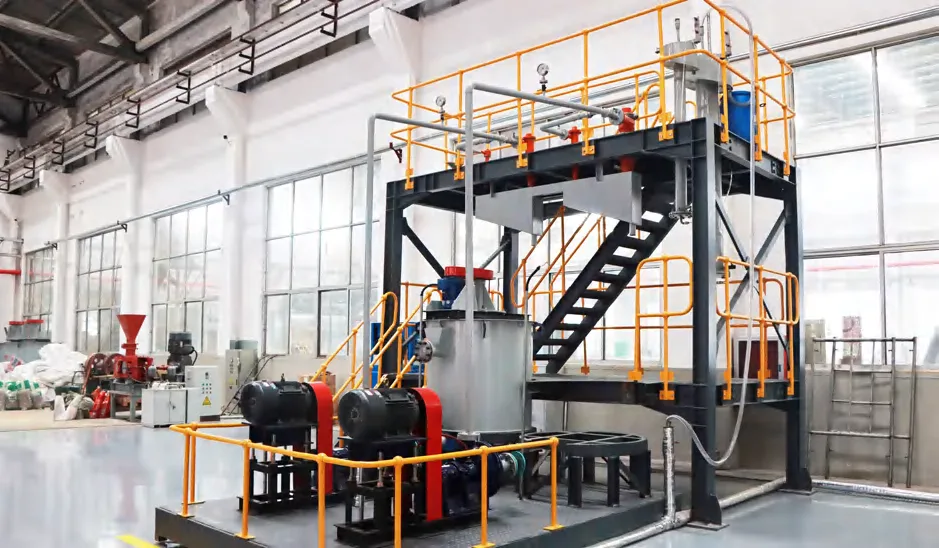
Mineral Processing Plant Cost: A Budgeting Framework
A mineral processing plant cost estimate is only as honest as the engineering definition behind it.
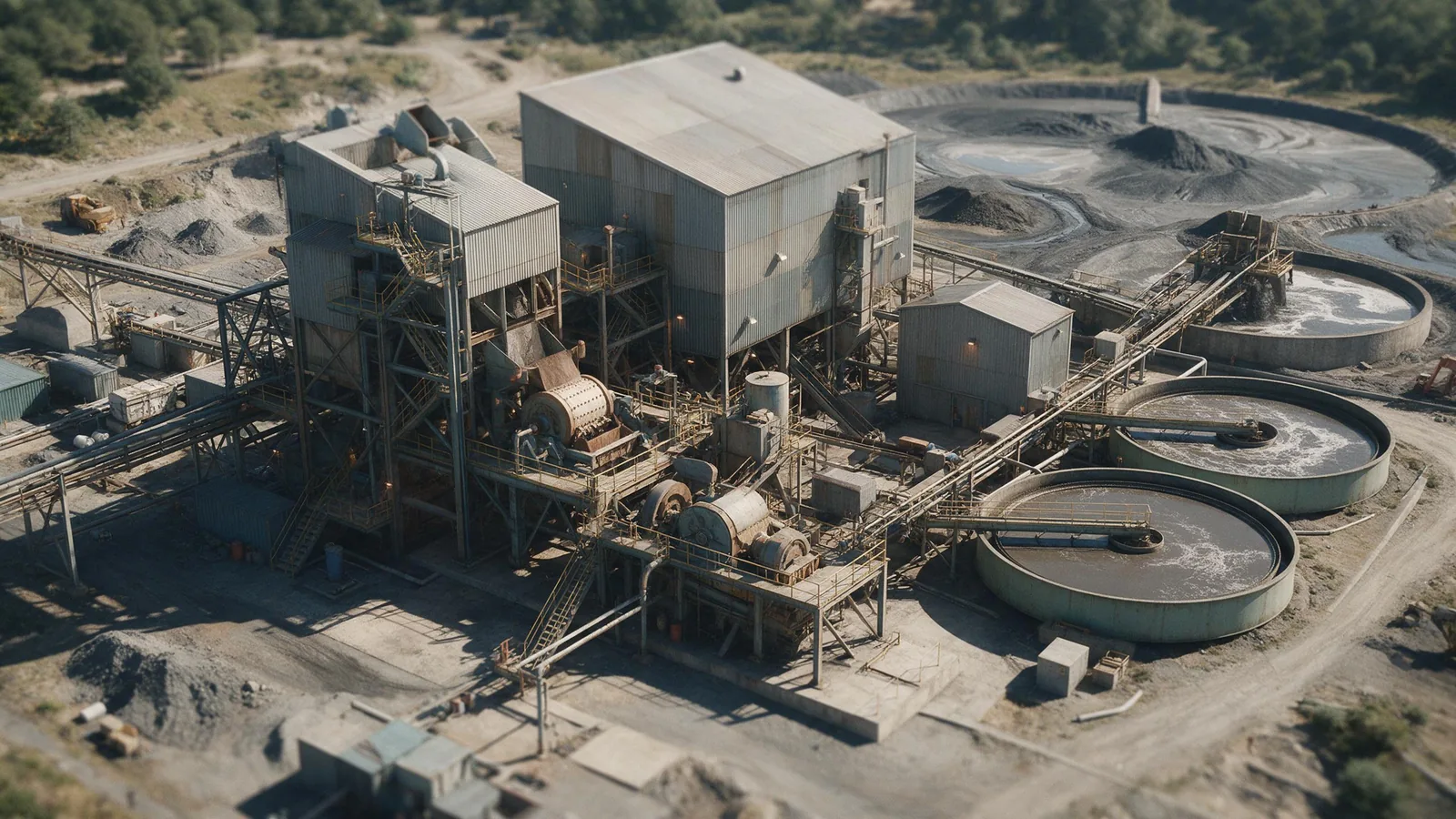
Say a mine owner asks for a mineral processing plant cost estimate. The honest answer? Nobody credible names a single number without seeing the testwork and the flowsheet.
How a mineral processing plant budget is actually built
Say a mine owner asks for a mineral processing plant cost estimate. The first thing you'll notice is that the number shifts as engineering definition sharpens. A scoping study might rely on a block flow diagram and a rough equipment list. A feasibility study will be built on testwork, sized equipment, site surveys and a civil layout. The estimate tightens because the unknowns shrink.
You can watch this happen across three study phases. Scoping, sometimes called order-of-magnitude, is the cheapest to produce and the least precise. Prefeasibility adds more definition. Feasibility, also called bankable, is the one a lender will scrutinise. In each phase the capital cost estimate carries a contingency that reflects the unproven parts of the design. The more engineering you complete, the less you need contingency. That relationship isn't linear, and it isn't a promise. It's a simple rule: better definition lowers uncertainty.
Cost isn't a single line. A proper budget adds up testwork, engineering, equipment supply, freight, installation, civils, power, water, permits, working capital and closure planning. Missing one of those doesn't make a cheap plant. It makes a misleading estimate.
Why testwork and flowsheet definition come before any price
No honest contractor prices a flowsheet they haven't seen. The ore dictates the route: flotation, gravity, magnetic separation, leaching, or some combination. You don't know that without testwork. A few bottles of drill core in a laboratory will tell you more about plant cost than a year of spreadsheet work. A metallurgical test programme typically starts with rougher and cleaner tests, then moves to locked-cycle testing, then maybe a pilot run. Each stage de-risks the next design decision.
Once you know the process route, you can size machines. P80 is the size 80 per cent of the mass passes. Feed size distribution, work index and throughput set the grinding mill dimensions. Flotation circuit volume follows residence time and pulp density. Thickener area comes from settling flux. Filtration area comes from cake formation rate. These are not guesses. They are outputs of testwork and mass balance, and they drive the equipment list that drives the capital estimate. Skip the testwork and you'll buy the wrong mill, the wrong flotation cells, the wrong thickener. The budget overrun is already baked in.
That's why a mineral processing test laboratory is a cost-control tool, not an overhead. If a supplier quotes a plant without asking for your ore characterisation, treat the quote as a placeholder. Mineral processing test service covers the full testwork-to-flowsheet chain, but the principle applies to any serious supplier: flowsheet first, then price.
One standards point worth knowing: sieve analysis defines the size classes you'll measure against. ISO 3310-1:2000 specifies the aperture sizes for test sieves from 125 mm down to 20 μm. If two labs disagree on particle size, your mass balance falls apart, and so does your equipment sizing.
What actually drives the cost: equipment, civils, and owner's costs
A mineral processing plant budget has three big blocks, and each one hides costs if you don't split it out.
Equipment is the first block. Crushing, screening, grinding, classification, flotation, thickening, filtration, pumping, and electrical and control systems all scale with throughput and ore hardness. The crusher product size follows the flowsheet: primary jaw or gyratory crushers reduce run-of-mine rock, then cone crushers take over for secondary and tertiary stages. The U.S. EPA crushed stone processing reference describes the same unit operations: crushing, screening, size classification, material handling and storage. That sequence is what you're paying for, whether the plant handles limestone or a polymetallic sulphide.
Grinding is usually the largest single equipment cost in a hard-rock flowsheet. A 10,000 t/d plant needs a different mill than a 500 t/d plant, and not just a bigger shell. Motor, drive, liner metallurgy, bearing type and foundation all change. The same applies to flotation cells, thickeners and filter presses. A modular plant can reduce onsite civil work and installation time, but the equipment still has to be sized for the duty. If you're weighing a skid-mounted option, modular plant service is one way to see what prefabrication changes and what it doesn't.
Civils and structural work form the second block. Concrete foundations, retaining walls, steelwork, buildings, sumps, bunds and access roads are not a fixed percentage of equipment cost. They follow site conditions, seismic zone, soil bearing capacity and climate. A plant on soft ground in a cyclone region will carry a different civils bill than one on rock in the desert.
Owner's costs come third, and they're the most underestimated. Power line connection, water supply, tailings storage, permits, logistics, import duties, site accommodation, first fills, commissioning spares and working capital all predate a tonne of product. You can build a beautiful plant and still not start it because the transformer hasn't arrived. That is a cost, and it belongs in the budget.
Safety compliance is a line item too. Machine guarding, interlocked guards on revolving drums and barriers around fan blades are legal requirements, not optional extras. OSHA 1910.212 sets the general guarding requirements for all machines. If a quotation lists equipment ex works without guarding, installation or civils, it's not a plant cost. It's a shopping list.
Where EPC+M+O changes the risk split on cost
Traditional contracting splits risk across multiple parties: the testwork lab, the designer, the equipment vendor, the civil contractor, the installation crew, and the operator. Every interface is a place where cost can leak. EPC+M+O puts one party in charge of engineering, procurement, construction, mine construction management and mine operation management. The owner still carries financing and permitting risk, but the delivery risk sits with the contractor.
That doesn't mean the estimate gets cheaper. It means the estimate gets more honest, because the same team that prices the equipment also has to build and run the plant. A contractor who will operate the plant for five years has a different incentive than one who only supplies machines. You'll hear this called lifecycle thinking. In practice, it changes what gets included in the capital estimate: commissioning support, operator training, spares holding, and ramp-up assistance are no longer afterthoughts.
Flexible cooperation models exist for a reason. EPC, EPCM, joint venture, performance-based O&M, profit sharing and cost-plus each move risk and reward differently. A performance-based operation agreement, for example, ties payment to throughput or recovery outcomes, so the contractor has skin in the game. That's far more useful than arguing about whether a gearbox was in scope.
In a module-built plant, the same logic applies earlier. Prefabricated steel frames and prewired skids move work from a muddy site to a controlled factory environment. That shortens installation time and reduces field rework, which is where small errors become expensive. Modular plant approach illustrates what a prefabricated scope includes, but ask any EPC contractor what percentage of their budget is factory labour versus site labour. It will tell you how they think about risk.
How Xinhai approaches plant design and cost control
Xinhai's design chain starts with resource assessment and moves through prefeasibility, feasibility, FEED and detailed engineering before construction drawings are issued. That full lifecycle design, as the company's engineering pages describe, locks in the majority of life-of-mine cost before ground is broken. One of the more useful concepts in this space: integrated design decisions lock in the majority of life-of-mine cost before ground is broken. You'll see that principle in engineering literature, not just in marketing material.
Xinhai holds ISO 9001:2015, ISO 14001:2015 and ISO 45001:2018 management system certifications. These standards don't make a plant cheaper. They impose document control, environmental review and occupational safety discipline, which means the estimate you receive should include those systems, not hide them.
Xinhai reports 600+ mine EPC+M+O projects, according to the company's published figures. The intelligent equipment research institute has a 110,000 m² factory area, according to the company's published figures. Those are company-reported numbers, not third-party audited statistics, and they tell you something about fabrication capacity and project repetition. They don't tell you what your plant will cost. Only your ore and your site can do that.
What to check before you accept any plant cost estimate
A price on a page is a promise with no engineering behind it. Here's the test you can run in a meeting.
Ask for the basis of estimate. Ask which testwork reports the equipment sizing relied on. Ask whether the estimate includes installation, civils, owner's costs, spares and commissioning. Ask how contingency was calculated and whether it's included in the headline number or added later. Ask what's excluded. Exclusions are the fine print where budget overruns hide.
A complete quotation should list the following items, and you should check each one.
| Quotation line item | What to check |
|---|---|
| Process flow diagram and mass balance | Is it based on your ore testwork, not a generic flowsheet? |
| Equipment list with model and duty | Are motors, drives, liners and duty points specified? |
| Freight and logistics | Incoterms, packing, export documentation and local transport? |
| Installation and civils | Foundations, structural steel, piping, electrical, instrumentation? |
| Owner's costs | Power, water, permits, land, site accommodation, first fills? |
| Commissioning and ramp-up | Who supplies spares, training and operational support? |
| Contingency | Is it a stated percentage, and does it shrink as design matures? |
| Exclusions | What is explicitly not in the price? Ask for a written list. |
That table is your defence against a magical number. If a supplier won't itemise, walk away. A plant budget is not a lottery ticket. It's an engineering document, built the same way you'd build the plant: step by step, with every interface named.
Finally, compare two quotes like for like. Align the scope, the voltage, the elevation, the seismic zone, the tailings duty and the battery limits. A cheap quotation that omits the transformer and the tailings line isn't cheaper. It's just incomplete. For a second opinion on a flowsheet or estimate, talk to an engineer before you commit.
Frequently asked questions
What does mineral processing do?
Mineral processing separates valuable minerals from waste rock using physical and chemical methods. The main stages are crushing, grinding, classification, concentration (flotation, gravity, magnetic separation or leaching), dewatering and tailings disposal. The goal is a saleable concentrate or metal product.
What is the cost of an iron ore processing plant?
No single answer exists. The cost depends on feed grade, ore hardness, magnetic separation or flotation route, throughput, civils, power, water and logistics. A credible supplier will only price an iron ore plant after testwork defines the flowsheet. Ask for a basis of estimate before comparing numbers.
How much is a gold processing plant?
A gold plant cost depends on whether you use CIP/CIL, flotation, heap leaching or gravity recovery, and on throughput, gold grade, preg-robbing and site conditions. There is no fixed price per tonne. You should ask any bidder to itemise equipment, installation, civils, owner's costs and contingency.
What factors determine mineral processing plant cost per ton?
The ore's hardness, feed size, liberation size, process route, throughput, equipment duty, civils, energy cost, water availability, tailings storage and permitting all change the capital cost per tonne of installed capacity. Fixed costs spread over larger throughput often reduce unit capital, but only if the orebody supports the scale.