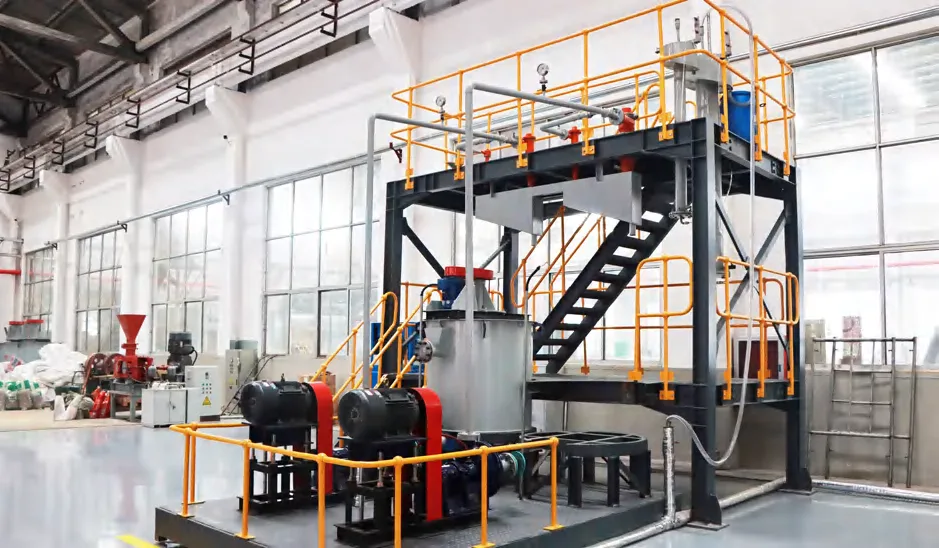
Flash Flotation in the Grinding Circuit
Flash flotation recovers liberated mineral early in the grinding circuit, before overgrinding can destroy recovery.
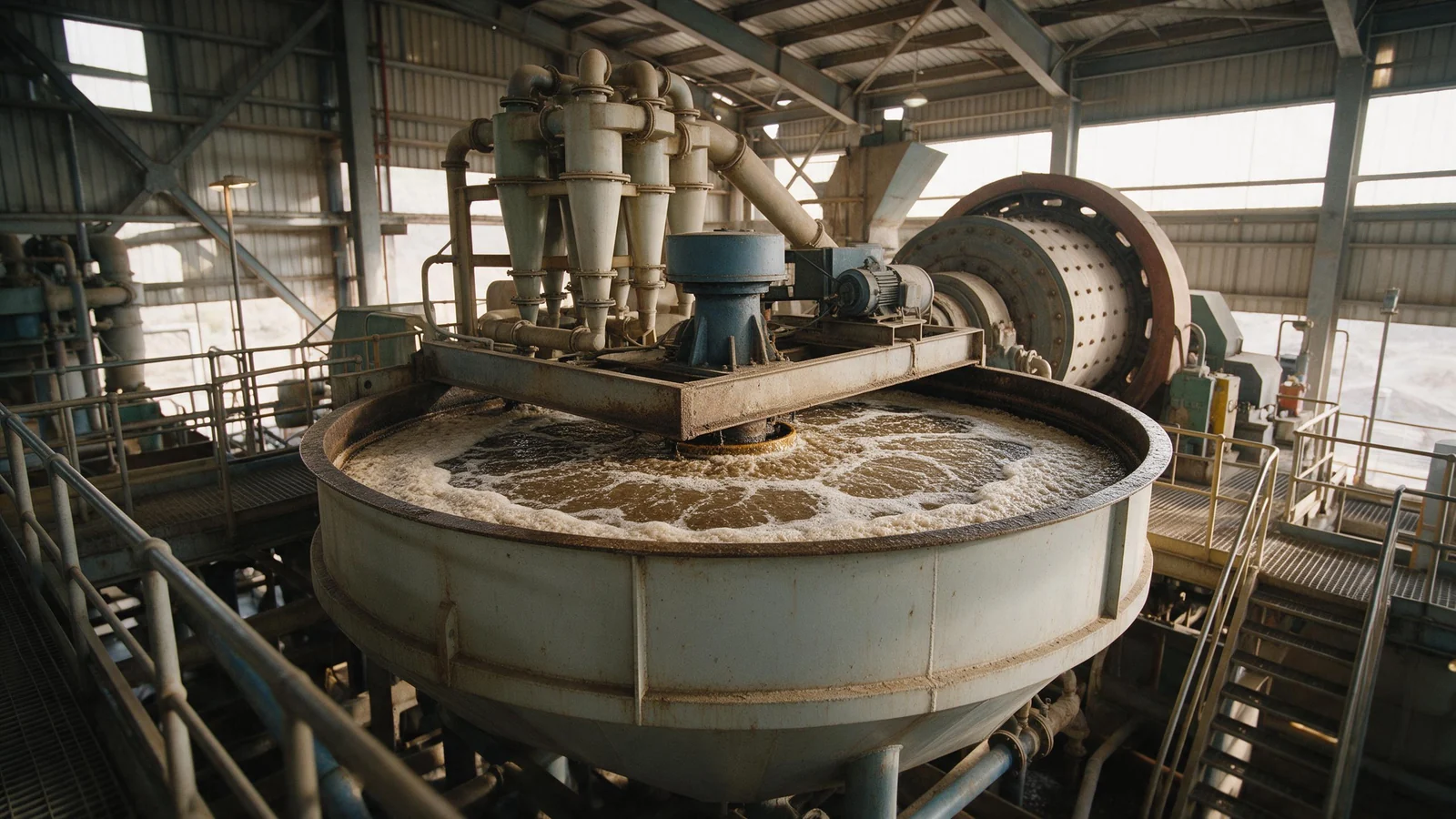
Flash flotation is a small, high-intensity flotation stage placed inside the grinding circuit on the cyclone underflow stream. It recovers valuable mineral as soon as it's liberated, instead of waiting for the main flotation bank. This early recovery can stop already-free particles from being ground even finer for gold and coarse sulphide ores. That's where they become harder to recover.
What Is Flash Flotation?
Think of it as a continuous flotation stage that treats the high-density, coarse fraction from a grinding circuit's classification device, usually a hydrocyclone underflow. It's not a separate process; it's a flotation cell integrated into the grinding loop. The feed to a flash flotation cell is not the cyclone overflow that goes to conventional flotation. It's the underflow, the stream that would normally return to the mill for further grinding. This placement means the cell sees particles that have just been discharged from the mill and classified by size. Many are already coarse enough to float, yet still heavy enough to report to the underflow. Flash flotation exploits that window, recovering mineral before it's unnecessarily reground.
Why Put It on Cyclone Underflow?
In a closed grinding circuit, the hydrocyclone separates mill discharge into a fine overflow and a coarse underflow. The overflow advances to the main flotation or leaching circuit. The underflow, containing the heavier and coarser particles, returns to the mill for more size reduction. Liberated native gold and dense sulphide minerals such as chalcopyrite, galena, and pyrite often concentrate in the underflow because their specific gravity is high. If they're not removed, they keep circulating in the mill, getting ground finer each pass. A flash flotation cell sits on this underflow stream, intercepting these dense, already-liberated particles and recovering them as a concentrate. This is why the cell is placed on cyclone underflow and not on the main flotation feed. The main flotation bank sees a much larger volume of finer particles, many of which are already too small to be efficiently recovered if they've been overground. The flash cell gets the first chance at the coarser, denser, higher-value fraction.
The Overgrinding Problem It Solves
Overgrinding occurs when valuable mineral particles are ground beyond the size at which they can be recovered efficiently. In flotation, very fine particles have less inertia, collide less frequently with bubbles, and are more easily entrained into the tailings. They can also produce slimes that consume reagents and reduce selectivity. Gold is particularly vulnerable. Native gold is malleable, so instead of breaking into clean fragments, it can flatten and smear onto mill liners and grinding media. Coarse sulphides such as chalcopyrite and galena can be floated at relatively coarse sizes, often far above the final grind target. By recovering these particles as soon as they're liberated, flash flotation reduces the amount of valuable mineral that returns to the mill. This cuts the energy spent on grinding already-free particles and lowers the risk of losing them to slimes or surface oxidation in subsequent regrinding. According to the USGS Mineral Commodity Summaries: Gold, gold is recovered from a mix of free-milling and refractory ores, many of which use flotation of sulphide concentrates. Similarly, the USGS Mineral Commodity Summaries: Copper shows that copper is overwhelmingly concentrated by flotation. For both metals, early recovery in the grinding circuit can protect grade and improve overall plant performance.
Cell Design and Residence Time
A flash flotation cell isn't a standard rougher cell moved into the grinding circuit. It's a specialized mechanical machine built for a difficult feed. The feed is high in percent solids, dense, and coarse, and it can vary rapidly with mill discharge. The cell must generate high shear and strong air dispersion to keep coarse particles in suspension and attach them to bubbles. Flash flotation cells often use a bottom-fed impeller design that draws the dense slurry upward through the rotor, which improves mixing and reduces sanding. Froth crowding and wash water may also be configured differently to handle the coarse, fast-floating load. Residence time in a flash flotation cell is deliberately short, because the objective is to skim off already-liberated mineral quickly and return the rest of the underflow to the mill. The exact residence time isn't a fixed universal number; it's set by test work to match the ore's flotation kinetics, the cyclone underflow density, and the target concentrate grade. Too long a residence time can pull in coarse middlings and dilute the concentrate with unliberated gangue. Too short a residence time leaves liberated value in the circulating load. The cell must therefore be sized and tuned for the specific grinding circuit, not copied from a general table.
How Testwork Decides
Flash flotation isn't automatically beneficial for every grinding circuit. The decision to install a flash cell starts with laboratory test work. A typical test program begins with mineralogical analysis to determine liberation size, grain size distribution, and the association of valuable minerals with gangue. Then, flotation tests are run on samples of cyclone underflow under conditions that mimic the flash cell: high solids, coarse grind, short float time, and minimal reagent addition. If the underflow sample yields a concentrate with acceptable grade and recovery without excessive entrainment of gangue, the circuit may benefit. Locked-cycle tests can show whether the cell stabilizes or destabilizes the grinding circuit mass balance. Pilot testing with a small flash cell installed on a slipstream of plant cyclone underflow gives the most reliable answer. This pilot campaign measures concentrate mass pull, grade, and the change in recirculating load. Xinhai's mineral processing test work covers these stages, from scoping tests to pilot campaigns, so a plant owner can see whether flash flotation pays off before committing to a full-scale installation. Without test work, adding a flash cell is a guess; with test work, it becomes an engineering decision.
Flash Flotation Is a Supplement, Not a Replacement
A flash flotation cell does not eliminate the main flotation circuit. It's a supplement, placed in front of the conventional bank to catch a specific coarse, fast-floating fraction. The main flotation circuit still handles the cyclone overflow, which contains the bulk of the finer liberated particles and the slower-floating middlings. Flash concentrate is usually high grade and can be directed to final concentrate or to a small cleaning stage. The tailings from the flash cell return to the mill or to the classification sump, depending on the circuit arrangement. Because the flash cell removes some dense, high-value particles from the circulating load, it can reduce the mill's recirculating load and stabilize the cyclone overflow feed. This can improve grinding throughput and reduce energy consumption, but it doesn't replace the need for conventional rougher, scavenger, and cleaner flotation stages. For a copper circuit, for example, a flash cell might recover coarse chalcopyrite, but the copper processing flowsheet will still need the main flotation bank to recover fine and middling particles. For a gold circuit, the flash cell might pull free gold and gold-bearing pyrite early, but the gold processing circuit will still have cyanidation or conventional flotation downstream. The flash cell is an insurance policy against overgrinding, not a standalone recovery unit.
A Practical Path to Evaluation
For a plant owner evaluating whether flash flotation would help, the first step is sampling. Collect representative cyclone underflow samples at normal operating conditions and send them for mineralogical and flotation testing. Compare the underflow's liberation and flotation response against the cyclone overflow. If the underflow contains significant liberated value, a pilot flash cell is the next logical step. Pilot testing on a slipstream can run for days or weeks, providing data on concentrate grade, mass pull, impeller wear, and the effect on grinding circuit stability. Once the economics are clear, the flash cell can be integrated into the grinding circuit with minimal disruption. The cell is small relative to the main flotation bank, so its footprint and energy demand are modest. Xinhai's flotation cell manufacturing supplies both flash cells and conventional flotation machines, allowing the same supplier to match the flash cell to the main bank. By combining the right cell design with the right test work, a plant can recover value earlier, reduce overgrinding, and improve the performance of the entire concentrator. Flash flotation isn't a new idea, but it remains one of the simplest retrofit options for plants that suffer from overground gold or coarse sulphide losses.
Frequently asked questions
What is flash flotation?
Flash flotation is a flotation stage placed inside the grinding circuit, usually on the cyclone underflow stream, to recover valuable mineral as soon as it is liberated. It treats the coarser, denser fraction before it returns to the mill.
Why is a flash flotation cell placed on cyclone underflow?
Cyclone underflow contains the heavy, coarse particles, including liberated gold and dense sulphides. By intercepting this stream, the flash cell recovers these particles before they are reground and potentially overground.
Does flash flotation replace the main flotation circuit?
No. Flash flotation is a supplement to the main flotation bank. It catches a coarse, fast-floating fraction, but the main circuit still handles the finer particles and middlings.
How do you know if flash flotation will benefit a circuit?
Test work is essential. Mineralogical analysis, batch flotation tests on cyclone underflow samples, locked-cycle tests, and pilot campaigns show whether the cell can recover liberated value without excessive gangue entrainment.